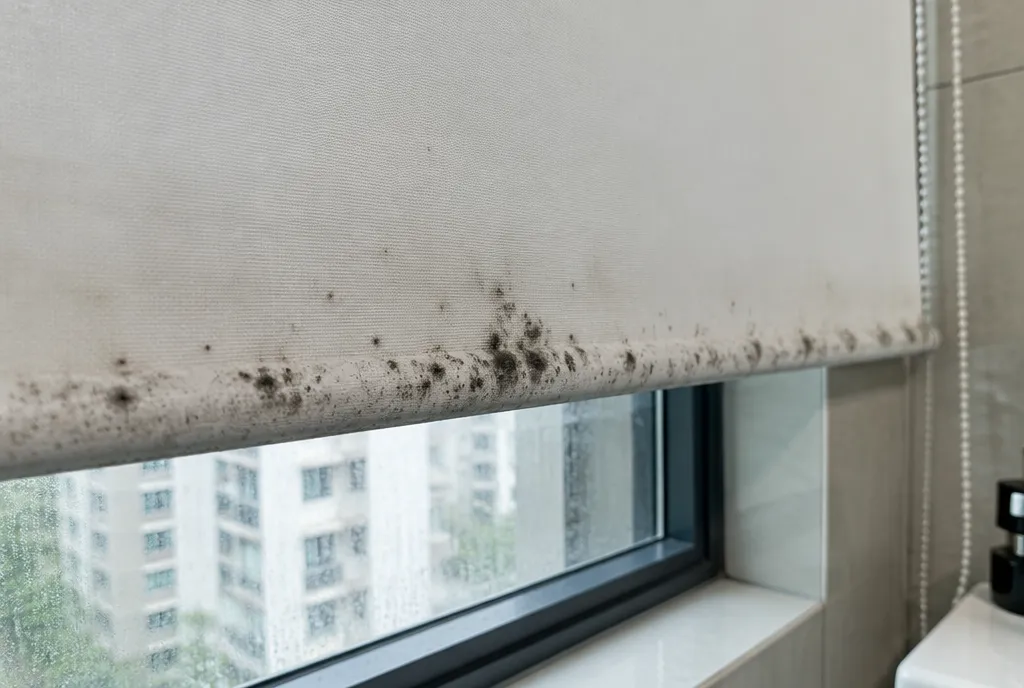
You pull down the bedroom roller blind and see grey speckles along the bottom, or you tilt the Venetian slats and find black dots on the edges facing the glass. Mould on blinds is common in Singapore flats. This guide covers what it means in a bedroom, how to clean each type of blind, what to do if you rent, and how to prevent it.
If the mould is on fabric curtains rather than blinds, our guide on why curtains get mouldy in Singapore covers washing and drying curtains.
Why blinds go mouldy
Mould needs moisture, food and still air. A blind sits between the glass and the room, which is where all three meet.
- Condensation. When aircon runs overnight, the glass and frame cool down. In the morning, warm humid air meets those cool surfaces and moisture settles on the glass, the sill and the part of the blind closest to it.
- Dust. Dust and cooking grease on slats and fabric give spores something to feed on.
- Rolled-up fabric. A roller blind left rolled up for weeks traps any damp inside the roll, which is why mould often shows as a repeating pattern of spots once the blind comes down.
- Bottom rails. The bottom bar sits near the sill, where water from rain or condensation collects.
Is mould on blinds a problem in a bedroom?
Small patches of mould on a blind are not an emergency, but they are not something to leave either. Mould releases spores into the air, and people with asthma, allergies or sensitive airways may notice a stuffy nose, coughing or itchy eyes, especially in a closed bedroom with the aircon on. Clean it promptly, keep the room aired, and see a doctor if symptoms persist.
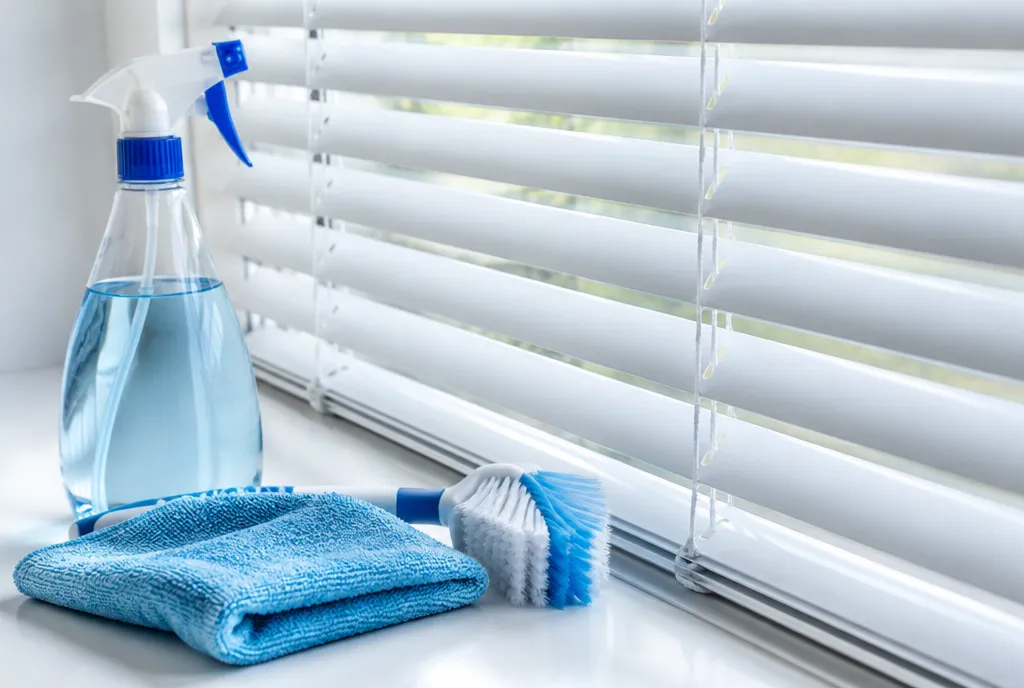
How to remove mould, by blind type
Open the window, wear gloves, and test any cleaner on a hidden spot first. Never mix bleach with vinegar, ammonia or other cleaners.
Aluminium and PVC Venetian blinds
These are the easiest to clean because the slats do not absorb water.
- Close the slats flat and vacuum both sides with a brush attachment to lift loose dust.
- Wipe each slat with a cloth dipped in warm water and a little dish soap.
- For stubborn spots, use a diluted vinegar solution (roughly one part white vinegar to one part water) and leave it for ten minutes before wiping.
- Wipe again with clean water and dry each slat with a towel.
- Leave the slats open and the window open until fully dry.
Wooden and faux wood Venetian blinds
Real wood can warp or stain if it gets wet. Use a barely damp cloth with mild soap, work one slat at a time and dry immediately. If mould has stained into bare or cracked wood, it may not come out. Faux wood can take a little more moisture. In a room that stays humid, aluminium or PVC slats are easier to keep clean than real wood.
Roller blinds
- Lower the blind fully and lay a towel on the sill.
- Vacuum both sides with a soft brush.
- Dab the spots with warm soapy water on a sponge. Do not scrub hard, as it can lift coatings and leave pale marks.
- For blackout roller blinds, check the backing. If the coating is cracked or peeling, mould in the cracks rarely cleans out fully.
- Leave the blind down and the window open until it is completely dry before rolling it up again.
Korean combi (zebra) blinds
The double layer of fabric traps dust between the bands. Lower the blind, vacuum gently, then spot clean with a damp cloth and mild soap. Leave it fully lowered with the bands open to dry. Many combi fabrics cannot be soaked, so check the care information first.
Our guide on how to clean blinds in Singapore covers routine cleaning for each type in more detail.
When the mould will not come off
Light, recent mould usually cleans off. Deep black staining that has soaked into fabric often fades but leaves a mark, even once the mould is gone. If the stain or musty smell returns within a few weeks, or the fabric or coating is damaged, replacing the blind is usually the better option.
If you rent
Most tenancy agreements expect tenants to keep fittings clean, but mould caused by a leaking window frame or a damp wall is a building problem. A sensible order is:
- Take dated photos of the mould and the window.
- Clean what you can with a gentle method suited to the blind.
- Tell your landlord or agent in writing, especially if there is water coming in or the mould returns quickly.
- Do not use bleach or harsh scrubbing on a landlord’s blinds without asking, since damage may come out of your deposit.
How to stop mould coming back
- Air the room after aircon. Switch off, open the blind and the window for at least half an hour each morning.
- Keep the blind off the glass. Blinds mounted inside a shallow recess can touch the glass. Fitting them on the frame face or ceiling leaves a gap for air.
- Do not leave roller blinds rolled up wet. If the glass is wet in the morning, let the blind dry down before rolling it up.
- Wipe the sill and glass. Water sitting in the sill track keeps the bottom rail damp.
- Dust every few weeks. Less dust means less for mould to feed on.
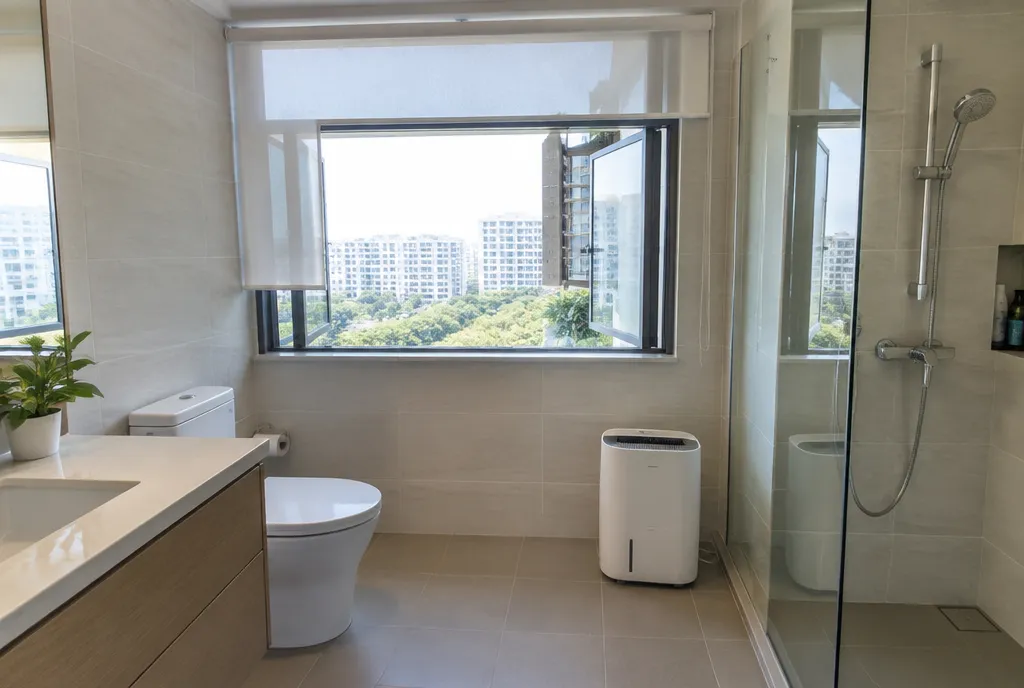
- Use a fan or dehumidifier in rooms that stay closed, such as a spare bedroom or study.
When to call a professional
Call someone in if mould keeps coming back on the same window, if the blinds are high or hard to reach, or if the fabric or coating is damaged. We supply and install blinds in materials that suit humid rooms, including blackout roller blinds and aluminium Venetian blinds, and we can look at the mounting position during a home measuring visit so the new blind sits away from the glass. If you have fabric curtains in the same room with the same problem, our curtain cleaning service covers on-site steam, dry cleaning, washing, and take-down and rehang.
Common questions
What are the black spots on my roller blind?
Small black or grey dots, often in a repeating pattern along the fabric, are usually mould. The pattern comes from the blind being rolled up while damp, so the same spot on each layer of the roll stays wet.
Can I use bleach on mouldy blinds?
Only on white aluminium or PVC slats, diluted as directed, with the window open. Avoid bleach on fabric roller blinds, combi blinds, wood and blackout coatings, as it can discolour or damage them.
Is it safe to sleep in a room with mouldy blinds?
A small amount of mould is not usually an emergency, but it should be cleaned and the room aired. If you or anyone in the room has breathing problems, clean it promptly and see a doctor if symptoms persist.
Which blinds are least likely to go mouldy?
Aluminium and PVC Venetian blinds are the easiest to wipe clean and do not absorb water. Polyester roller blinds also cope well if they are dried before being rolled up.
 Blind Cord Safety: Making Blinds Safer for Young Children
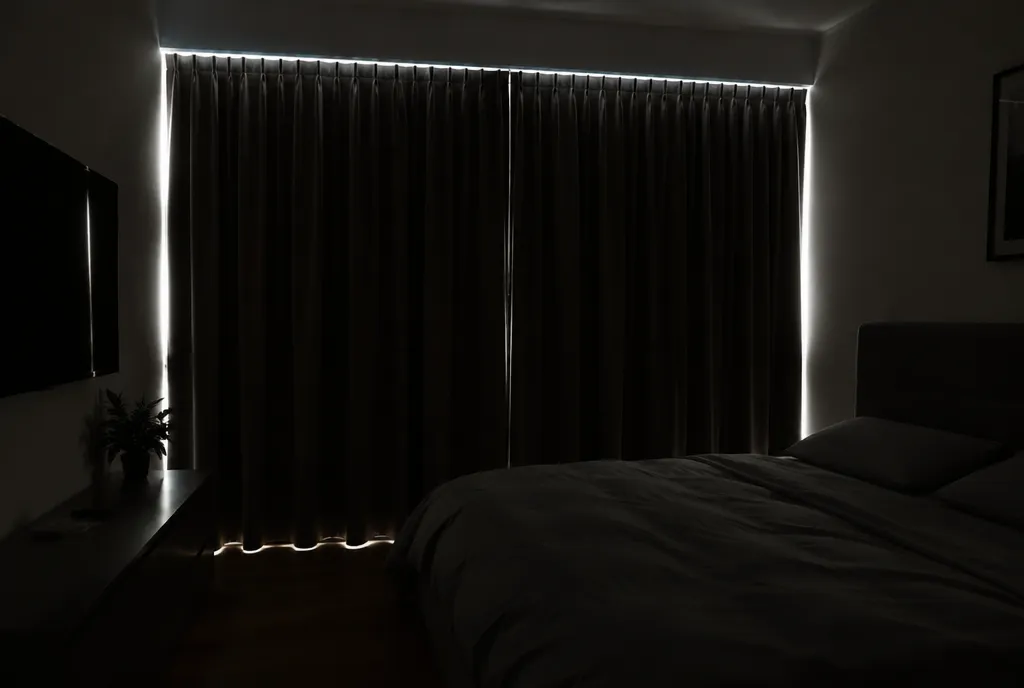 How to Stop Light Leaking Around Blackout Curtains
 Curtain Rod Sagging, Track Stuck and Broken Blinds: Common Faults and Fixes