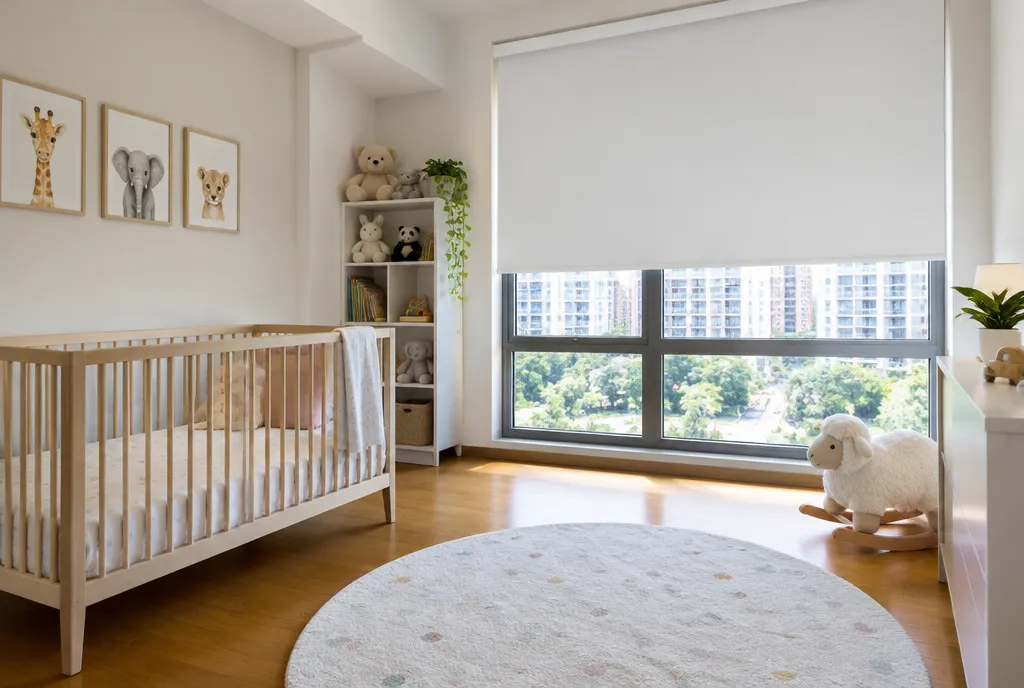
Most blinds are raised and lowered with a cord or a bead chain. For adults this is simple and convenient. For babies, toddlers and young children, a hanging loop of cord near a bed, cot, sofa or window seat is a strangulation risk. Safety agencies in many countries have warned about this for years, and many newer blinds are designed with it in mind.
This guide explains where the risk comes from, how to make existing blinds safer, and which options remove the cord altogether. It is general guidance for parents and anyone with young children visiting their home.
Where the risk comes from
Young children can get their head or neck caught in a loop of cord or chain. It can happen quickly and quietly, often when a child is left alone briefly in a bedroom or playing near a window. The parts to look at are:
- Bead chains and pull cords on roller, combi and vertical blinds, which form a continuous loop.
- Lift cords on Venetian and Roman blinds, which hang down the side and can form a loop when tangled or knotted together.
- Inner cords that run through the slats or fabric of some Venetian and Roman blinds, which a child can pull out into a loop.
- Tilt cords and wands on Venetian blinds.
The risk rises when furniture a child can climb sits near the window: a cot, bed, sofa, chair, toy box or bay window seat.
How to make existing blinds safer
If you are keeping your current blinds, these steps reduce the risk. Do all of them, not just one.
- Fit a tension device to every looped chain or cord. A tension device fixes the bottom of the loop to the wall or window frame so the chain stays taut and cannot be pulled away into a loose hanging loop. Many blinds are supplied with one; it needs to be screwed in place to work.
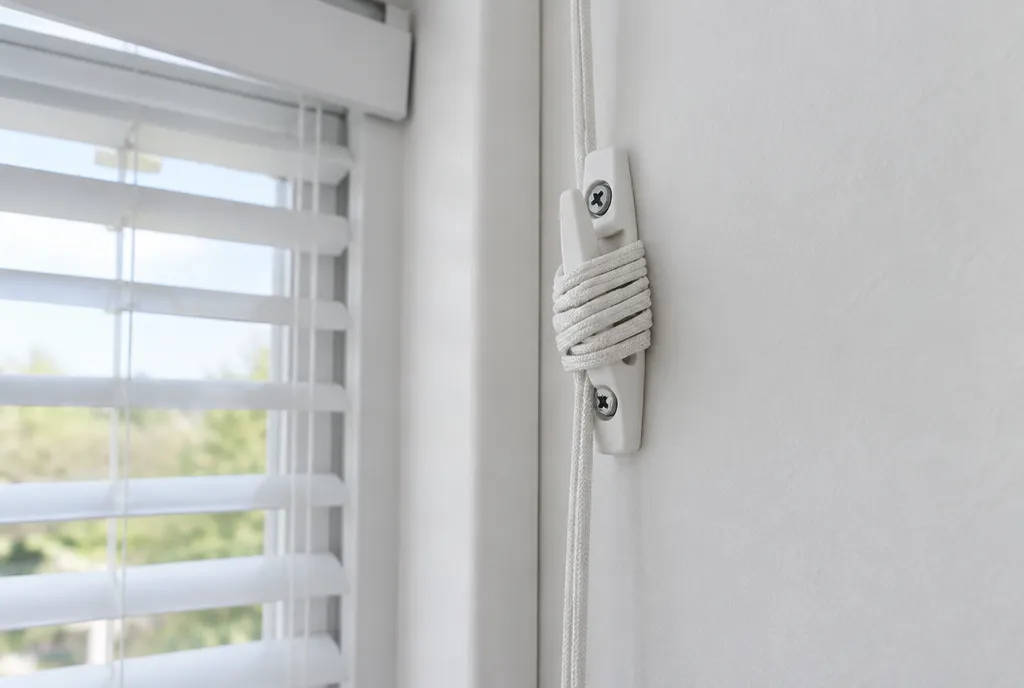
- Fit a cord cleat high on the wall. For loose lift cords, wind the cord around a cleat mounted at least 1.5m above the floor, out of a child’s reach. Wind it up every time the blind is raised or lowered.
- Cut looped cords apart. If a Venetian blind has two cords joined at the bottom with a tassel, separating them and fitting individual tassels stops them forming a loop. Some blinds use breakaway connectors that come apart under pressure.
- Check inner cords. Some blinds have stop devices that limit how far inner cords can be pulled. If yours do not, keep the blind fully lowered or replace it in a child’s room.
- Move furniture away from windows. Keep cots, beds, sofas and anything climbable away from blind cords. This matters as much as the hardware.
- Do the check in every room. Living rooms and grandparents’ homes are as relevant as the nursery.
- Teach older children not to play with blind cords, and check new blinds when they arrive before installation is finished.
Cordless and motorised options
The simplest way to remove the risk is to remove the cord.
Cordless roller and combi blinds
Cordless blinds are raised and lowered by hand, using the bottom rail or a handle, with a spring mechanism inside. There is nothing hanging down. They suit bedrooms and windows a child can reach, as long as the window is not too large or high to operate by hand.
Motorised blinds
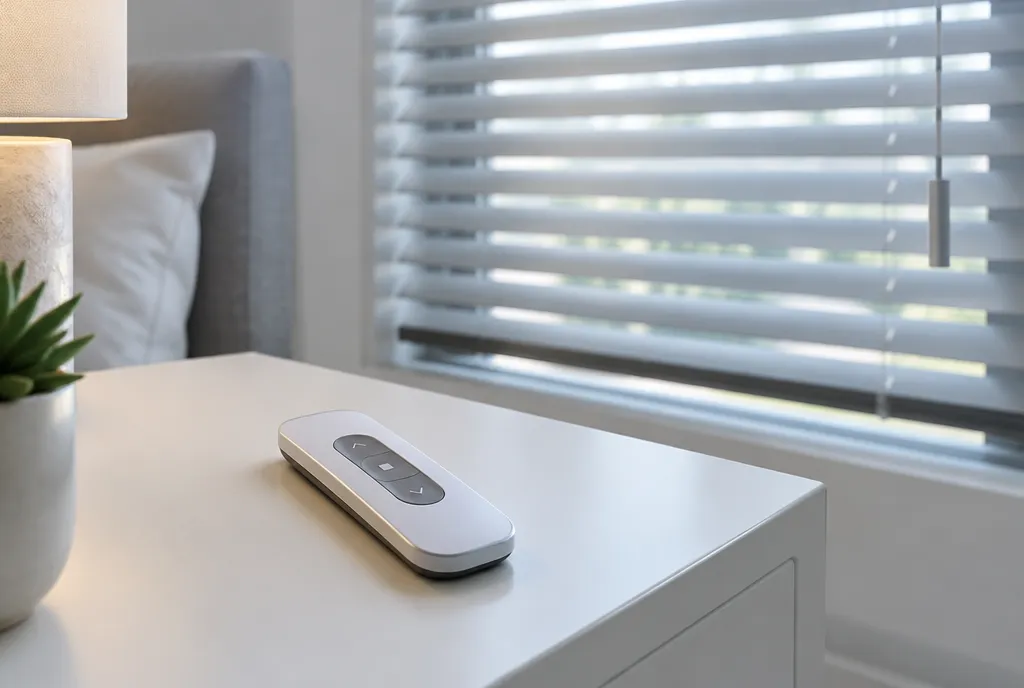
Motorised roller blinds are operated by remote, wall switch or app, so there is no cord or chain at all. They suit large or high windows, and rooms where you want blinds to open and close on a schedule. Plan for power: some motors run on rechargeable batteries, while others need a power point near the window. Our guide to motorised blinds and curtains covers what to plan before renovation.
Wand-operated blinds
Some Venetian and vertical blinds use a rigid wand instead of cords to tilt and draw the slats. A wand cannot form a loop, though it should still be kept clear of cots.
Curtains instead of blinds
Curtains on a track or rod have no cords unless you choose a corded track. They are a simple choice for a child’s room. Our page on kids’ room curtains and blinds covers blackout options for naps and early bedtimes.
Choosing blinds for a child’s room
When buying new blinds for a nursery or kids’ room, ask for:
- cordless or motorised operation where possible
- a tension device fitted and fixed for any chain that remains
- no looped lift cords, and stop devices on any inner cords
- a blackout fabric if the child naps in the day; see our blackout roller blinds
- a fabric that wipes clean, since children’s rooms get sticky hands
When to call a professional
If you are not sure how to fit a tension device or cleat securely, or your blinds have inner cords with no stop devices, it is safer to have them changed. We supply and install blinds, including cordless and motorised options. During a home measuring visit we can look at each window, the furniture nearby and the operation that suits it. If you would rather switch to curtains, our installation service fits tracks and rods.
Common questions
Are blind cords dangerous for babies and toddlers?
Looped or loose cords and chains can be a strangulation risk for young children, especially near a cot, bed or furniture they can climb. Securing or removing the cords reduces that risk.
What is a blind tension device?
It is a small fitting that holds the bottom of a chain or cord loop against the wall or frame, keeping the loop taut so a child cannot pull it out into a hanging loop. It only works when it is screwed in place.
Are cordless blinds safer?
Cordless and motorised blinds have no hanging cords or chains, which removes that particular risk. They are the usual recommendation for children’s rooms.
Can I make my existing blinds child safe without replacing them?
Often, yes. Fit tension devices to chains, wind loose cords around a high cleat, separate looped cords and move furniture away from the window. If inner cords can still be pulled out, replacement is the safer option.
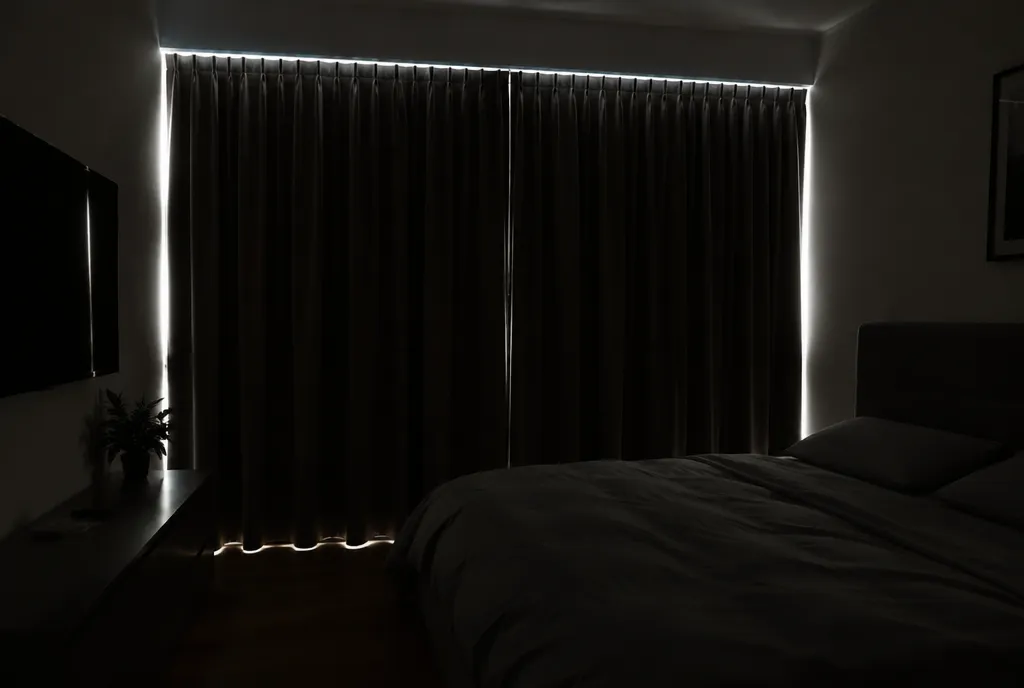 How to Stop Light Leaking Around Blackout Curtains
 Curtain Rod Sagging, Track Stuck and Broken Blinds: Common Faults and Fixes
 Are Curtains Bad for Allergies? Dust Mites, Blinds and Cleaning Routines