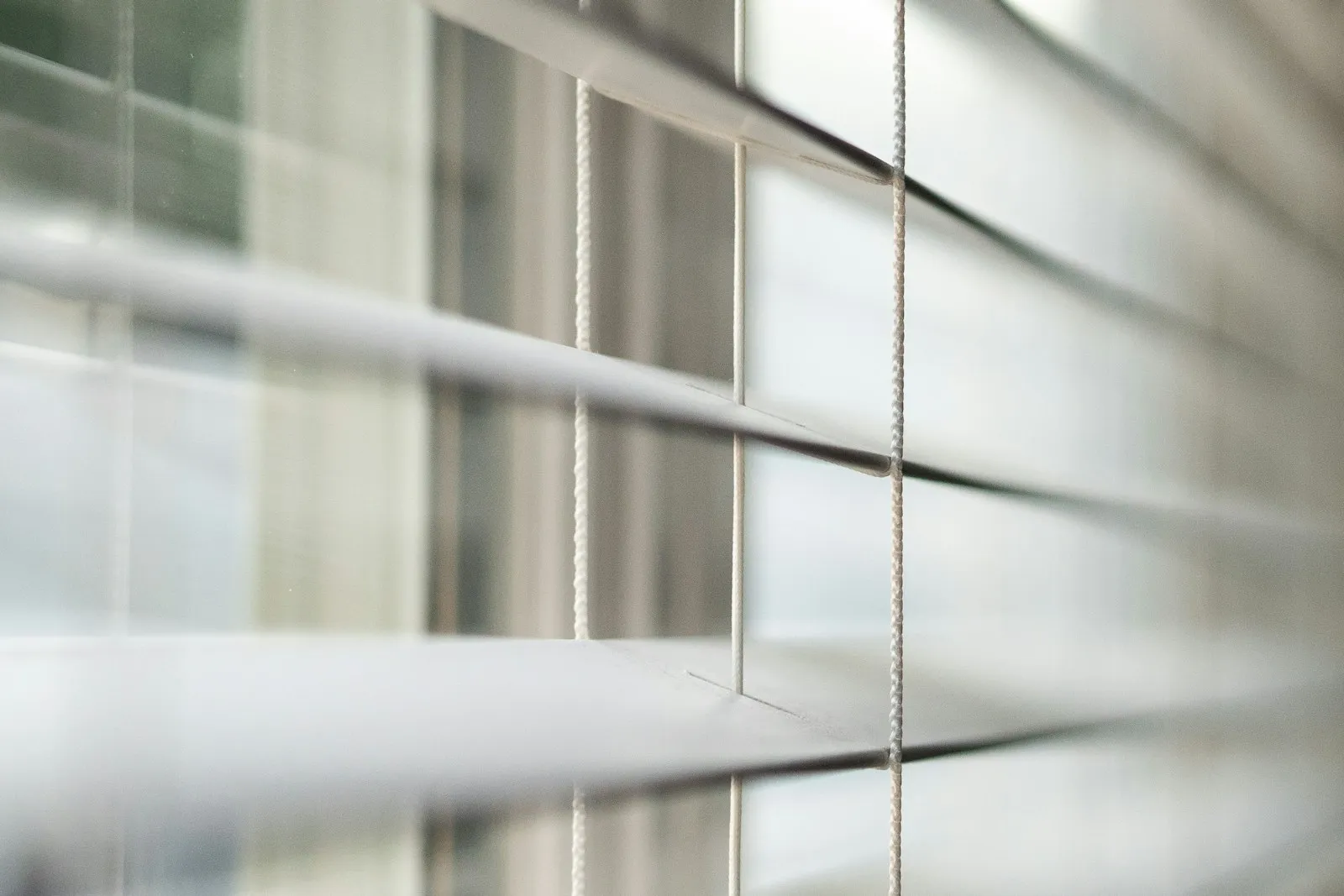
To clean blinds, dust them every week or two with a vacuum brush or microfibre cloth, then every few months wipe hard slats with a damp cloth and mild dish soap, or dab fabric marks with a barely damp cloth. Keep water off wooden slats, roller fabric and any motor.
Run a finger along a blind that has not been cleaned for a few months and it comes away grey. In a Singapore flat, the dust is often mixed with something else. Near the kitchen it is a thin film of cooking oil. In a bedroom that stays shut during the day, or a bathroom window, it can be small black spots of mould. Each blind type needs a slightly different method, and a few common habits, like soaking a roller blind or wetting wooden slats, can ruin a blind for good.
This guide covers venetian (aluminium, PVC and wood), roller, Korean combi, roman, vertical and honeycomb blinds, followed by mould, grease, what to avoid and how often to clean.
Before you start
Check what your blind is made of. The material decides how much water it can take. Aluminium and PVC tolerate water well, polyester fabric tolerates a little, and real wood and many coated fabrics tolerate almost none. If you still have the supplier’s care card, follow it over any general advice, including this guide.
A basic kit covers almost every blind:
- a vacuum cleaner with a soft brush attachment
- two or three microfibre cloths
- mild dish soap or a gentle detergent
- a spray bottle of plain water
- a soft brush, such as a clean paintbrush or an old soft toothbrush
- a small step stool, so you are not stretching from a chair
Close the window first so dust does not blow back in, and lower the blind fully so you can reach every slat or fold. For motorised blinds, switch off the power or remove the battery before you wipe anything near the motor or the head rail.
How to clean venetian blinds
Aluminium and PVC venetians
These are the easiest blinds to clean, and common in HDB kitchens and bathrooms because they handle moisture well.
- Lower the blind and tilt the slats closed so they lie flat.
- Vacuum or dust from top to bottom with the soft brush.
- Tilt the slats the other way and repeat on the reverse side.
- Wipe each slat with a cloth dampened in water with a little dish soap. Hold the slat from behind with one hand while you wipe, so it does not bend.
- Wipe again with a cloth dampened in plain water to remove soap residue.
- Dry with a clean cloth and leave the blind open for an hour or so.
For a heavily soiled blind, you can take it down and wash it in the shower area or a bathtub with warm soapy water, then rinse and hang it to dry. Keep the head rail and the cords as dry as you can, and make sure everything is fully dry before rehanging, since trapped water in the head rail can rust metal parts. Our venetian blinds page explains the slat materials if you are choosing replacements.
Wooden venetians
Real timber slats can warp, crack or lose their finish when wet, and Singapore’s humidity (the Meteorological Service puts the mean annual relative humidity at around 82%) means they already take on moisture from the air.
- Dust or vacuum both sides of the slats every week or two.
- For marks, wring a cloth until it is barely damp and wipe only the affected slat.
- Dry the slat straight away with a second cloth.
- Use a wood cleaner or a little furniture polish occasionally, following the product’s instructions.
Never soak, spray or take wooden venetians into the shower. Faux wood (PVC that looks like timber) can be treated like the aluminium and PVC blinds above.
How to clean roller blinds
Roller blinds are a single sheet of fabric, often with a coating on the back for sunscreen or blackout performance. Water and scrubbing can stain the fabric, leave tide marks or crack the coating.
- Lower the blind fully.
- Vacuum both sides with the soft brush on low suction, working from top to bottom.
- For a mark, dab (do not rub) with a cloth dampened in water with a drop of mild soap.
- Dab again with a cloth dampened in plain water.
- Leave the blind fully lowered until it is completely dry before you roll it up.
Rolling a damp blind traps moisture inside the roll, which is how mould starts in a humid flat. Some roller blinds use PVC-coated or vinyl fabric that can be wiped more firmly, so check the fabric type before you scrub. Do not put roller fabric in a washing machine or soak it, since it can shrink, lose its stiffness and stop rolling straight. See our roller blinds page for the fabric types.
How to clean Korean combi blinds
Korean combi blinds (also called zebra or day and night blinds) have two layers of fabric with alternating sheer and solid bands. Dust settles on both layers and in the loop at the bottom.
- Lower the blind and align the bands so the solid stripes sit over each other.
- Vacuum the front with the soft brush on low suction.
- Shift the bands so the sheer stripes align, then vacuum again to reach the fabric you missed.
- Spot clean marks by dabbing with a damp cloth and mild soap, then plain water.
- Leave the blind lowered until fully dry.
The sheer bands are delicate, so avoid hard brushing or pulling on them. Do not try to remove the fabric from the tube and wash it unless the supplier says it is designed for that. Our Korean combi blinds page covers the fabric options.
How to clean roman blinds
Roman blinds fold into pleats, and dust collects inside each fold. Many have a lining and cords running through rings at the back, so the fabric does not come off easily.
- Lower the blind fully so the folds open out.
- Vacuum front and back with the soft brush.
- Spot clean with a barely damp cloth and mild soap, dabbing rather than rubbing.
- Leave it lowered until dry so the folds do not set with moisture inside them.
Some roman blinds have a removable fabric face that can be washed or dry cleaned. Check the care label first, because lined and blackout fabrics often need dry cleaning only.
How to clean vertical blinds
Vertical blinds are often on balcony doors, where they catch dust from outside and get handled each time someone walks through.
- Close the vanes so they lie flat and vacuum from top to bottom.
- Turn the vanes the other way and repeat.
- Wipe PVC or aluminium vanes with a cloth and soapy water, then plain water, and dry them.
- For fabric vanes, spot clean with a damp cloth. If the care label allows, unhook individual vanes, remove the bottom weights and hand wash them in a basin of lukewarm soapy water. Rinse, put the weights back and rehang them to dry straight.
Clean the track at the top occasionally with a dry brush, since grit in the track makes the vanes stick when you draw them.
How to clean honeycomb blinds
Honeycomb (cellular) blinds have hollow cells that trap air, and the cells also trap dust and the odd insect.
- Vacuum the face gently on low suction.
- Blow out the cells with a hair dryer on a cool setting, or a can of compressed air.
- Spot clean with a barely damp cloth and mild soap, dabbing gently.
Avoid soaking, since water can get trapped inside the cells and leave marks or mould.
Cleaning methods by blind type
| Blind type | Regular dusting | Water tolerance | Deeper clean | Avoid |
|---|---|---|---|---|
| Aluminium or PVC venetian | Brush or vacuum both sides | High | Wipe slats, or take down and wash in the shower | Bending slats, wet head rail |
| Wooden venetian | Brush or vacuum both sides | Very low | Barely damp cloth, dry at once, wood cleaner | Soaking, spraying, steam |
| Roller | Vacuum on low | Low | Dab marks with mild soap | Washing machine, scrubbing, rolling up damp |
| Korean combi | Vacuum in both band positions | Low | Dab marks with mild soap | Pulling sheer bands, hard brushing |
| Roman | Vacuum with folds open | Low | Spot clean, or wash or dry clean a removable face per label | Folding up while damp |
| Vertical | Vacuum both sides | High for PVC, medium for fabric | Wipe PVC vanes, hand wash fabric vanes if the label allows | Losing the bottom weights |
| Honeycomb | Vacuum gently, blow out cells | Low | Dab marks gently | Soaking, crushing pleats |
Mould spots on blinds
Mould usually appears where moisture sits and air does not move, such as a bathroom window, a bedroom kept closed during the day, or the inside of a roller blind that was rolled up damp. The monsoon months, with frequent rain and windows kept shut, are when you are most likely to notice it.
On aluminium, PVC and faux wood, wipe mould spots with a cloth dampened in diluted white vinegar or a mild mould cleaner suited to the material, then wipe with plain water and dry. Wear gloves and keep the window open while you work.
On fabric, mould is harder to remove. Dab with diluted white vinegar on a hidden corner first to check the fabric does not discolour, then treat the spots and let the blind dry fully while lowered. Avoid bleach on coloured or coated fabric, since it can leave pale patches or weaken the coating. If the spots have spread across a fabric blind or come back after cleaning, replacing the fabric is often more practical than repeated treatment.
To prevent it coming back, open the blind and the window for part of the day where you can, run the bathroom exhaust fan after showers, and never roll up a fabric blind while it is still damp.
Kitchen grease
Blinds near a stove collect a sticky layer of oil and dust that a dry cloth only smears. For aluminium and PVC venetians, wipe each slat with warm water and a little dish soap, which is made to break down grease. Taking the blind down and washing it in the shower area is often faster than working slat by slat on a greasy kitchen blind.
Fabric blinds in a kitchen are hard to degrease without staining, which is one reason aluminium and PVC venetians, or PVC roller fabric, are the usual choice for HDB kitchens. If you are still choosing, our guide to curtains or blinds compares how each copes with kitchens and bathrooms.
What not to do
- Do not soak or machine wash roller, Korean combi, roman or honeycomb fabric unless the care label says you can.
- Do not let water reach the motor, battery or wiring of a motorised blind.
- Do not use bleach, abrasive pads or strong solvents on coated fabric or wood.
- Do not use a steam cleaner on wooden slats or coated fabric.
- Do not roll up or fold a fabric blind while it is still damp.
- Do not hang a washed blind back up until the head rail and cords are dry.
- Do not pull hard on cords, chains or sheer bands to reach a high spot. Use a step stool.
How often to clean blinds
A light dusting every week or two keeps dust from building into a film that needs washing.
Plan a deeper clean, such as wiping slats or spot cleaning fabric, every three to six months, and more often for kitchen blinds and any blind that tends to get mould. Check bathroom and kitchen blinds for black spots each month during the wetter months, when windows stay closed for longer.
Common questions
How do I clean blinds without taking them down?
Lower the blind, close the slats or vanes, and vacuum both sides with a soft brush attachment. Then wipe hard slats with a damp cloth and mild soap, or dab fabric marks with a barely damp cloth. Most routine cleaning can be done with the blind in place.
How do I clean roller blinds?
Vacuum both sides on low suction, then dab any marks with a cloth dampened in water and a drop of mild soap, followed by plain water. Leave the blind fully lowered until it is dry before rolling it up. Do not soak or machine wash the fabric.
How do I clean venetian blinds quickly?
Close the slats, vacuum or dust from top to bottom, then flip the slats and repeat. For aluminium or PVC, follow with a damp cloth and a little dish soap. Wooden slats should only be dusted or wiped with a barely damp cloth and dried at once.
Can I wash Korean combi blinds?
Spot cleaning is the safest approach. Vacuum the fabric in both band positions, then dab marks with a damp cloth and mild soap. Only remove and wash the fabric if the supplier says it is designed for that.
How do I get mould off blinds?
On aluminium or PVC, wipe the spots with diluted white vinegar, then plain water, and dry the slats. On fabric, test the vinegar on a hidden area first, dab the spots and let the blind dry fully while lowered. If mould keeps returning on fabric, replacing the fabric is usually more practical.
What is the easiest way to clean dirty blinds?
Lower the blind, close the slats and vacuum both sides with a soft brush attachment. Then wipe hard slats with a microfibre cloth dampened in water and a little dish soap, followed by plain water. For very dirty aluminium or PVC venetians, taking the blind down and washing it in the shower area is often faster.
What can I use to clean my fabric blinds?
Use a vacuum with a soft brush attachment on low suction for dust, and a cloth dampened in water with a drop of mild dish soap for marks. Dab rather than rub, then dab again with plain water. Avoid bleach, abrasive pads and steam, which can stain the fabric or crack its coating.
How can I make my blinds white again?
Start with a full clean. Wipe aluminium or PVC slats with warm water and dish soap, which lifts the grey film of dust and kitchen grease, and treat black mould spots with diluted white vinegar. If the slats have yellowed after years of sun, cleaning will not reverse it, and replacing the blind is more practical.
How do professionals clean blinds with vinegar?
Diluted white vinegar is mainly used on mould spots. Wipe aluminium, PVC or faux wood slats with a cloth dampened in the vinegar solution, then wipe with plain water and dry them. On fabric, test it on a hidden corner first, then dab the spots and let the blind dry fully while lowered.
What is a good blinds cleaner spray?
A spray bottle of water with a few drops of mild dish soap works on most aluminium, PVC and faux wood blinds. Spray it onto a microfibre cloth rather than straight onto the blind, so water does not run into the head rail. Follow with a cloth dampened in plain water, and keep sprays off wooden slats.
Does Curtains SG clean blinds?
We offer a curtain cleaning service for curtains, done on site or taken away and rehung. For blinds, the home methods in this guide cover routine care.
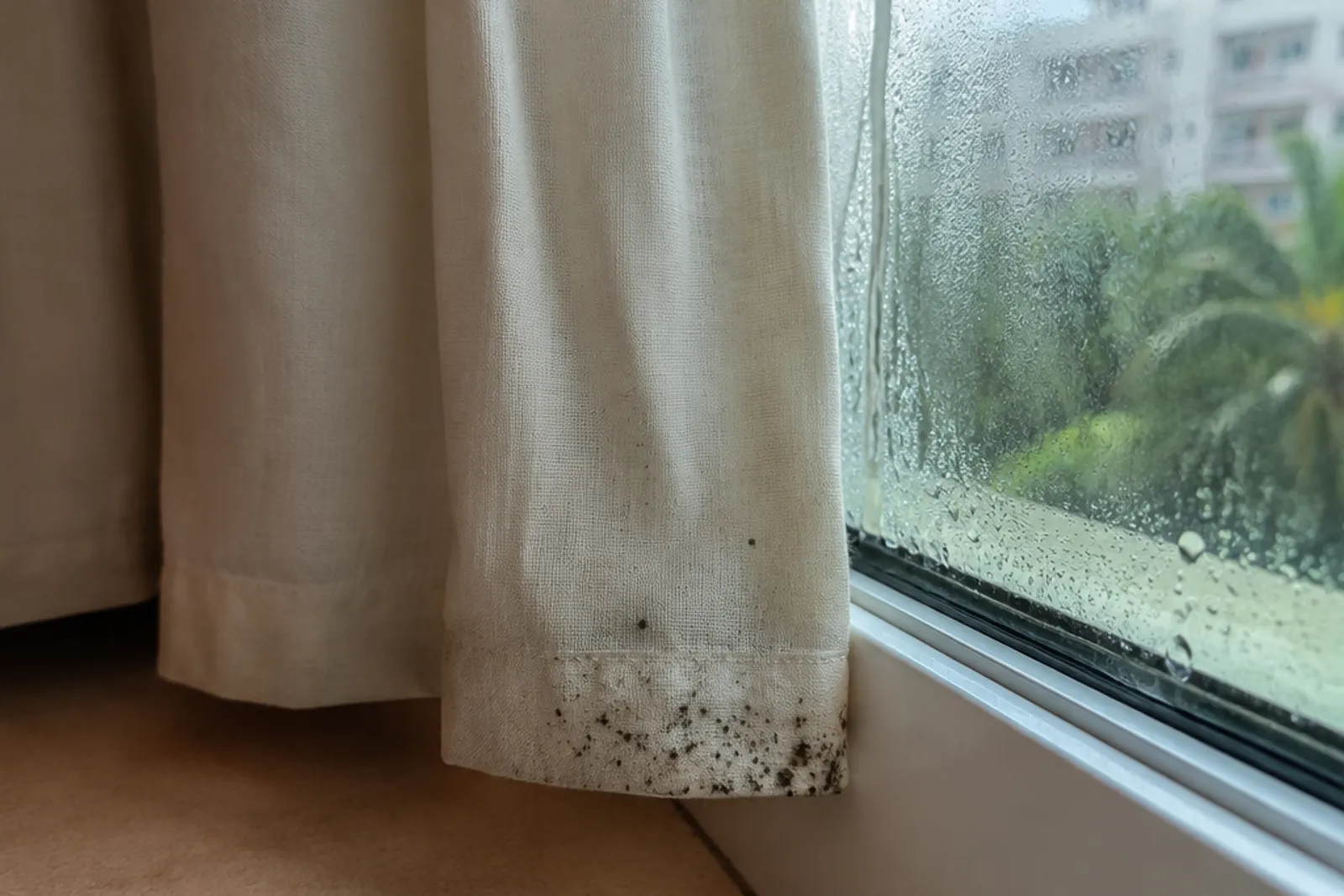 Why Curtains Get Mouldy in Singapore and How to Stop It
 Types of Blinds in Singapore: 9 Options Compared
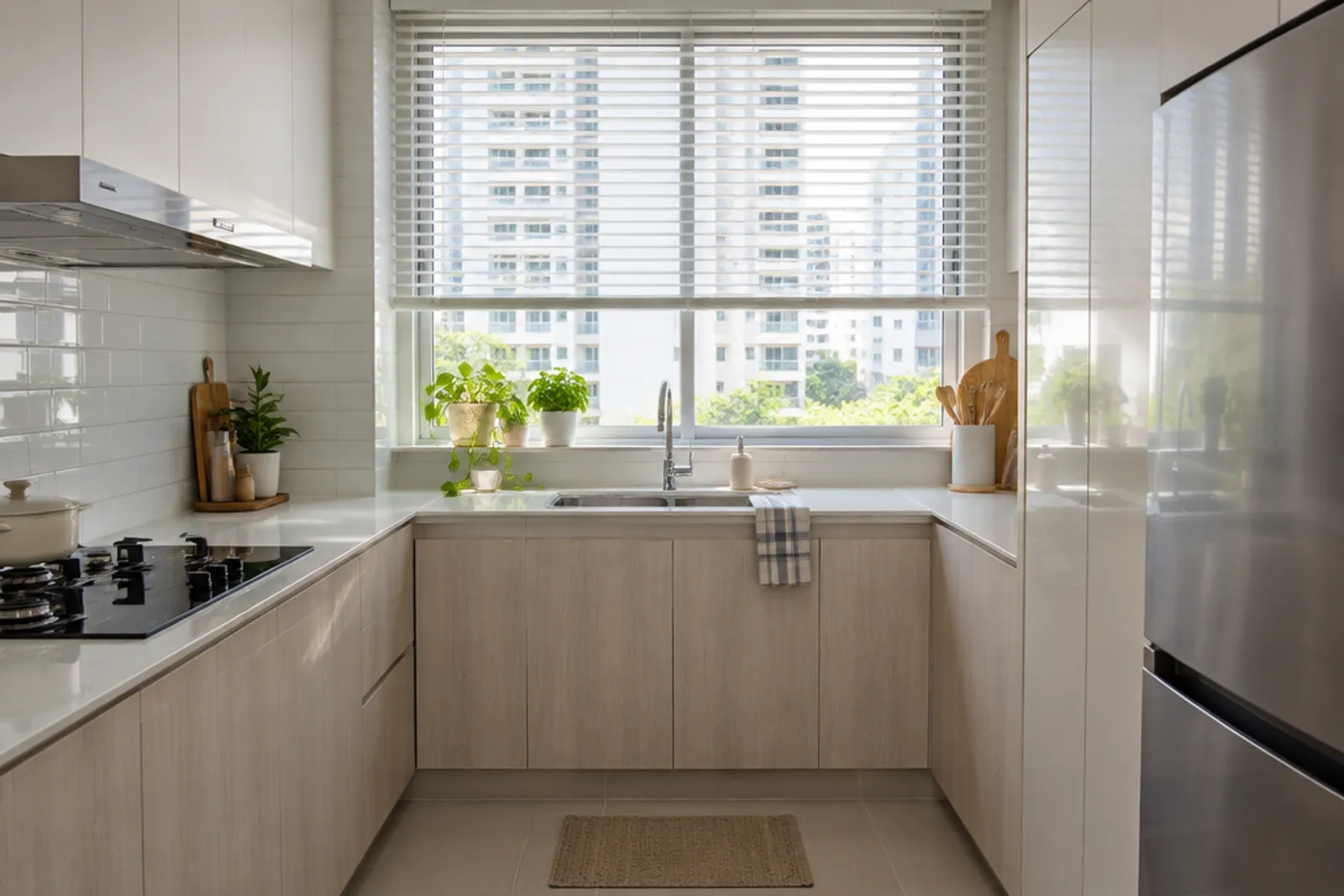 8 Kitchen Window Ideas for HDB and Condo Kitchens