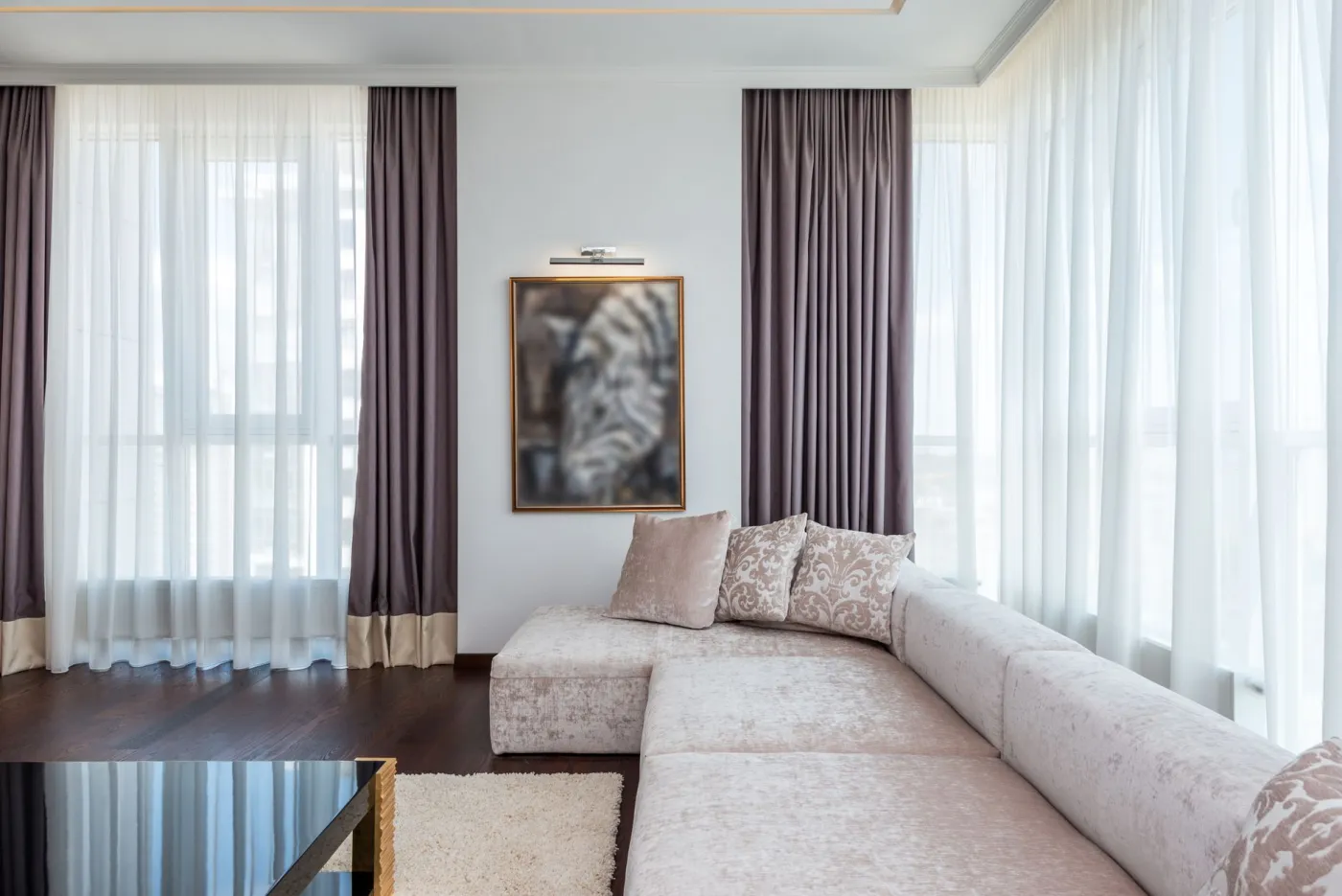
A curtain pelmet, usually called a curtain box in Singapore, is a box fixed at the ceiling that hides the curtain track and cuts light spilling over the top. As a rough guide, a single track needs around 15cm of internal depth and a double track around 20 to 25cm or more, but confirm the figure with your curtain installer once the track and heading are chosen.
Your ID has sent the carpentry drawings for your BTO or condo renovation, and there is a line item called “curtain box” over every window. Nobody has chosen the curtains yet. This is the moment to decide how deep that box needs to be, because once it is built and painted, the box sets the limits on which tracks and headings will fit.
What a curtain pelmet or curtain box does
A pelmet is a covering that sits over the top of the curtain and hides the track. In Singapore, the built version is usually called a curtain box. It is usually a three-sided box of plywood or gypsum board fixed to the ceiling, with the track mounted inside it.
A curtain box does three jobs.
It hides the track, gliders and hooks, so the room looks cleaner when the curtains are open.
It reduces light leaking over the top of the curtain. With a track fixed to the ceiling inside a box, there is less gap for morning sun or corridor lights to come through. It helps most in a bedroom with blackout curtains, where the top edge is often where the remaining light gets in.
It gives the curtains a defined line at ceiling height, which makes the drop look intentional, especially on full-height windows.
A curtain box does not make a curtain blackout by itself. Light still comes in at the sides and where the panels meet. The box helps with the top edge only.
Built-in curtain box or fabric pelmet
There are two main types.
Built-in curtain box. This is carpentry work, usually done by your ID or carpenter during renovation. It is painted to match the ceiling and looks like part of the room. It is the more common choice in new HDB flats and condos because it is planned alongside the false ceiling and lighting.
Fabric pelmet. This is a board or frame covered in fabric, sometimes matching the curtains, fixed above the window. It is more decorative and more traditional. It can be added after renovation without carpentry, but it shows as a visible feature rather than blending into the ceiling.
Most modern Singapore homes go with a built-in box painted white. A fabric pelmet suits a room where you want the window treatment to look more formal, or where carpentry is no longer practical.
Pelmet, valance or curtain box
The three terms get mixed up on quotations.
A valance is a short length of fabric that hangs across the top of the window, in front of the curtain heading. It can be gathered, pleated or shaped, and it is soft rather than rigid. Valances are uncommon in new HDB flats and condos, though you will still see them in older resale flats and in more traditional interiors.
A pelmet is rigid. It can be a plain painted box, a board covered in padded fabric (an upholstered pelmet), or a board cut into a curved or stepped lower edge (a shaped pelmet). The painted box is what Singapore IDs build as a curtain box. Upholstered and shaped pelmets are decorative and suit a formal room.
A valance does little to block light at the top. A pelmet or box fixed against the ceiling does more, because it closes the gap between the track and the ceiling.
How deep should a curtain box be
Depth is the measurement that matters most, and the one most often under-sized. The box has to hold the track, the carriers and the curtain heading, with enough clearance that the fabric does not rub against the box or the window.
As general guidance, a single track usually needs a box that is noticeably deeper than the track itself, often somewhere around 15cm of internal depth. A double track, for a sheer and a night curtain, needs room for two rails side by side plus a gap between the layers, so it is often around 20 to 25cm or more.
S-fold curtains need extra allowance because the waves project forward and backward from the track. A pinch pleat curtain sits flatter. If you are planning S-fold on a double track, ask for more depth rather than less.
These are typical figures, not a specification. The right depth depends on the track system, the heading, the fabric thickness and whether a window handle or air-con trunking sits close to the glass. Our curtain track guide covers the different rails. The safest approach is to choose the track and heading first, then give the carpenter the depth your curtain installer asks for.
Length matters too. Extend the box past the window frame on each side so the curtains can stack beside the glass when open. If the box stops at the frame, the stacked fabric covers part of the window.
False ceiling curtain pockets
Some homes have a recessed curtain pocket built into the false ceiling instead of a box that hangs below it. The track sits in a slot inside the ceiling line, so from the room you see only the curtain dropping from the ceiling.
This gives the cleanest look and is common in condos with a full false ceiling. The same depth rules apply. A pocket that is too shallow cannot take a double track, and it is hard to change once the ceiling is closed and painted.
Check what the track will be fixed to. Gypsum board on its own may not be strong enough to hold a heavy lined curtain. The carpenter should add a timber packer or fix the track to the concrete slab above. Tell your ID the weight of curtain you are planning.
Curtain boxes room by room
In the living room, the box usually runs the full width of the window wall or the balcony door, with a double track for a sheer and a dim-out curtain. Running it wall to wall also hides any uneven plaster above the window and makes the room look wider. Plan length with our curtain track length calculator so the stack clears the glass.
In the master bedroom, a box helps most by cutting light over the top of a blackout curtain. Ask for enough depth for a sheer plus blackout if you sleep with a sheer drawn in the day.
In a kids’ room, a box keeps the track and hooks out of reach and keeps the room darker for naps. A single track is often enough.
In a study, a box is optional. Many owners use a blind inside the recess instead, which needs no box at all. In kitchens and bathrooms, skip the box and use a blind.
Motorised tracks in a curtain box
A motor sits at one end of the track and needs a power point close to it, usually hidden inside the box or the ceiling. The box must be long enough at that end to hide the motor and deep enough for the motor head. If you think you might add a motor later, ask your electrician to run a power point to the box during renovation and leave it capped. Our smart curtains guide explains the wiring.
When to skip a curtain box
A curtain box is not always needed.
You may want to skip it if you are renting and cannot make carpentry changes, if the window is small and a simple rod looks better, or if you have chosen eyelet curtains, which hang on a visible rod and cannot sit inside a box.
Think twice in a room with a low ceiling. A box that drops below the ceiling line takes some height from the window, and a ceiling-mounted track with a neat heading may look better.
Household shelter bedrooms need care. SCDF and HDB allow drilling into the internal face to a depth of not more than 50mm, with non-metallic inserts and removable screws, and fixtures have to come down within 48 hours if you are told to clear the shelter. A permanent curtain box is usually not the right fit there.
For newer HDB bedrooms with ferrolite partition walls, HDB notes say not to drill within 200mm of the ceiling or beam. Fix to the concrete slab or a packed pelmet instead.
Curtain pelmet without a false ceiling
You do not need a false ceiling to have a curtain box. In most flats the box is built as a standalone piece of carpentry, fixed straight to the concrete slab and painted the ceiling colour, so it reads as part of the ceiling. The track then screws into the box, or through it into the slab.
The same depth guidance applies: around 15cm inside for a single track and 20 to 25cm or more for a double track. Extend the box past the frame on each side so the curtains stack off the glass. If you want no carpentry at all, a ceiling-mounted track with the heading set to cover the rail gives a similar clean line without a box.
Curtain pelmets in HDB flats
In BTO and resale flats, the curtain box is usually part of the ID’s carpentry package and is fixed to the concrete ceiling. HDB ceilings are not especially high, so a box that drops well below the ceiling line takes noticeable height off a full-length curtain. Keep the drop shallow and the depth generous.
Two rooms need extra care. Household shelters have strict drilling limits, so a permanent box is usually not the right fit there. Bedrooms with ferrolite partition walls should not be drilled within 200mm of the ceiling or beam, so fix the box to the slab instead. Our BTO curtains checklist lists what to settle before key collection.
Curtain pelmet with LED lighting
Some IDs build a cove light into the curtain box: an LED strip set along the top or front of the box that washes light up onto the ceiling or down over the curtain. It gives soft evening lighting and makes the window wall look taller.
Plan it with the curtains. The strip needs its own space so the heading does not block or rub against it, which usually means a slightly deeper box or a separate ledge in front of the track. The electrician has to run power and a driver to the box during renovation, and if you might add a curtain motor later, plan that power point at the same time. An aluminium channel with a diffuser gives a cleaner line than a bare strip.
Common questions
Is a curtain pelmet the same as a curtain box?
In Singapore, people use the two terms for much the same thing. “Curtain box” usually means a built-in carpentry box. “Pelmet” can mean that, or a decorative fabric-covered board.
Can I add a curtain box after renovation?
Yes. A carpenter can build and fix one later, but it will need painting and it may not line up as neatly with lighting or a false ceiling. A fabric pelmet is another option.
Do I need a curtain box for blackout curtains?
It is not required, but it helps by cutting light at the top of the curtain. Side gaps and the centre overlap still need attention.
What is the difference between a pelmet and a valance?
A pelmet is rigid, usually a box or a board, and fixed at the top of the window. A valance is a soft strip of fabric hung across the top. A pelmet blocks more light at the top edge and suits modern flats better.
Should the curtain box run the full width of the wall?
In living rooms it often does, because it gives a clean line and lets curtains stack well clear of the glass. In bedrooms, a box that extends past the frame on each side is usually enough, unless the window is near a corner.
What if my curtain box is too shallow?
A shallow box may only fit a single track, or a slimmer heading. Some installers can mount the second layer on the wall or ceiling in front of the box. Check the depth before choosing fabrics.
Is a curtain pelmet necessary?
No, a curtain pelmet is optional. It helps most in a bedroom with blackout curtains, where it cuts light over the top of the track, and in rooms where you want the track hidden. A slim ceiling-mounted track with a heading that covers the rail does a similar job without any carpentry.
Are curtain pelmets still fashionable?
Plain built-in curtain boxes painted to match the ceiling are still common in new HDB flats and condos, because they hide the track and give a clean line at the ceiling. Fabric pelmets, upholstered boards and shaped pelmets are less common now and suit a formal or traditional room rather than a modern flat.
What are some alternatives to curtain pelmets?
A ceiling-mounted track with the heading set to cover the rail is the most common alternative. Others are a recessed pocket in the false ceiling, a soft fabric valance, or a decorative rod with eyelet or ring-top curtains. For a small window, a blind inside the recess needs no box at all.
How do I hang a pelmet for my curtain?
A built-in curtain box is fixed to the ceiling slab by a carpenter, with the track screwed inside it. A fabric pelmet board is usually fixed to the wall above the window on brackets, deep enough to clear the track and the stacked curtain. Check shelter and ferrolite wall drilling limits before anyone drills.
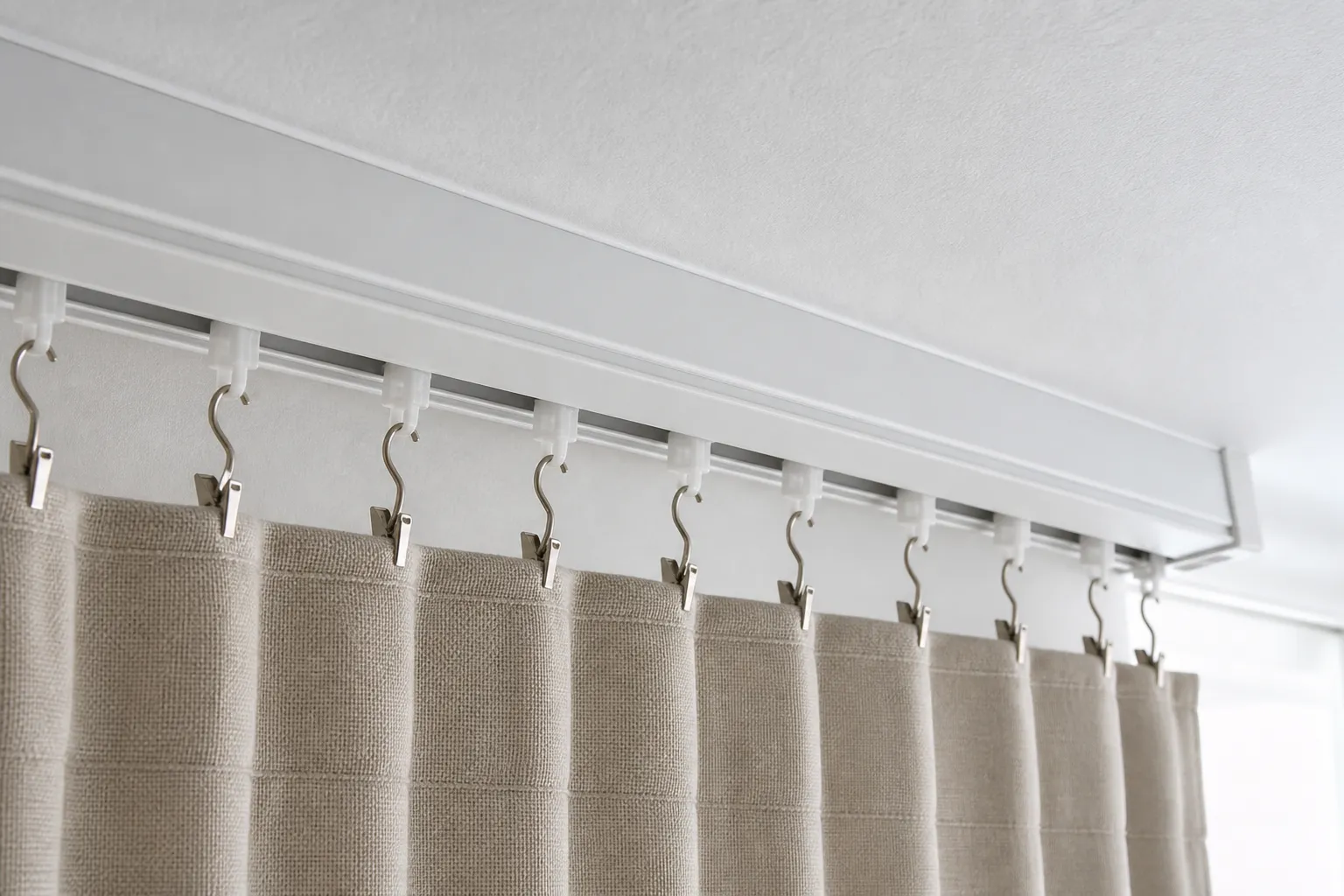 How to Choose a Curtain Track in Singapore
 Day and Night Curtains: Layering Sheers with Blackout in Singapore
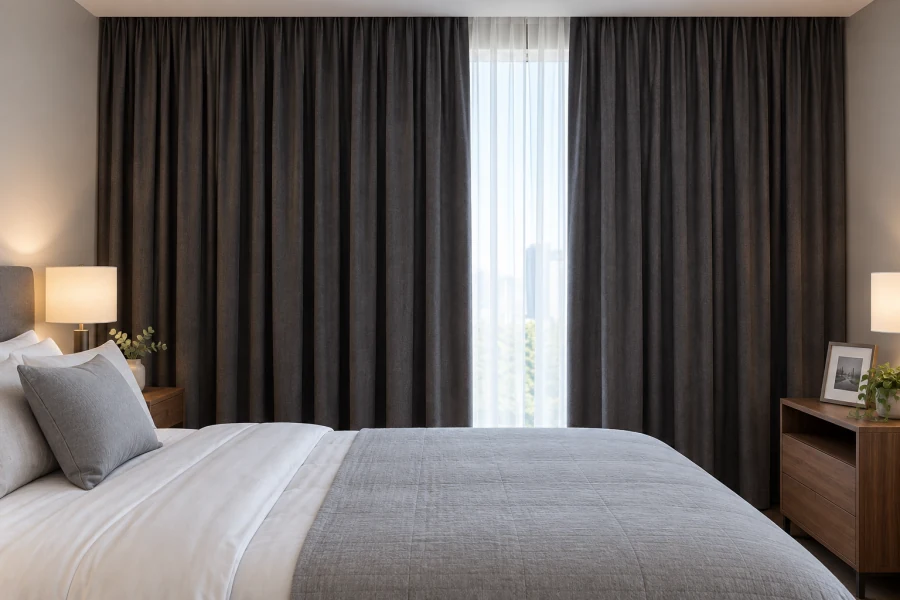 Blackout vs Dim-Out Curtains: Which Do You Need?