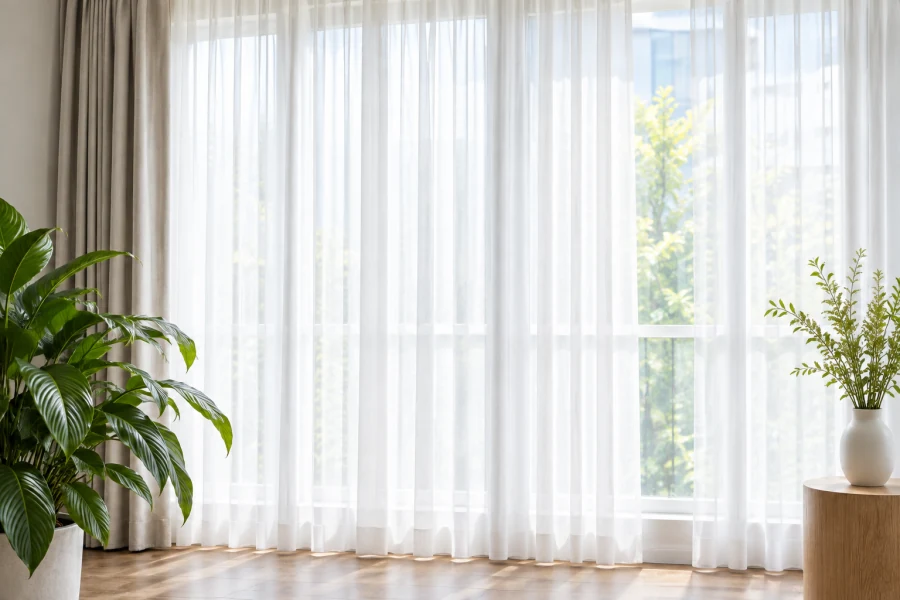
Your living room faces the next block, and the master bedroom gets the west sun from mid-afternoon. During the day you want light without neighbours looking straight in. At night you want the bedroom dark enough to sleep with the aircon on and the corridor lights out of sight. One curtain cannot do both jobs well. That is why many Singapore homes hang day and night curtains: a sheer layer and a heavier night layer on the same window.
What day and night curtains are
Day and night curtains are two separate curtains hung on two parallel tracks over one window.
The day curtain is a sheer or semi-sheer fabric. It softens daylight, cuts glare and gives some privacy while still letting the room feel bright. Our day curtains and sheers page explains the different sheer weaves.
The night curtain is a heavier fabric, often a blackout curtain or a dim-out fabric with lining. It is drawn in the evening for privacy and darkness.
You use them independently. In the morning you open the night curtain and leave the sheer drawn. At night you close both.
The double track
Both layers need their own rail. The usual set-up is a double track: two tracks fixed side by side on the ceiling or inside a curtain box.
The two tracks need a gap between them so the curtains do not rub when you draw one past the other. The exact spacing depends on the track system and heading. S-fold curtains, for example, project further from the rail than pinch pleat, so they need more clearance. Our curtain track guide covers the different rails.
If you are planning a curtain box, it must be deep enough for both tracks and both headings. A box built for a single track often cannot take a second one. Tell your ID you want day and night curtains before the carpentry is done.
Which layer goes in front
There are two common arrangements, and both work.
Sheer at the back, night curtain in front. The sheer sits on the track closer to the window and the night curtain sits on the track closer to the room. This is the more common layout. The night curtain closes over the sheer, and the sheer is protected from some direct sun by its position. When both are open, the night curtain stack sits in front of the sheer stack.
Night curtain at the back, sheer in front. The heavier layer sits closer to the glass and the sheer faces the room. During the day you see only the soft sheer, and the night curtain stack is partly hidden behind it. Having the blackout layer nearer the window can also help a little with light at the top and sides. The trade-off is that the sheer takes more of the daily handling, since you open and close the night curtain by reaching behind it.
Neither layout is wrong. Choose based on which layer you want to see most of the time, and which one you will draw more often.
Plan the stack space
When curtains are open, the fabric gathers into a stack at the side of the window. With two layers, you have two stacks, one in front of the other.
If the track stops at the edge of the window, those stacks cover part of the glass. On a window you want to see out of, extend the track past the frame so the stacks can sit beside the window instead of in front of it. This matters most on balcony doors and full-height living room glass, where you also need a clear walkway.
Also decide which way each curtain opens. A centre split, with panels opening to both sides, gives two smaller stacks. A one-way draw gives one larger stack. Write it down for each window before measuring.
Pairing the fabrics
The two layers are seen together, so they should look like they belong together.
Most people pick a sheer in white, off-white or a light neutral, then choose a night curtain in a colour that suits the room. A warm white sheer next to a cool grey blackout can look slightly mismatched in daylight, so view swatches together at the window rather than separately in a showroom.
Match the heading where you can. If both layers use S-fold or both use pinch pleat, the stacks line up neatly. Mixing headings is possible, but the layers will fold differently.
Think about weight. A lined blackout curtain is much heavier than a sheer. The track holding it needs to suit that weight, especially on a wide window. A textured fabric such as linen can work for either layer, depending on the weave and lining.
If you are considering motorised curtains, decide now. You can motorise one layer or both, and that changes the track. Our smart curtain guide explains the options.
Privacy at night with sheers
This is the most common surprise. A sheer gives good privacy during the day because the outside is brighter than the room. At night, with lights on inside, that reverses. People outside can often see into a lit room through a sheer, especially a fine or very light one.
If your windows face another block, plan to close the night curtain after dark. A denser sheer or a semi-sheer gives more privacy than a fine voile, but it will also let in less daylight. Ask to see sheer samples held against a lit lamp, not only against daylight.
Common questions
Can I add a sheer layer to an existing single track?
Usually you need a second track. Some installers can fix a second rail in front of or behind the existing one, but if the track sits inside a shallow curtain box, there may not be room.
Do day and night curtains make a room fully dark?
The night layer does most of the work. A blackout fabric with a ceiling track, a curtain box and enough overlap at the sides gives the best result. The sheer adds little to darkness.
Should both layers be the same length?
Usually yes, so they finish at the same line near the floor. Some people hang the sheer slightly shorter so it does not catch on the night curtain hem.
Are day and night curtains worth it for a bedroom?
For a bedroom that faces another block or gets strong afternoon sun, they give you a bright, private room in the day and a darker room at night. In a room you only use at night, a single blackout curtain may be enough.
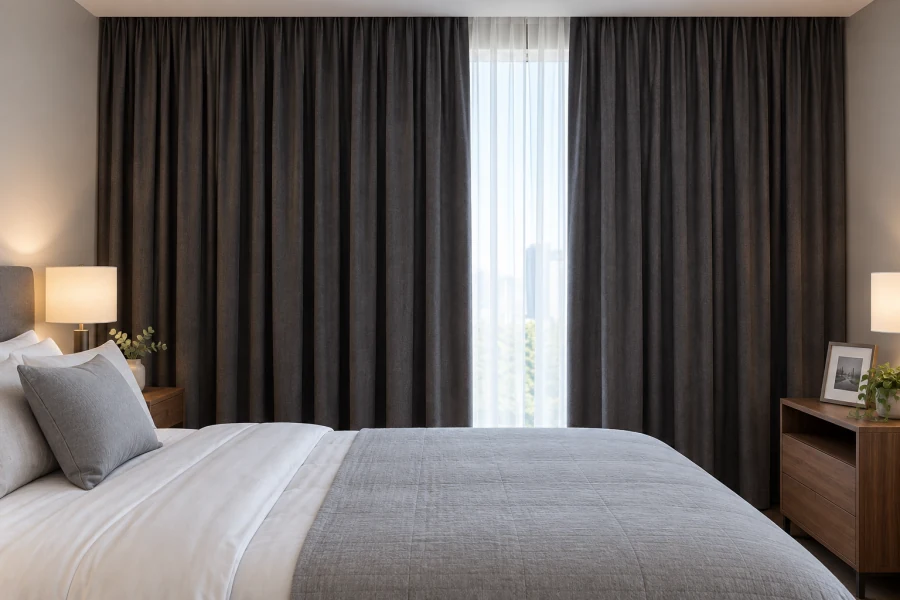 Blackout vs Dim-Out Curtains: Which Do You Need?
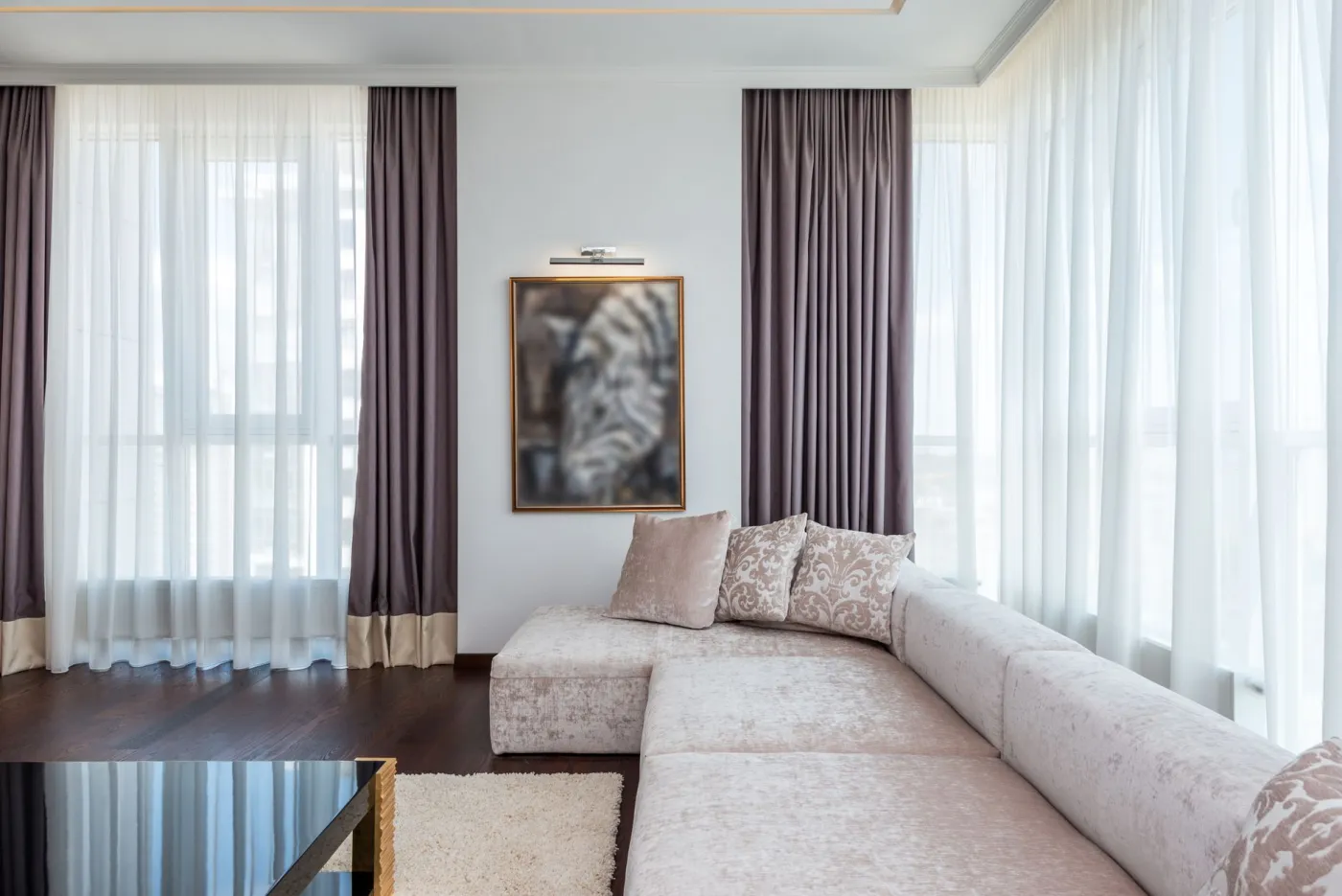 Curtain Pelmets and Curtain Boxes in Singapore Homes
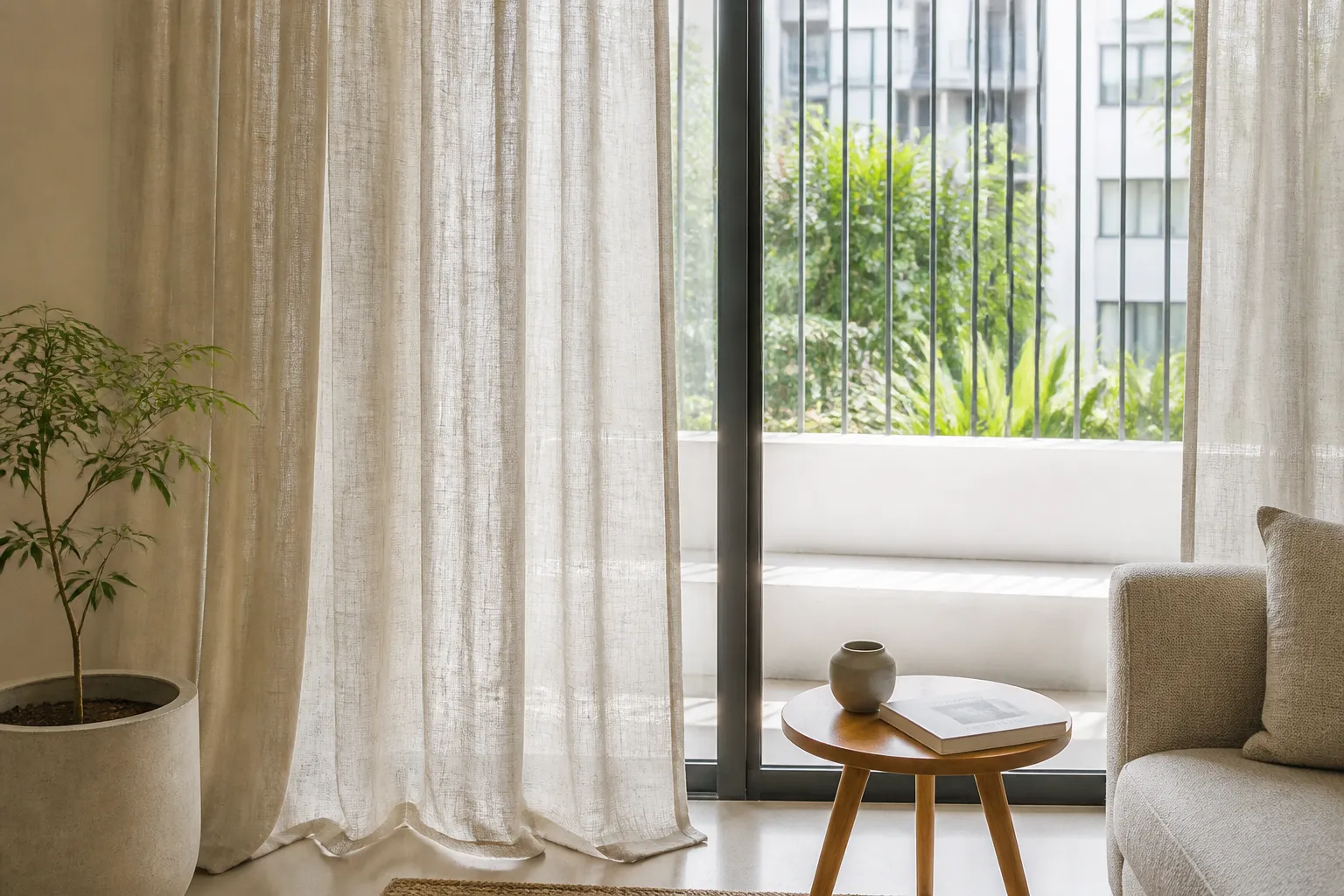 Linen or Polyester Curtains in Singapore Humidity?