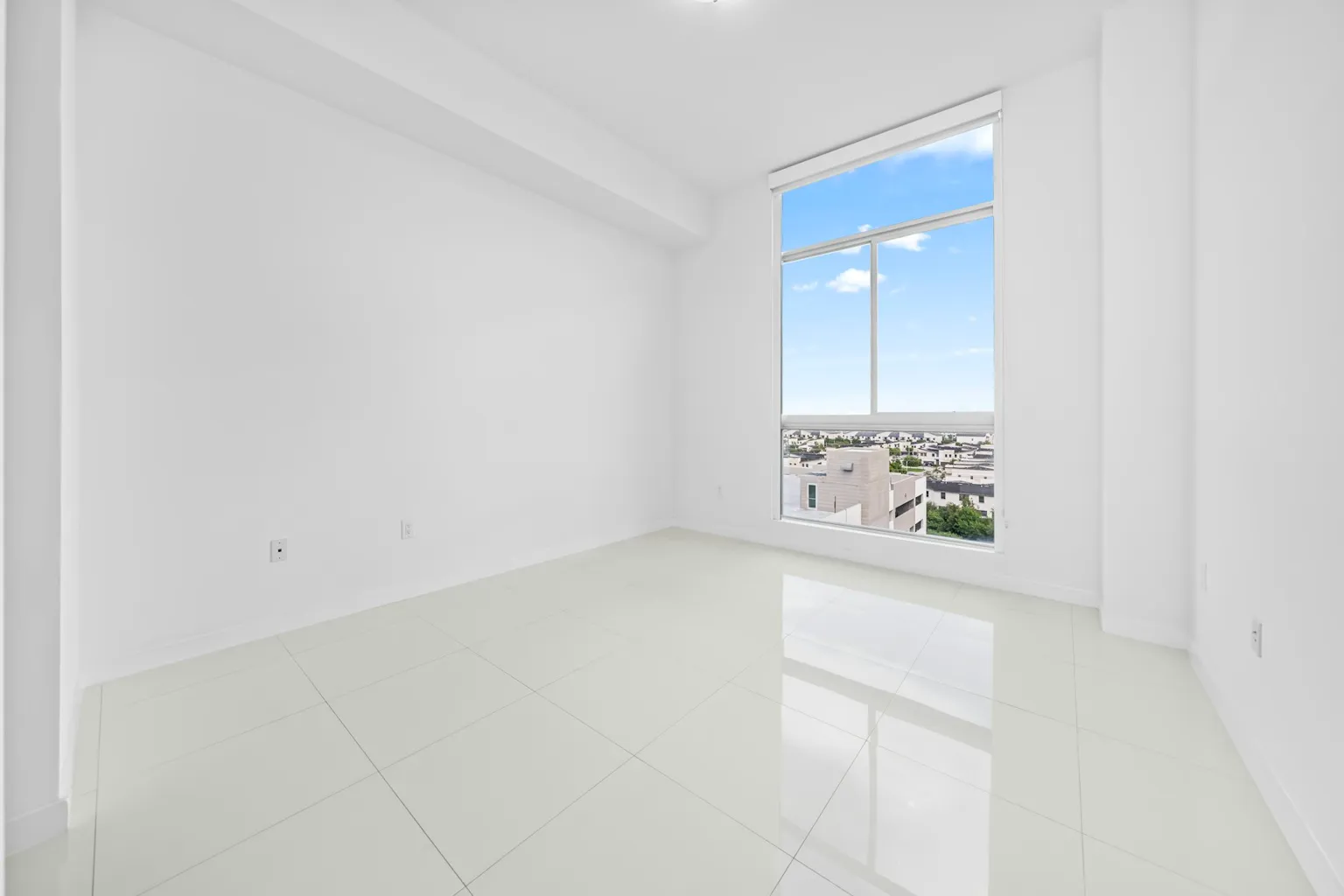
Your BTO key collection date is a few months away. The ID has sent a floor plan with carpentry, lighting points and a false ceiling in the living room, and somewhere near the bottom of the quotation is a line for curtains. It is tempting to leave that line until the end, since curtains go up last. The trouble is that a few curtain decisions affect the ceiling, the wiring and the carpentry, and those need to be made while the contractor is still working. This checklist follows the order a typical renovation runs in, so each decision comes up before it gets expensive to change.
Before key collection
At this stage you only have the floor plan and the unit’s orientation, but you can already sort out what each window needs to do.
- Note which way each window faces. A west-facing living room takes afternoon sun all year in Singapore, and an east-facing bedroom gets bright early.
- Check what each window looks out on. A bedroom facing the corridor or the next block’s kitchens needs privacy at night as well as during the day.
- Decide which rooms need darkness. Master bedroom and children’s rooms usually do. The living room usually needs softened light and glare control instead.
- Mark the windows where furniture will sit underneath, such as a desk, a bed headboard or a built-in cabinet. These may suit a shorter curtain or a blind.
- List the wet areas. Kitchen, bathrooms and the service yard usually take blinds rather than fabric curtains.
Bring this list to your first meeting with the ID. It gives them enough to plan curtain boxes and ceiling heights without guessing.
During renovation: track or curtain box
The biggest curtain decision during renovation is how the track is mounted. You have three common options.
A curtain box (sometimes called a pelmet) is a recess or boxed-in channel built into the false ceiling or carpentry. The track sits inside it and the top of the curtain is hidden. It gives a clean line and cuts the strip of light above the curtain, which suits bedrooms. It has to be built during renovation, and it needs enough depth for the number of tracks you want. Our curtain pelmet guide explains the sizes and finishes.
A ceiling-mounted track fixes straight to the ceiling or the false ceiling. There is no carpentry involved, but your contractor should know where it goes so the false ceiling has backing at that line.
A wall-mounted track or rod fixes above the window frame. It needs no ceiling work and suits rooms without a false ceiling, though it leaves a gap above the fabric where light comes through.
Decide this room by room with your ID before the false ceiling goes up. If you want a sheer and a blackout layer on the same window, tell them now, because a curtain box built for one track is too shallow for two. Motorised tracks also need a power point near one end of the box, and that wiring has to be run before the ceiling is closed.
After the false ceiling and windows are in
Once the false ceiling, curtain boxes and window grilles are finished, the window openings are final and measurements can be taken. Measuring from the floor plan is not enough, because the drop to the floor changes once the ceiling height and flooring are set.
Measure these for each window.
- The width of the track line, inside the curtain box or across the ceiling, including how far it extends past the window on each side.
- The drop from the track position to the finished floor, taken at both ends and the middle, since floors and ceilings are rarely perfectly level.
- The depth of each curtain box, so the curtains and any second track fit.
- Any obstructions such as aircon trunking, switches, grilles, window handles and built-in furniture near the window.
If your flooring is not yet laid, wait or confirm the finished floor height with your contractor. A full-length curtain measured to bare screed will sit off the floor once vinyl or tiles go down. Our guide on how to measure windows for made-to-measure curtains walks through each measurement.
Before move-in
Made-to-measure curtains take time to sew after measuring, so book this step early enough that they are ready when you move. Installation is best done after painting and the final clean, and before the furniture arrives, so the installer can reach every window.
On installation day, check that each curtain clears the floor evenly, overlaps the window at the sides when closed, and stacks clear of the glass when open. Run motorised tracks a few times and confirm the remote or app pairing works.
Day and night layers by room
A BTO flat usually faces other blocks, so many owners use two layers. A sheer stays drawn in the day for privacy and soft light, and a dim-out or blackout curtain closes at night. Our day and night curtains guide covers the double track in detail.
| Room | Day layer | Night layer | Mounting to plan with the ID | Notes |
|---|---|---|---|---|
| Living room | Sheer | Dim-out | Ceiling track or double-track curtain box | Extend the track so open curtains clear the glass |
| Master bedroom | Sheer (optional) | Blackout | Curtain box deep enough for two tracks | Generous side overlap for a darker room |
| Common bedroom | Sheer (optional) | Blackout or dim-out | Curtain box or ceiling track | Shorter curtain if a desk or bed sits under the window |
| Study | None, or a light sheer | Dim-out | Ceiling or wall track | Glare control for screens |
| Kitchen | Blind | Blind | Recess or face fix on the window frame | Roller or venetian blinds clean more easily |
| Bathroom and service yard | Blind | Blind | Recess fix | Choose a moisture-tolerant material |
Blinds for the kitchen and bathroom
Fabric curtains near a stove or sink pick up grease and splashes, and in a bathroom they stay damp. Blinds are usually the better fit in these rooms. Aluminium or PVC venetian blinds and roller blinds in a wipeable fabric are common choices. They mount inside the window recess or on the frame, so they do not need a curtain box, but tell your ID if the window sits behind a kitchen cabinet or tap so the blind can clear it.
Budget priorities
When the renovation budget gets tight, curtains are often where owners try to save. Some areas give you more for the money than others.
Spend on the bedrooms first. Blackout fabric and good side coverage affect your sleep every night, and a poor fit there is the most noticeable. Next comes the living room, especially if it faces west or looks across at another block. A study or spare room can start with a simpler single layer and get a sheer added later, as long as the curtain box was built for two tracks.
Ready-made curtains can work for a spare room or a standard window, but BTO windows and ceiling heights vary enough that full-length curtains often need to be made to measure. Our guide to BTO and HDB curtains explains what a made-to-measure order for a new flat includes, which also helps when comparing a BTO curtain package from your ID or another supplier. Ask any package quote to list the fabric type, lining, track and installation for each window so you can compare like with like.
Common mistakes
- Building a single-track curtain box, then deciding later to add a sheer.
- Forgetting the power point for a motorised track until after the false ceiling is closed.
- Measuring before the flooring or false ceiling is finished.
- Stopping the track at the window frame, so open curtains cover part of the glass.
- Hanging fabric curtains in the kitchen or bathroom.
- Choosing every fabric from a swatch book under showroom lights without checking it at your own window.
Common questions
When should I order curtains for my BTO flat?
Plan the track positions and curtain boxes with your ID before the false ceiling goes up. Order the curtains once the false ceiling, windows and flooring are done, so the measurements are final.
Do I need a curtain box in every room?
No. Curtain boxes suit bedrooms, where hiding the top of the curtain and cutting light from above helps. A ceiling-mounted track works well in living rooms and studies, and kitchens and bathrooms usually take blinds instead.
Should I take the curtain package from my ID?
It can be convenient, but compare it against other quotes using the same details for each window: fabric, lining, number of tracks, mounting and installation. A package that lists only a total figure is hard to compare.
Can I install curtains myself in a new HDB flat?
You can, but drilling into a false ceiling or concrete needs suitable fixings, and the track has to be level for the curtains to run well. If you prefer not to drill, our guide on hanging curtains without drilling covers the options and their limits.
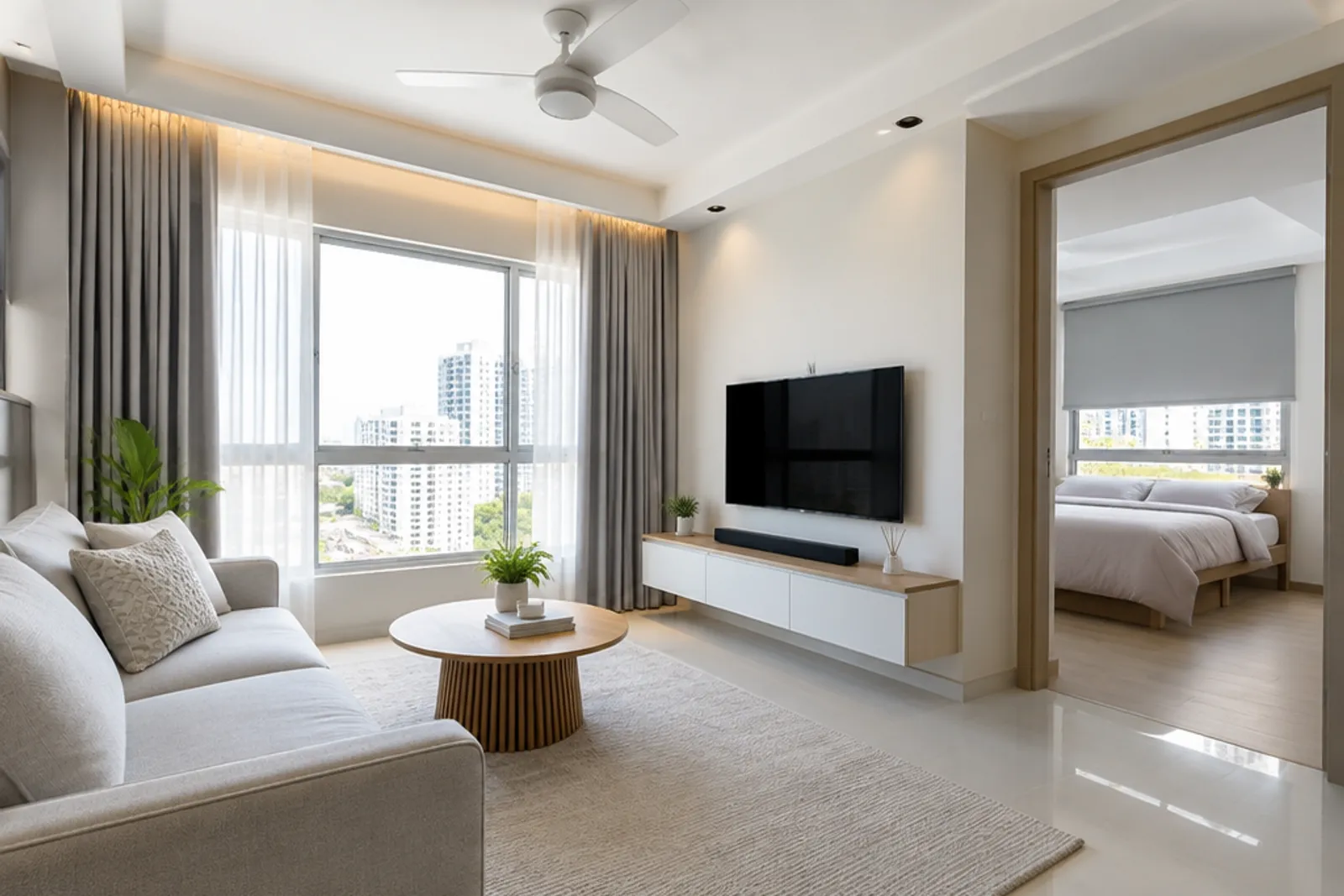 10 BTO Curtain Ideas by Room
 How to Measure Windows for Made-to-Measure Curtains in Singapore
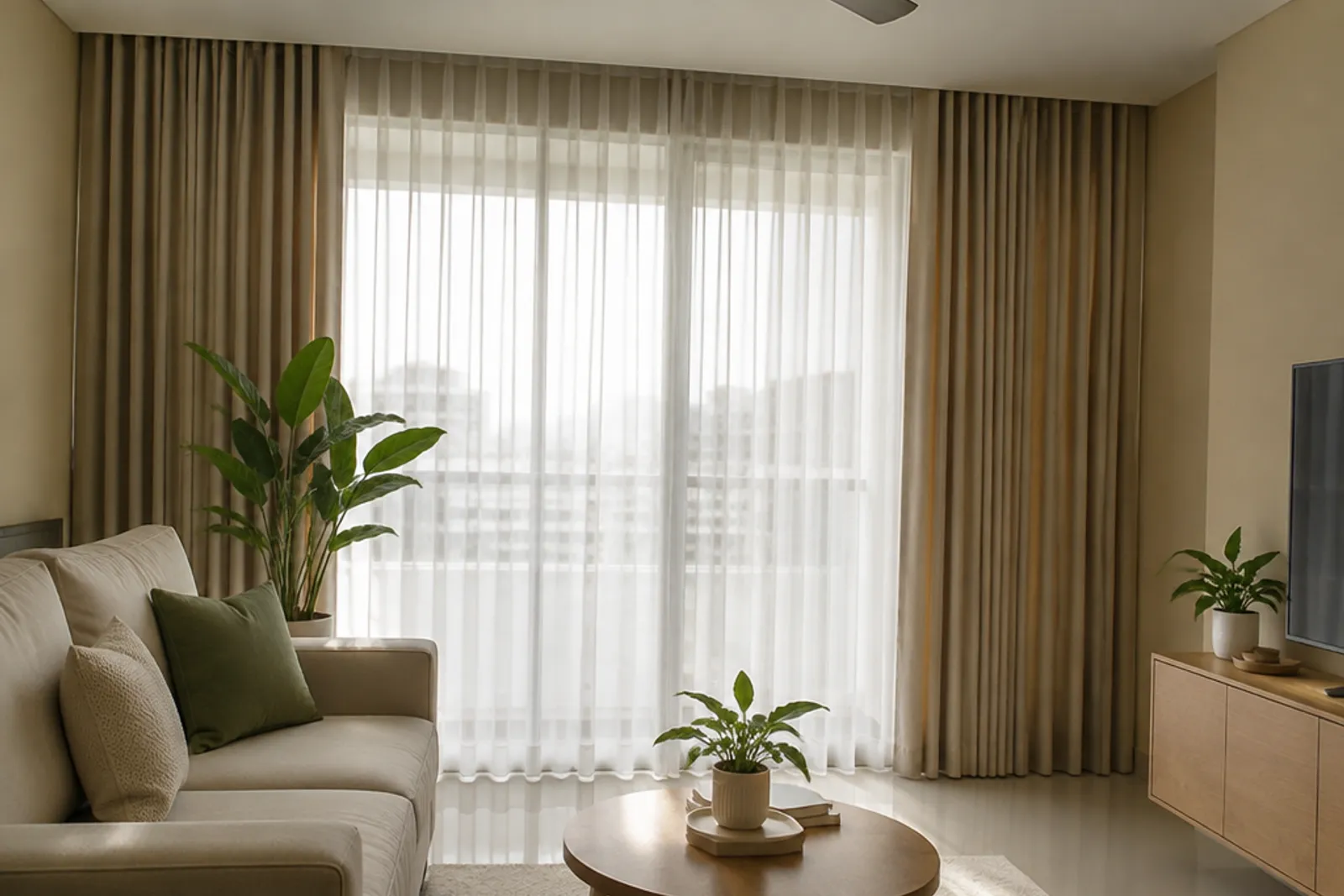 15 Living Room Curtain Ideas for Singapore Homes