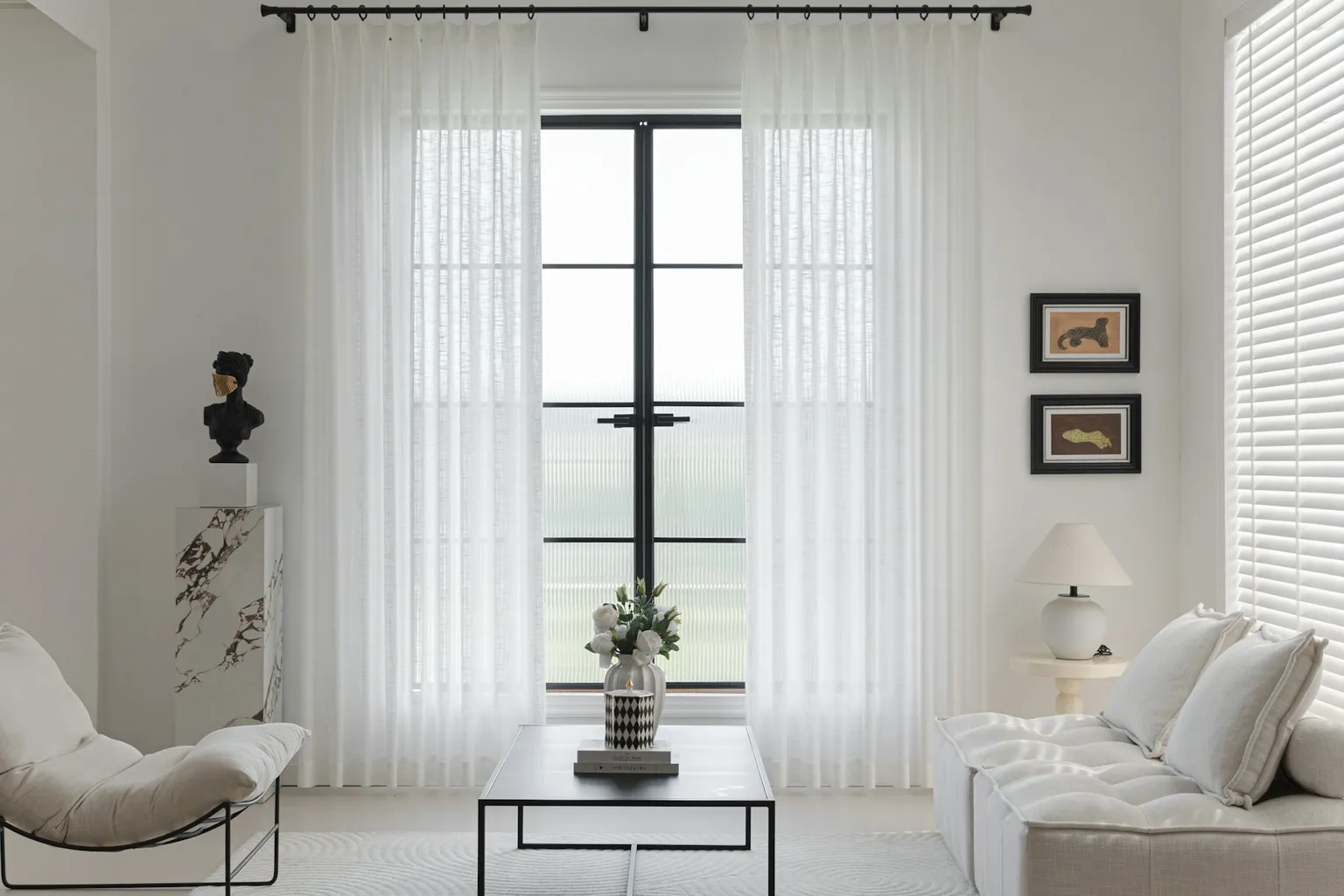
The curtains in style now in Singapore are full-height S-fold curtains on a ceiling track, a white sheer behind a dim-out or blackout layer, and linen-look fabric in warm neutrals. For blinds, Korean combi, timber-look venetian and soft Roman blinds are the common picks. Here are the 10 styles you will be shown most often, and which are likely to last.
Scroll through renovation photos of recently completed BTO flats and condo units, and the windows start to look alike. Curtains run from ceiling to floor in soft, even waves. Sheers stay drawn in the day. Fabrics have a slightly rough, linen-like texture in beige, oat or warm grey. In the kitchen and study, blinds with timber-look slats or alternating sheer and solid bands replace fabric. If you are choosing curtains now, these are the looks you will be shown most often. Some are likely to look current for a long time, and some are tied to the moment. If you want the full list of curtain types behind these looks, our types of curtains guide sorts them by fabric, heading and layout.
1. S-fold and ripple fold curtains
An S-fold (also called a ripple fold or wave fold) curtain hangs in even, rounded waves along its full width, both open and closed. The heading tape clips onto carriers in the track, spacing every fold the same. The result is tidy and modern, with no gathered pleats at the top.
S-fold suits ceiling tracks and curtain boxes, which is why it appears so often in new flats with false ceilings. It needs a compatible track, and it stacks neatly to the side. The trade-off is a less traditional look than pinch pleat, which some owners prefer in a formal living room. Our curtain headings guide compares S-fold, ripple fold, pinch pleat and eyelet.
2. Full-height, ceiling-mounted curtains
Instead of a rod just above the window frame, the track goes on the ceiling or inside a curtain box, and the curtain drops to just above the floor. This makes ceilings look higher and windows look wider, especially in HDB flats where ceilings are not very tall. It also cuts the strip of light above the curtain, which helps in bedrooms.
The catch is planning. A curtain box or ceiling track is easiest to arrange during renovation, and full-height curtains use more fabric than sill-length ones.
3. Layered sheers
A sheer stays drawn during the day, with a dim-out or blackout curtain on a second track for night. Flats facing other blocks get daytime privacy and soft light, and the sheer gives the window a light, finished look even when the night curtain is open. White and ivory sheers are the most common, since they suit any room colour and look consistent from outside.
4. Linen-look textures
Natural linen creases easily and can be fussy in humid weather, so many current fabrics are polyester or blends woven to look like linen, with a slightly irregular slub. They give the relaxed look of linen with easier upkeep. Our linen or polyester guide explains how each behaves in Singapore humidity.
5. Warm neutrals
Cool greys were common in flats renovated some years ago. The colours shown most often now are warmer: oat, sand, greige, taupe and soft white. They suit timber-look flooring and light carpentry. Warm neutrals are also easy to live with, since they go with most furniture and hide sun fading better than strong colours.
6. Korean combi blinds
Korean combi blinds (also called zebra or day and night blinds) have alternating bands of sheer and solid fabric in two layers. Line the bands up to let light through, or offset them to block the view. They give a clean, flat look in studies, bedrooms with a desk under the window, and smaller windows where a curtain would be too bulky. They do not darken a room as fully as a blackout curtain, so they suit rooms where some light at night is acceptable.
7. Timber-look venetian blinds
Venetian blinds with timber-look slats, usually in a faux wood or PVC material, add warmth to kitchens, studies and bathrooms where fabric is impractical. Faux wood copes better with humidity and splashes than real timber. Slats tilt to control light and privacy precisely, though they collect dust and take longer to clean than a roller blind.
8. Roman blinds in soft fabric
A Roman blind is a fabric blind that folds up in flat, even pleats when raised. It gives the softness of a curtain in the space of a blind, which suits a bedroom window over a bed, a study, or a small window in a living room where a full curtain would crowd the sofa. Current versions use the same linen-look and warm neutral fabrics as curtains, so a Roman blind in the study can match the curtains in the hall. Keep them away from the kitchen and bathroom, since fabric absorbs steam and grease.
9. Sheer curtains over a blackout blind
Instead of two curtain layers, some bedrooms now pair a sheer curtain on the ceiling track with a blackout roller blind fixed inside the window recess. The sheer gives the soft, full-height look in the day. The roller sits close to the glass and blocks light at night. This takes less depth than a double track, which helps when the curtain box is shallow, and it works well in BTO bedrooms where the window is set into a deep recess.
10. Motorised curtains and blinds
Motorised tracks and blinds open and close with a remote, an app or a schedule. They suit tall or wide windows, curtains behind a bed or sofa, and owners who want curtains to open at a set time. They need power near the track, which is far easier to arrange during renovation. Our smart curtains guide covers motor types, wiring and when they are a sensible choice.
Fullness and length that make a style look right
A style only looks like the photo if the curtain has enough fabric and the right drop. Thin, flat curtains are the most common reason a new flat’s windows look unfinished.
S-fold curtains look best with enough fabric for full, even waves. Pinch pleat needs a similar allowance for its pleats. Skimp on width and the folds stretch flat when closed. Our curtain calculator gives a fabric width for the fullness you choose.
For length, current Singapore flats mostly use a hem that just clears the floor. That keeps the hem out of dust and away from a robot vacuum, and looks tidy against vinyl or tile. A curtain that puddles on the floor looks soft in photos but collects dust and damp in a humid flat. Sill-length curtains now look dated in living rooms, though they still suit kitchens and small windows above a desk. The curtain length calculator shows how to measure the drop from your track.
Which styles suit HDB flats and condos
| Style | HDB flat | Condo | Lasting or trend-led |
|---|---|---|---|
| S-fold or ripple fold | Suits ceiling tracks and curtain boxes in new flats | Common with full-height windows | Likely to last; clean look |
| Full-height, ceiling-mounted | Makes standard ceilings look taller | Suits floor-to-ceiling glass | Likely to last |
| Layered sheers | Privacy from facing blocks | Privacy and glare control | Likely to last |
| Linen-look fabric | Easy care in humid rooms | Same | Texture lasts; exact shades may date |
| Warm neutrals | Works with timber-look vinyl | Works with most finishes | Neutrals last; specific tones shift |
| Korean combi blinds | Studies and smaller bedrooms | Studies and dens | More trend-led |
| Timber-look venetian blinds | Kitchens, bathrooms, studies | Same | Faux wood ages well |
| Roman blinds | Bedrooms and studies | Smaller windows and dens | Likely to last |
| Sheer over a blackout roller | BTO bedrooms with a deep recess | Bedrooms with a shallow box | Practical; likely to last |
| Motorised | Plan wiring during renovation | Often pre-wired or easy to add | Function, not a passing look |
Timeless or on trend
Styles tied to how a window works tend to last. Full-height curtains, layered sheers and S-fold headings solve practical problems with light, privacy and stacking, so they are unlikely to look wrong in ten years. Neutrals in general have a long life, even if the preferred shade changes from cool grey to warm beige and back.
Specific colours, bold patterns and particular blind finishes are more tied to the moment. If you like them, put them where they are easy to change, such as a blind in the study or a set of cushions, rather than in the largest curtains in the flat.
Common questions
What type of curtains are in style now?
Full-height curtains on ceiling tracks or in curtain boxes, with S-fold or ripple fold headings, are common in newly renovated Singapore flats. They are often paired with a white sheer and made in a linen-look fabric in a warm neutral.
What type of blinds are in style now?
Korean combi blinds and timber-look venetian blinds are widely used in studies, kitchens and bedrooms. Roller blinds in plain textured fabrics remain popular for a minimal look.
Are pinch pleat curtains outdated?
No. Pinch pleat is a more traditional heading that gives a fuller, tailored look that suits formal living rooms and classic interiors. S-fold looks more modern and suits ceiling tracks.
How full should modern curtains be?
Full enough that the folds stay rounded when the curtain is closed. Thin curtains with too little width look flat, especially with S-fold. Check the fabric width for your track with a curtain calculator before you order.
Should curtains touch the floor?
In most Singapore flats, a hem that just clears the floor is the current look. It keeps the curtain out of dust and damp. Puddled curtains look soft but need more cleaning in a humid home.
Is motorisation only for big windows?
No. It suits any window you open and close often or find hard to reach, such as one behind a bed. It is most convenient when the power point is planned during renovation.
Quiz
What's your curtain style?
Five quick picks. You get a style, the curtains that suit it and a look to copy. Open the full quiz
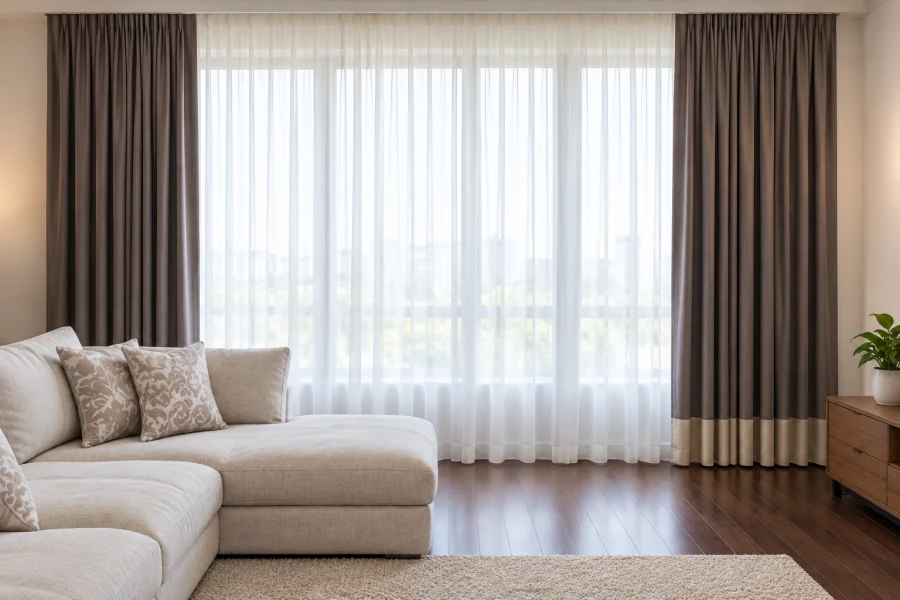 S-Fold vs Pleated Curtains in Singapore: Ripple Fold, Pinch Pleat or Eyelet?
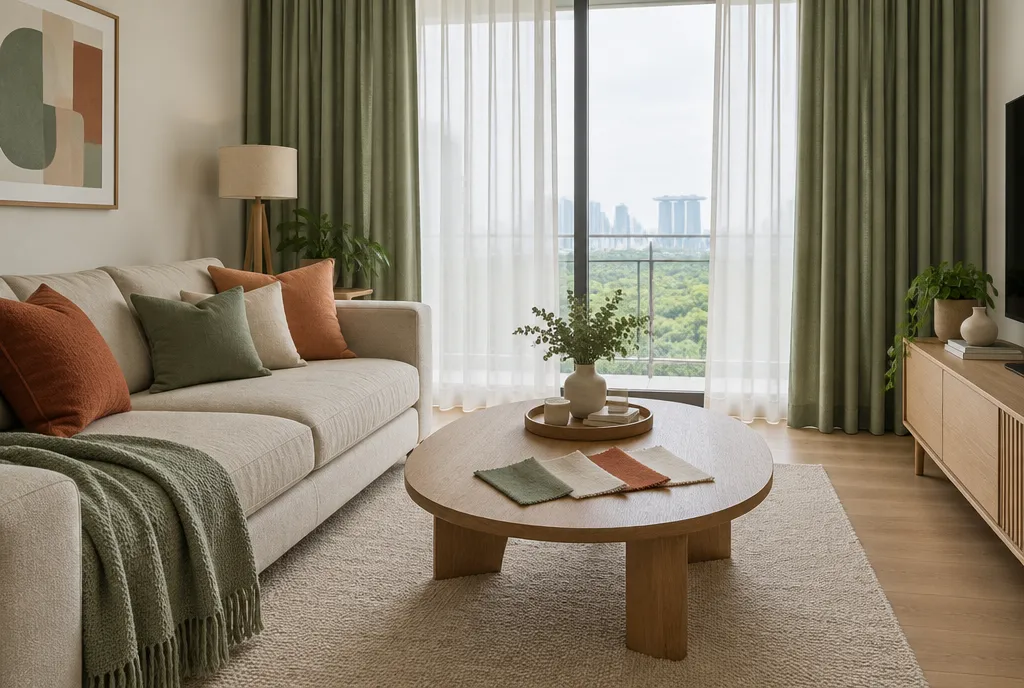 What Colour Curtains Should I Get? A Singapore Room Guide
 Blinds for Living Rooms in Singapore: Which Type Works