
You have chosen a fabric for the living room of your new BTO, and the next question on the quote is the heading: S-fold, ripple fold, double pleat, pinch pleat or eyelet. These sound like styling choices, but the heading also decides which track or rod goes up, how much fabric you pay for, and how much of the window the curtain covers when it is drawn open. Settle it before the carpenter builds a curtain box or anyone drills the ceiling.
S-fold curtains hang in an even, continuous wave on a dedicated track with linked carriers, and stack slim when open. Pleated curtains (pinch pleat or double pleat) have sewn folds at the top, hang on a standard track or rod, and look more tailored. Choose S-fold for a modern room and full-height glass, pleated for a classic look or an existing track.
What a heading actually does
The heading is the top section of the curtain, where it attaches to the track or rod. It sets the shape of the folds all the way down the drop.
It also sets the fullness. Fullness is how much fabric width goes into the curtain compared with the width of the track. A 2x fullness on a 3m track means roughly 6m of fabric across the curtains. More fullness gives deeper folds and a richer look. Less fullness looks flatter and uses less fabric.
Each heading has a range of fullness where it looks right. Too little and the folds collapse; too much and the curtain becomes bulky.
S-fold curtains in Singapore: how the ripple fold works
S-fold curtains hang in a continuous, even wave from one end to the other. Seen from above, the top of the curtain traces a row of S shapes. Ripple fold is the same family of heading, and many shops in Singapore use the two names interchangeably. Some suppliers use “ripple fold” for a system where the fabric snaps onto a cord between the carriers. The look is very similar.
What makes the wave even is the track. S-fold needs its own rail, where the carriers are linked at a fixed spacing by a cord or chain. That spacing controls the depth of each wave. You cannot hang S-fold tape on an ordinary glider track and expect the waves to hold, which is covered in more detail in our curtain track guide.
Fullness is usually set by the carrier spacing rather than chosen freely. Around 2x is a common starting point, and some suppliers make S-fold at 2.5x or more for a deeper wave. Your installer should confirm the figure for the specific track and fabric.
S-fold stacks neatly. When the curtain is open, the waves fold into a compact, tidy bundle. This is one reason it is popular for full-height living room glass and condo balcony doors, where you want the stack to sit out of the way.
The waves do project forward from the track. If the curtain is going into a curtain box, the box needs enough depth for the wave as well as the rail. Tell your ID or carpenter you are using S-fold before the box is built.
Pinch pleat and double pleat curtains
Pinch pleat is the classic tailored heading. The fabric is gathered into pleats sewn at regular intervals along the top, with flat sections between them. A triple pinch pleat has three folds in each pleat. A double pleat has two, which gives a slightly lighter, more modern look and uses a little less fabric. In Singapore listings, “double pleat” and “pinch pleat” are often grouped together because they hang on the same hardware.
Pinch pleat and double pleat use hooks on a standard track with gliders, or rings on a rod. A typical aluminium C-section ceiling track handles them well. This makes them a practical choice when a track is already installed and you do not want to replace it.
Typical fullness for pinch pleat is around 2x to 2.5x. Double pleat is often made at the lower end of that range.
The stack is a little fuller than S-fold at the same fullness, because the pleats hold their shape at the top. The folds below are less uniform than a wave, which reads as softer and more traditional.
S fold vs pleated curtains: the main differences
If you have narrowed it down to S-fold or a pleated heading, these are the points that usually decide it.
The look comes first. S-fold gives a smooth, even wave that looks the same from inside the room and from outside the window, which suits modern condos and BTO flats with plain walls. Pinch pleat and double pleat have sewn folds at the top and softer, less uniform folds below. They read as more tailored and traditional.
The track is the next point. S-fold needs its own track, so an S-fold order usually includes new hardware. Pleated curtains hang from hooks on an ordinary glider track or rings on a rod, so they can often go onto a track you already have. If your old track is in good condition, pleated is the simpler swap.
Cost follows from the fabric and the hardware. S-fold often uses as much fabric as a pleated curtain or more, and adds a dedicated track, so it usually costs more for the same window. Double pleat at lower fullness is often the more economical choice. Ask for both options at the same fabric and fullness so the comparison is fair.
Light at the top matters in a bedroom. An S-fold track normally sits just below the ceiling, so the wave can let a line of light over the top unless the track sits in a curtain box or the heading is close to the ceiling. Pleated headings on a ceiling track sit flatter at the top and are easier to keep tight to the ceiling.
Space when open favours S-fold. The waves fold into a compact bundle, so more of the glass stays clear. A pleated stack is a little wider at the same fullness.
Both headings work with motorised tracks, and both can be taken down for cleaning. Our curtain cleaning service handles either, on site or taken away.
Eyelet curtains
Eyelet curtains have metal or plastic rings punched through the top of the fabric. The rod passes through the rings, so the curtain forms soft folds as it slides.
Eyelet needs a rod. It does not work on a ceiling track. That limits where you can use it. A rod is mounted on the wall above the window, which suits a rented room, a study or a window without a curtain box. It does not suit a full-height drop from a concrete ceiling.
Fullness for eyelet is usually lower, often around 1.5x to 2x. Eyelet panels also stack more bulkily when open, because the rings bunch together on the rod and the fabric folds out in front of them.
Many ready-made curtains use an eyelet heading. Our ready-made vs made-to-measure guide covers that comparison.
Which heading suits blackout and which suits sheers
For a bedroom that needs to be dark, the main concern is light leaking around the curtain. Light gets in at the top, the sides and the gap where the two panels meet.
Pinch pleat and double pleat on a ceiling track, inside a curtain box, give good control at the top because the heading sits close to the ceiling. S-fold also works well for blackout curtains, though a lined S-fold curtain is heavier and the wave needs room in the box. Eyelet is the weakest option for blackout. The rod sits below the ceiling and light comes over the top of the rings.
For sheers, S-fold is a common choice because the even wave shows off a light fabric well and the stack stays slim. Pinch pleat sheers also look good, especially in a more traditional room. Eyelet sheers are fine on a simple window with a rod. Our day curtains and sheers page explains how sheer fabrics differ in privacy and light.
If you are hanging a sheer and a blackout layer together on a double track, many homes use the same heading on both layers so the stacks line up. Mixing headings is possible but needs more planning on the track.
A quick comparison
| Heading | Hardware | Typical fullness | Stack when open | Works well for |
|---|---|---|---|---|
| S-fold / ripple fold | Dedicated S-fold track with linked carriers | Set by the track, often around 2x | Compact and uniform | Full-height glass, sheers, modern rooms |
| Pinch pleat | Standard track with hooks, or rod with rings | About 2x to 2.5x | Fuller, tailored | Blackout, formal rooms |
| Double pleat | Standard track with hooks, or rod with rings | Often about 2x | Medium | Blackout, bedrooms |
| Eyelet | Rod only | Often about 1.5x to 2x | Bulky | Rentals, simple windows, studies |
These are typical figures, not fixed rules. Fabric weight and the specific track change what looks right.
Common questions
What does S-fold mean in curtains?
S-fold describes the shape of the curtain from above: the fabric runs in a row of S-shaped waves along the track. The waves are even because the carriers on an S-fold track are linked at a fixed spacing. The curtain looks like a smooth, regular wave from top to bottom.
Are S-fold curtains a good choice?
They suit full-height windows, sheers and modern rooms, where the even wave and slim stack look their best. They cost more than a pleated curtain because they need their own track. For a bedroom that needs to be very dark, or a window with a good existing track, a pleated heading may be the more practical pick.
Are pleated curtains better than S-fold?
Neither is better in every room. Pleated curtains fit a standard track, sit closer to the ceiling at the top and suit a classic look. S-fold looks cleaner and stacks tighter. Choose by the room, the track you have and the style you want.
Are S-fold and ripple fold curtains the same?
They are closely related and often sold under either name. Both rely on carriers spaced evenly along a dedicated track. Some suppliers use “ripple fold” for a snap-on system, but the finished look is very similar.
Can you hang S-fold curtains on a normal track?
Usually not. S-fold needs a track with linked carriers at a fixed spacing. A standard glider track will not hold the wave evenly. Check the existing rail with your installer first.
Which heading uses the least fabric?
Eyelet and double pleat usually use less fabric than triple pinch pleat. The difference depends on the fullness you choose, so compare quotes at the same fullness.
Is eyelet a good choice for a bedroom?
It works for a simple window on a rod, but it is the weakest heading for keeping light out at the top. For a bedroom that needs to be dark, a pleated or S-fold curtain on a ceiling track is usually a better fit.
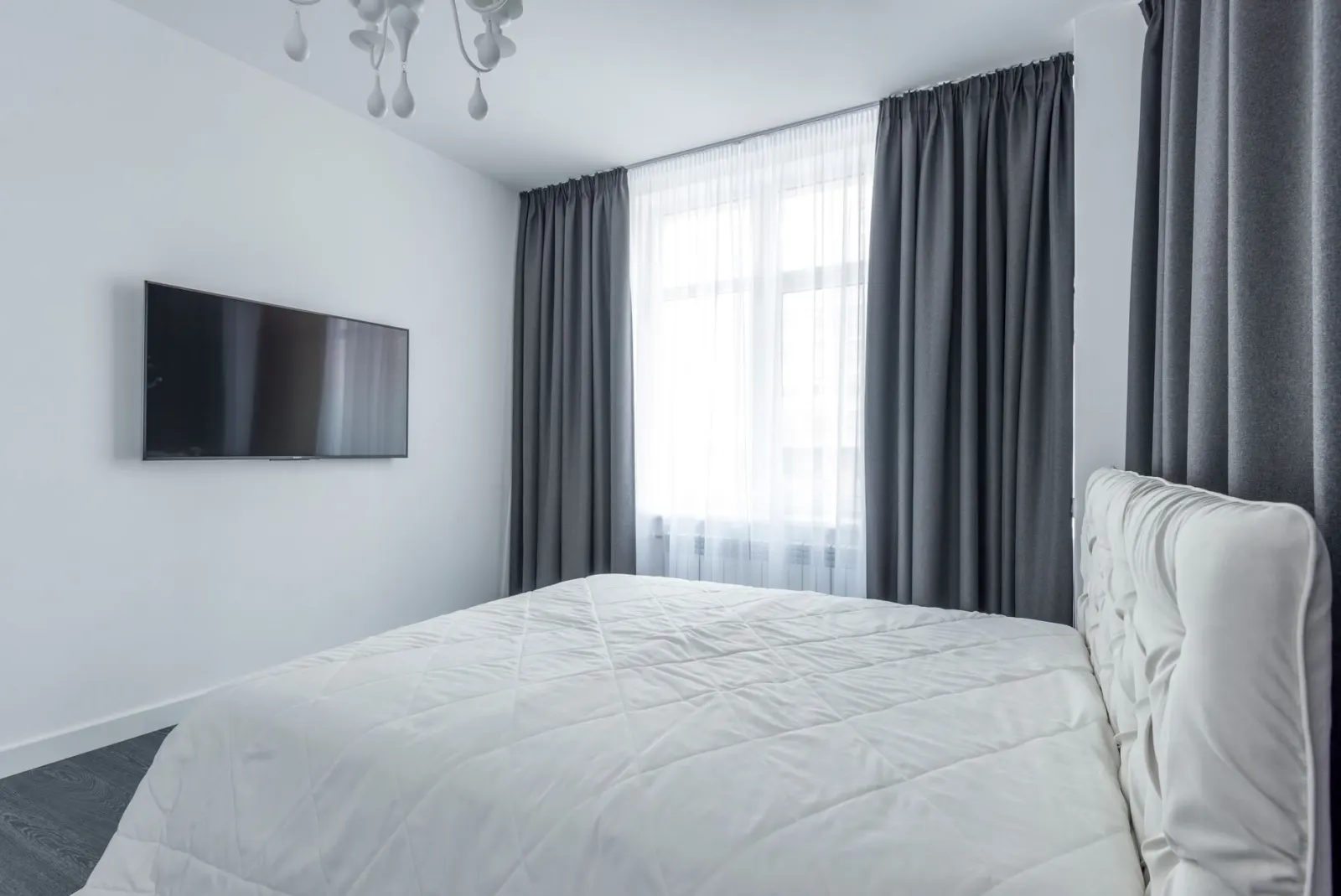 Types of Curtain Hooks and Which Your Track Needs
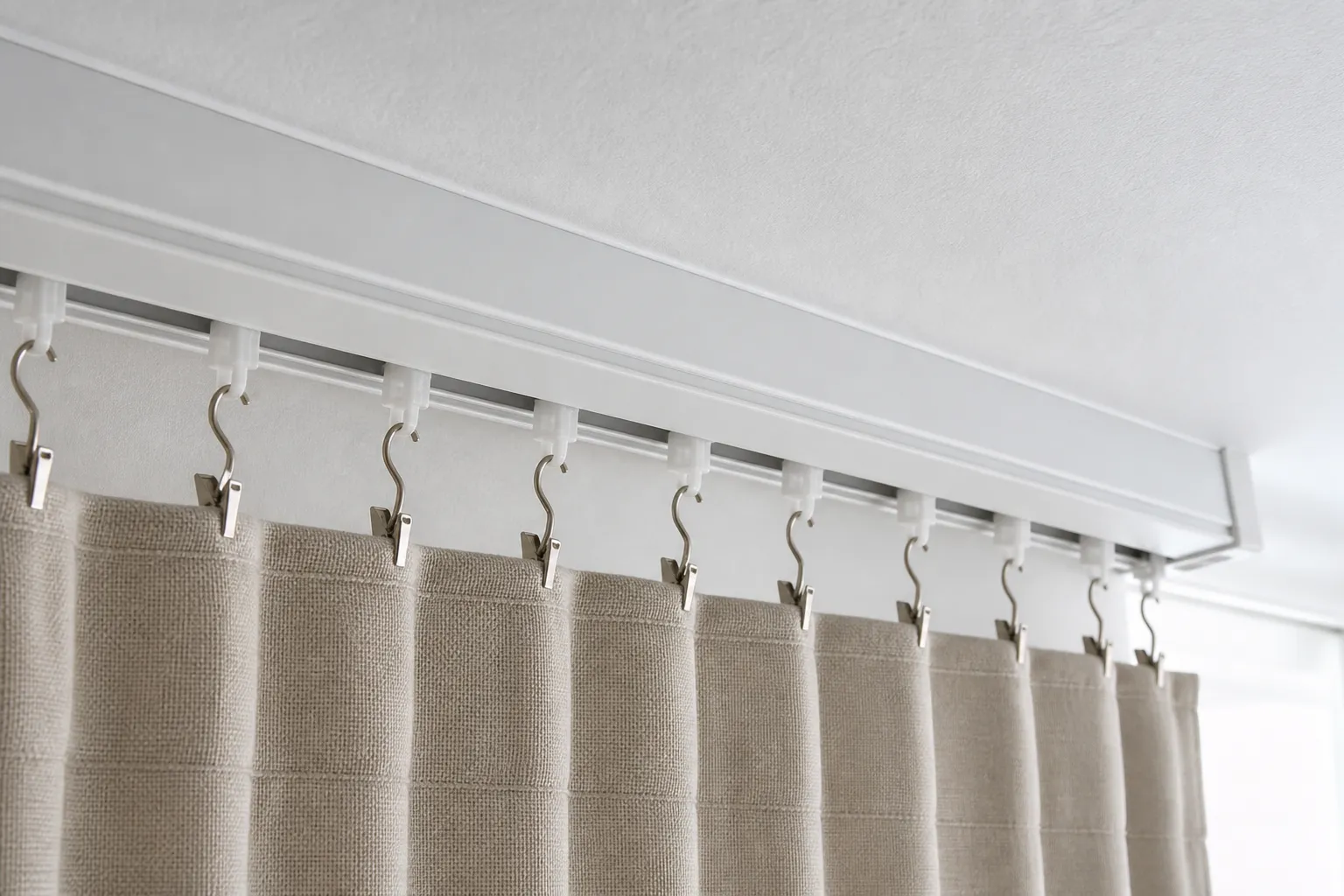 How to Choose a Curtain Track in Singapore
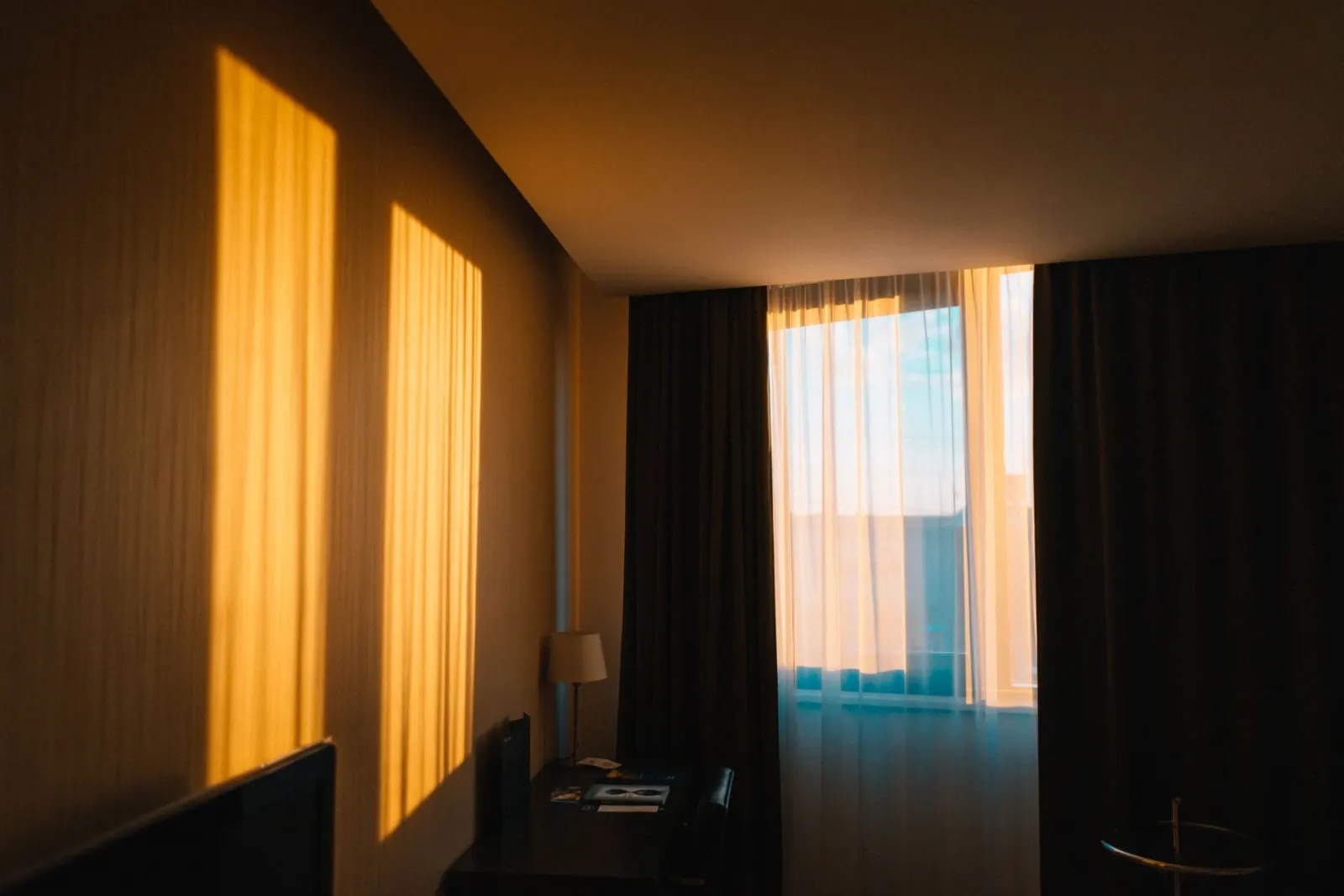 Curtain Rods vs Tracks in Singapore