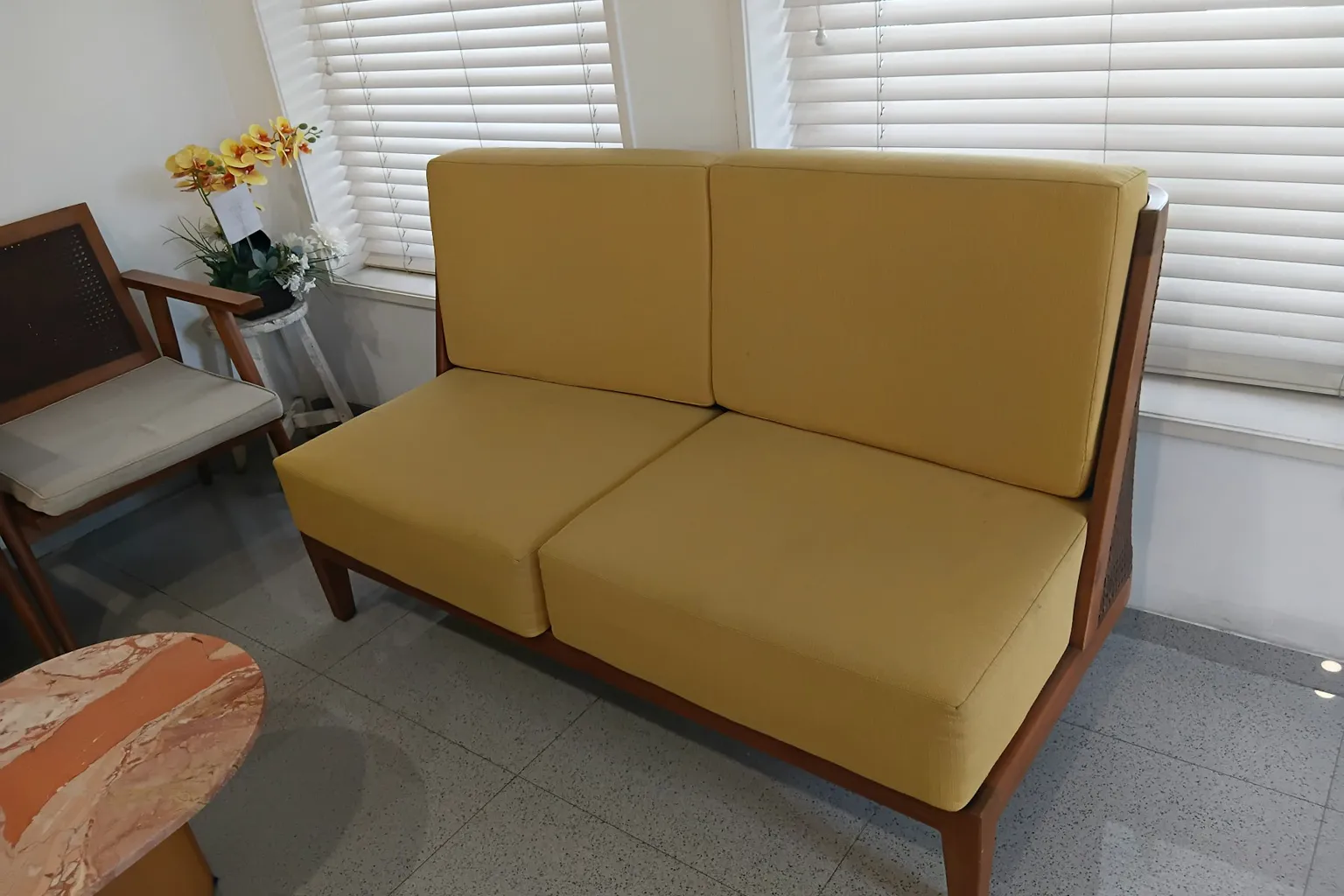
The living room is usually the hardest room in a Singapore flat to dress. In an HDB flat, it often has a wide window or a full-height sliding door to the balcony or service yard. In a condo, it may be a wall of glass facing the pool or another tower. You want daylight during the day, no glare on the TV in the evening, and some privacy from the block across, without the room feeling closed in. Blinds can do all of this, but each type handles these needs differently.
What a living-room window asks of a blind
Before comparing types, look at your own window and note four things.
- The width. A long window or a sliding door is often too wide for a single blind to work smoothly. Splitting it into two or three blinds side by side is common.
- Whether it is a window or a door. People walk through a balcony door many times a day, so the blind has to open fully and quickly.
- The direction it faces. West-facing living rooms get strong afternoon sun, which brings glare and heat.
- What sits opposite. A window facing the next block close by needs privacy in the evening, when lights are on inside.
A living room is also where people spend the most waking hours at home. A blind you adjust several times a day should be easy to operate, so think about the controls as much as the look.
Korean combi blinds
Korean combi blinds, also called zebra or day and night blinds, have two layers of fabric with alternating sheer and solid stripes. Moving the blind lines the stripes up to let light through, or offsets them to cover the gaps.
They suit living rooms well because they adjust light and privacy without raising the blind. In the day, you can align the sheer stripes and still see out. In the evening, you can close the stripes to block the view in. They roll up compactly at the top of the window.
Where they fall short, the sheer stripes still let some light through even when closed, so they will not darken a room for watching films in the afternoon. They also work best on standard windows. On a door, you have to roll the blind fully up each time you walk through. See our Korean combi blinds page for fabrics and options.
Roller blinds
A roller blind is one sheet of fabric that rolls up onto a tube at the top. The fabric decides how it behaves. A sunscreen fabric cuts glare and lets you see out in the day. A blackout fabric blocks light almost completely.
Roller blinds are simple, neat and easy to clean, which suits a living room that also serves as a dining area or home office. A sunscreen roller on a west-facing window can reduce glare on the TV screen while keeping the view.
The limitation is that one fabric does one job. A sunscreen fabric gives daytime glare control but little night privacy, because when the room is lit, people outside can see in. Some homes solve this with a double roller, a sunscreen fabric and a blackout fabric on one bracket. Our roller blinds page covers the fabric choices.
Venetian blinds
Venetian blinds use horizontal slats that tilt to control light and view. Aluminium and PVC slats suit Singapore humidity better than real wood in a room near an open balcony, and timber-look slats give a warmer look.
They give fine control. You can angle the slats upward so light reaches the ceiling but the view from the next block is blocked. That suits a living room facing a close neighbour.
On the downside, slats collect dust and take longer to clean than fabric, and a wide venetian blind becomes heavy to raise. They are better for standard windows than for a large sliding door. See our venetian blinds page.
Vertical blinds
Vertical blinds hang as a row of vertical vanes from a track at the top. The vanes rotate to control light, and the full set draws to one side like a curtain.
This makes them a practical choice for balcony sliding doors and floor-to-ceiling windows. You can draw them aside and walk through without raising anything, and the vanes can be angled to block glare while letting air through when the door is open. They also cope with wide spans well, since the track can run the full width of the door.
Their look is more practical than decorative, and the vanes can sway or clatter in a breeze from an open door. Our vertical blinds page explains the vane materials.
Roman blinds
A roman blind is fabric that folds up into soft, horizontal pleats when raised. It looks closer to a curtain than other blinds, which suits a living room where you want a softer feel.
Roman blinds work on smaller living-room windows, such as a window beside the sofa or above a console. On a wide window, a single roman blind becomes heavy to lift and the folds can sag, so several narrower blinds look and work better. Lining options range from light-filtering to blackout. See our roman blinds page.
Comparing blinds for living rooms
| Type | Light control | Night privacy | Wide windows and doors | Cleaning | Best placed |
|---|---|---|---|---|---|
| Korean combi | Adjustable without raising | Good when stripes are closed | Split into several blinds | Wipe or vacuum fabric | Standard living-room windows |
| Roller (sunscreen) | Cuts glare, keeps the view | Limited when lights are on inside | Split into several blinds | Wipe the fabric | West-facing windows, TV walls |
| Roller (blackout) | Blocks most light | Good | Split into several blinds | Wipe the fabric | Media rooms, afternoon films |
| Venetian | Fine control by tilting slats | Good with slats angled | Heavy on wide spans | Slat by slat, more effort | Windows facing a close block |
| Vertical | Rotating vanes | Good when closed | Suits sliding doors and full-height glass | Vane by vane | Balcony doors |
| Roman | Depends on lining | Good with a lined fabric | Better on narrow windows | Fabric care, some need dry cleaning | Smaller windows, softer look |
Pairing blinds with curtains
Many living rooms use both. A blind sits inside the window recess or close to the glass and handles day-to-day light control. A curtain hangs in front on a track or rod and adds softness, extra insulation from sun-heated glass, and full cover at night.
A common pairing is a Korean combi or sunscreen roller blind for daytime with a blackout or dim-out curtain for evenings. Another is vertical blinds on a balcony door with sheer curtains in front for a lighter look. If you plan both, check that the blind’s controls and brackets leave room for the curtain track, and that the curtain stacks clear of the window when drawn back.
Our guide to curtains or blinds compares the two in more detail if you are still deciding between them.
Motorised blinds for wide spans
A wide living-room window or a full-height glass wall can be awkward to operate by hand. A long blind is heavy on a chain, and several blinds across one window mean several chains to pull. Motorised blinds let you raise or lower one or all of them from a remote, a wall switch or an app, and some can run on a schedule, such as lowering a sunscreen roller when the afternoon sun reaches a west-facing window.
Motorisation also removes the cords and chains, which suits homes with young children or pets. It needs a power point near the window or a battery motor that you recharge. Plan for the power point before any renovation work closes up the wall or ceiling.
Common questions
Which blind is best for a living room facing the next block?
Korean combi or venetian blinds suit this well. Both let you block the view in from outside while still letting daylight into the room, which a basic roller blind cannot do at night.
Can I use blinds on a balcony sliding door?
Yes. Vertical blinds are the usual choice, because they draw to one side and you can walk through without raising them. Roller blinds split into sections also work if the door does not need to open often.
Do blinds reduce glare on the TV?
A sunscreen roller blind or angled venetian slats can cut glare on a screen while keeping some daylight. For a dark room in the afternoon, use blackout fabric or pair the blind with a blackout curtain.
Should living-room blinds go inside or outside the window recess?
Inside the recess gives a neat look but lets a little light past the edges. Mounting outside the recess, overlapping the frame, covers more of the edges. It depends on the recess depth and whether you also plan a curtain.
 Curtains or Blinds for Your Singapore Home?
 10 Curtain and Blind Styles for Singapore Homes Right Now
 Window Curtains in Singapore: How to Choose for Each Room