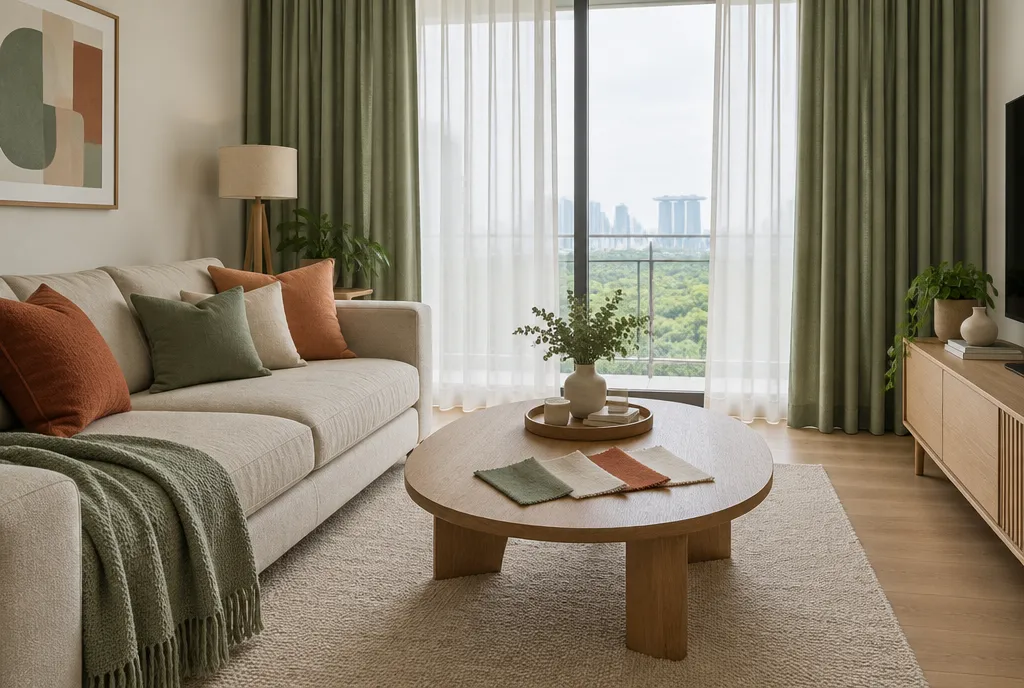
The walls are painted a soft white, the vinyl floor is a mid oak, and the grey sofa arrives next week. Now you are standing in a showroom with a ring of fabric swatches, trying to imagine each one hanging across a window three metres wide. Curtains cover more of a room than almost anything else, so their colour changes the look of the room more than most furnishings. A few practical checks narrow the choice quickly, and some of them are specific to Singapore’s sun and to how flats look from outside.
Start with what is already in the room
Curtains sit between the walls, the floor and the main furniture, so look at those first.
Matching the walls makes curtains blend in. The room looks calm and the window feels larger, because the eye does not stop at the fabric. Choose a shade one or two steps lighter or darker than the paint rather than an exact match, which can look like a mistake in some lights.
Picking up the floor colour works well with timber or timber-look vinyl. A warm beige or taupe curtain next to an oak floor ties the lower and upper parts of the room together.
Picking up the sofa or a large rug makes the curtains part of a set. This suits a living room where the sofa is the main piece. It also means changing the sofa later may leave the curtains looking out of place.
If you cannot decide, choose the walls. It is the safest option, and you can add colour through cushions and rugs, which are cheaper to change than curtains.
Light or dark in strong tropical sun
Windows in Singapore get strong sun all year, and that affects curtain colour in two ways.
Fading comes first. Sunlight gradually fades many dyed fabrics, and darker or brighter colours show the change more because the faded strips along folds and edges stand out against the unfaded parts. Light neutrals hide fading better. If you want a dark or strong colour on a west-facing window, ask about a lining, which shields the face fabric from direct sun.
The second is how the room feels. Dark curtains drawn in the afternoon make a room look heavier and darker. Light curtains bounce more daylight around. This is about how the room looks, not its temperature. Our guide on whether blackout curtains keep heat out explains what fabric can and cannot do about heat.
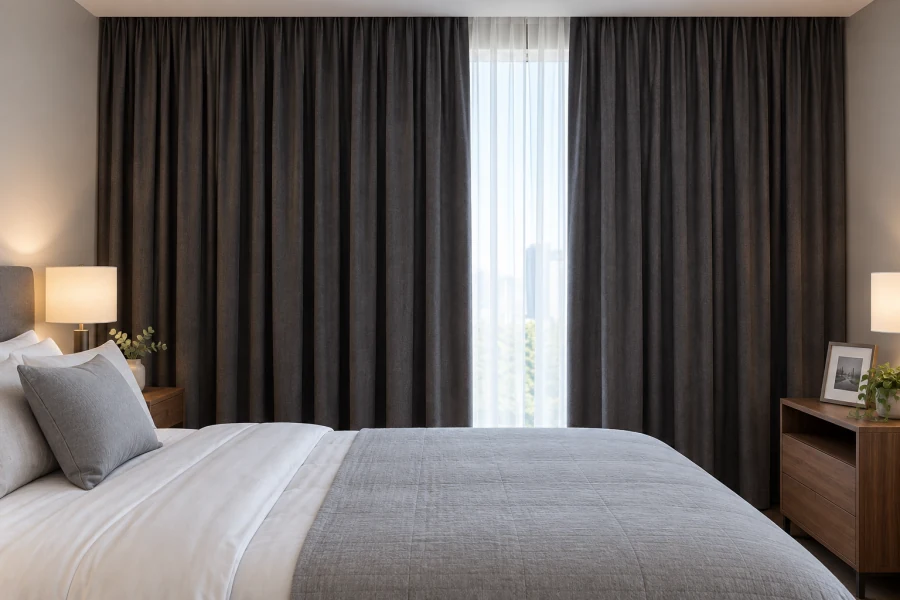
For darkness at night, the fabric makes more difference than the colour. A pale curtain with blackout lining blocks more light than a dark unlined one. Our blackout vs dim-out guide compares the two.
How the curtains look from outside
From the corridor or the next block, people see the back of your curtains. If every room uses a different colour, the windows look patchy from outside, and some HDB owners prefer a uniform look across their facade.
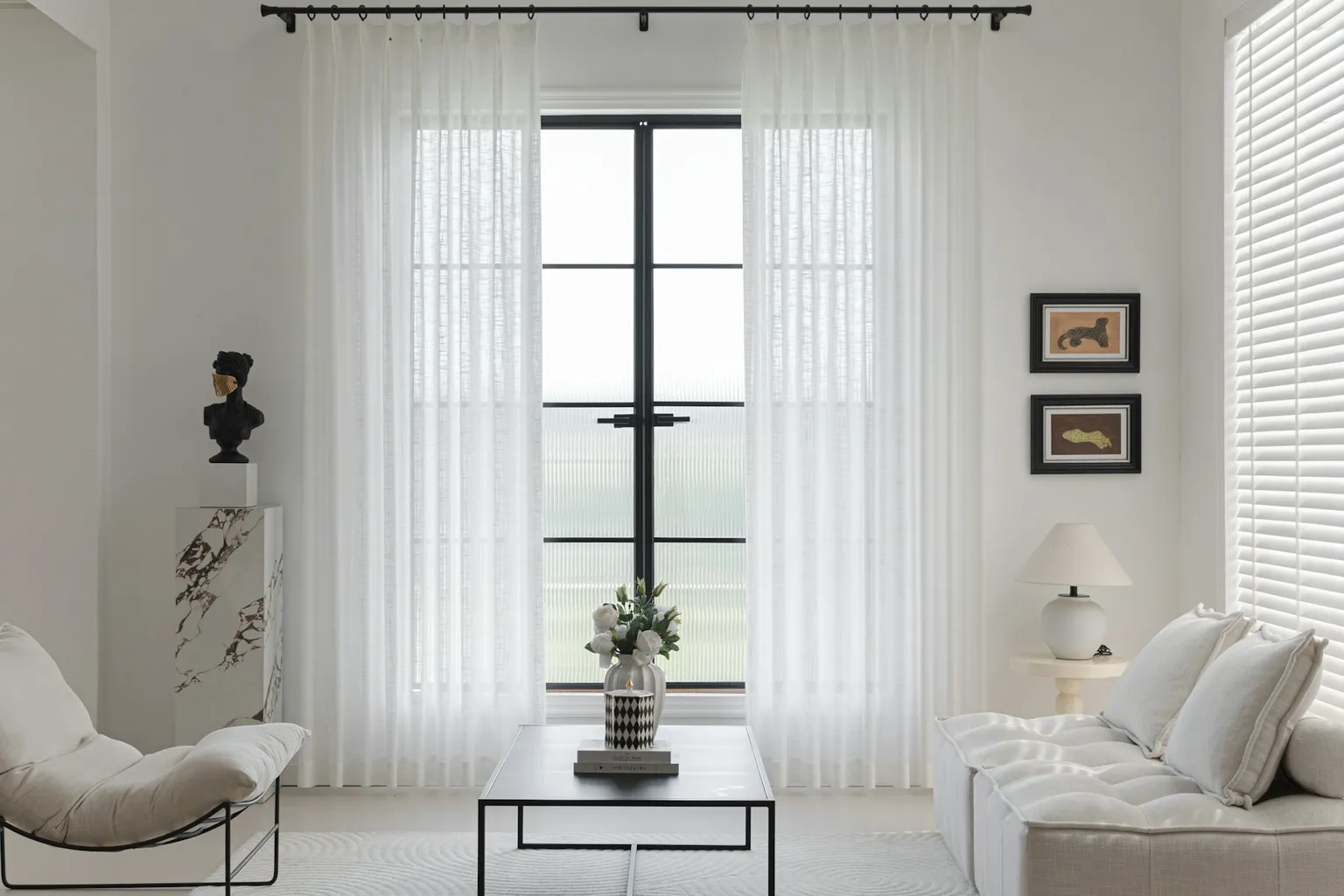
A white or off-white lining behind every curtain solves this. Each room can have its own face colour inside, while the outside view is consistent. Lining also protects the face fabric from sun, which helps with fading. Sheers are harder, because they have no lining and the colour shows through, so many owners keep all sheers in white or ivory and put colour on the night curtain.
Neutrals or an accent colour
Neutrals such as white, ivory, beige, greige, taupe and soft grey suit most Singapore flats. They work with timber and white carpentry, they hide fading and they rarely clash when you change furniture.
An accent colour such as sage, dusty blue, terracotta or deep green can work well in one room, usually a bedroom or study where you want a particular mood. Pick it from something already in the room, like a cushion or artwork, so it does not look random. In an open-plan living and dining area, one accent colour across both windows usually looks better than two different ones.
Patterns
Plain fabrics or subtle textures are easier to live with on large windows, because a pattern repeats across a big area. If you like pattern, consider it on a smaller window, a child’s room, or a Roman blind where less fabric shows. Small patterns read as texture from a distance. Large patterns become the main feature of the room, so keep cushions and rugs plain around them. Our types of curtains guide covers fabrics and textures in more detail.
Check samples in your own light
A swatch under shop lights can look quite different at home. Take samples home, or ask for them at the measurement visit, and hold them up against the window at the time the room gets its strongest light. Then look again in the evening under your own lamps, since warm and cool lighting shifts how greys and beiges appear. A larger sample tells you more than a small chip, and pinning it up for a day or two helps.
Hold the sample against the window with light passing through it as well. A sheer or unlined fabric looks lighter and warmer when backlit than it does lying on a table.
Colour ideas by room
| Room | Common choice | Why it suits | Watch for |
|---|---|---|---|
| Living room | Light neutral matched to walls or floor | Keeps the room bright and works with changing furniture | Fading on a west-facing window; consider lining |
| Master bedroom | Mid to deep neutral, or a soft accent | A calmer, darker feel at night | Use blackout lining for darkness, whatever the colour |
| Children’s room | Soft colour or small pattern | Easy to change later with the room | Bold prints can feel busy as the child grows |
| Study | Neutral or muted accent | Reduces distraction near the desk | Very dark colours make a small room feel smaller |
| Dining area | Matched to the living room | Open-plan spaces look better with one scheme | Two different colours in one sightline |
| Sheers in every room | White or ivory | Consistent look from outside | Coloured sheers show through to the facade |
If you are not sure how much fabric a colour choice involves, our curtain calculator gives a starting width and drop for each window.
Common questions
What colour curtains go with white walls?
Most colours work with white walls. For a calm look, choose ivory, light beige or soft grey. For more contrast, a mid grey, taupe or a muted colour from your furniture stands out without overwhelming the room.
Should curtains be lighter or darker than the walls?
Slightly lighter or slightly darker both work. Lighter curtains make the window blend in and keep the room bright. Darker curtains frame the window and add contrast, but they show fading more in strong sun.
Do dark curtains fade faster in Singapore?
Sun fades many dyed fabrics over time, and the change is more visible on dark and bright colours. A lining protects the face fabric, and keeping curtains open during the hottest hours on a west-facing window also reduces direct exposure on the folds.
Should all my curtains be the same colour?
They do not have to be. A white or off-white lining on every curtain keeps the outside view consistent, so each room can have its own colour inside. In open-plan living and dining areas, one colour usually looks better.
 18 Types of Curtains: A Singapore Guide to Fabrics, Headings and Layers
 10 Curtain and Blind Styles for Singapore Homes Right Now
 Blackout vs Dim-Out Curtains: Which Do You Need?