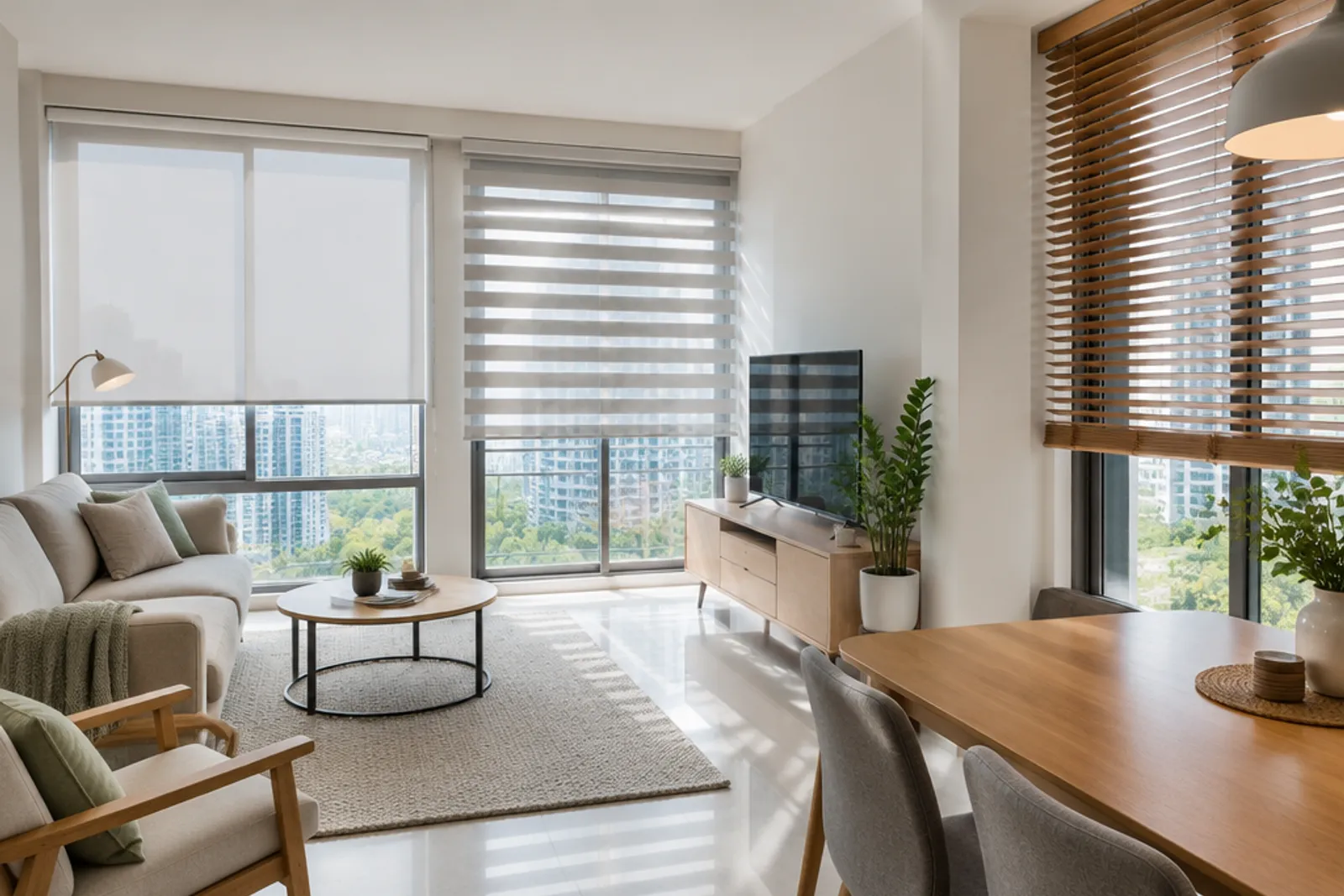
Walk into any blinds showroom in Singapore and you will be shown a wall of options with similar names. Roller, zebra, combi, double roller, honeycomb, cellular. Some are the same product under two names, and some look alike but behave very differently once they are on your window. Below are the nine types of blinds we supply, with what each does with light and privacy, which rooms in an HDB flat or condo it suits, and how much care it needs in our humid climate.
1. Roller blinds
A roller blind is a single sheet of fabric that rolls onto a tube at the top of the window. The fabric decides almost everything. Sunscreen fabric cuts glare and keeps your view out, light-filtering fabric softens the light, and blackout fabric blocks most of it.
Best rooms: bedrooms (blackout), study rooms and home offices (sunscreen), and kitchens, where a wipeable fabric is easier to keep clean than a curtain.
Light and privacy: one fabric does one job. A sunscreen roller gives daytime privacy, but once your lights are on at night, people in the next block can see in.
Care: wipe with a damp cloth or vacuum with a brush head. Keep the fabric rolled down on damp monsoon days now and then so it can air rather than staying tightly wound. See our roller blinds page for fabric choices.
2. Korean combi blinds (zebra blinds)
Korean combi blinds, also sold as zebra blinds, use two layers of fabric with alternating sheer and solid bands. Shifting the layers lines the sheer bands up to let light through, or offsets them so the solid bands cover the gaps.
Best rooms: living rooms and bedrooms on standard windows, especially where the window faces another block across a short distance.
Light and privacy: you can adjust light and view without raising the blind, which makes them practical for rooms you use all day. Even with the bands closed, some light passes through the sheer layer, so they will not darken a bedroom on their own.
Care: vacuum or wipe the fabric gently. Dust tends to sit in the folds at the bottom rail, so give that a look during regular cleaning. Our Korean combi blinds page shows the fabric range.
3. Venetian blinds (aluminium, PVC and wood)
Venetian blinds use horizontal slats on cords. You tilt the slats to control light and view, and raise all the slats together to clear the window.
Best rooms: kitchens and bathrooms (aluminium or PVC), studies, and rooms facing a close neighbour where you want daylight without a direct view in.
Light and privacy: angling the slats upward sends light to the ceiling while blocking sightlines from below or across. They give finer control than most fabric blinds.
Care: slats collect dust and cooking grease, so cleaning is slower than wiping one sheet of fabric. Pick the slat material with Singapore humidity in mind. Aluminium and PVC cope well with damp kitchens and bathrooms, while real timber can warp or discolour near steam. Our guide to wooden, aluminium and PVC blinds compares them in detail, and the venetian blinds page lists slat sizes and finishes.
4. Roman blinds
A roman blind is fabric that folds into soft horizontal pleats as you raise it. It looks closer to a curtain than any other blind.
Best rooms: bedrooms, smaller living-room windows, and windows above a bed, desk or console where a full curtain would get in the way.
Light and privacy: depends on the fabric and lining. An unlined roman blind filters light, while a blackout lining makes it a good bedroom option.
Care: fabric care applies, and some fabrics need dry cleaning rather than washing. On a wide window, a single roman blind becomes heavy to lift and the folds can sag, so two or three narrower blinds work better. See our roman blinds page.
5. Vertical blinds
Vertical blinds hang as a row of vanes from a track at the top. The vanes rotate to control light, and the full set draws to one side like a curtain.
Best rooms: balcony sliding doors, full-height living-room windows and offices with long runs of glass.
Light and privacy: angled vanes block glare and the view in while still letting air through when the door is open. Closed, they give good privacy.
Care: vanes are cleaned one by one, and they can sway or knock together in a breeze from an open balcony door. The look is practical rather than decorative, which is why many homes add a sheer curtain in front. Our vertical blinds page covers vane materials.
6. Honeycomb blinds
Honeycomb blinds, also called cellular blinds, are made from fabric folded into rows of hexagonal cells. The cells trap a layer of air between the window and the room.
Best rooms: bedrooms and west-facing rooms where heat from the glass is a concern, and windows where you want privacy at the bottom with light at the top.
Light and privacy: available in light-filtering and blackout fabrics. A top-down bottom-up version lets you lower the top edge for daylight while the lower half stays covered.
Care: the cells can collect dust and small insects, so a regular vacuum with a soft brush helps. They are not suited to wet areas like bathrooms. Honeycomb blinds do not have their own product page yet, so read our honeycomb blinds guide for the details.
7. Outdoor zip track blinds
Outdoor zip blinds run in side channels, with the fabric edges zipped into the tracks so the blind stays taut and does not flap in wind.
Best rooms: balconies, PES areas, patios and condo or landed-home outdoor spaces exposed to afternoon sun and monsoon rain.
Light and privacy: mesh fabrics cut sun and glare while keeping some view, and more solid fabrics give more privacy and rain protection. Because the edges are held in channels, they cope with gusty weather better than an ordinary outdoor roller.
Care: hose down or wipe the fabric and keep the channels clear of leaves and grit. Check your condo’s by-laws or MCST rules before installing on a balcony, as some developments have restrictions on what can be fitted to the facade. See our outdoor zip blinds page.
8. Motorised blinds
Motorised blinds are less a separate type than an option you add to roller, Korean combi, roman, honeycomb, vertical or outdoor zip blinds. A motor raises and lowers the blind from a remote, wall switch, app or schedule.
Best rooms: wide living-room windows with several blinds side by side, tall condo windows that are hard to reach, and children’s rooms where you want no cords or chains.
Light and privacy: the same as the blind underneath, with the added option of timing. A west-facing living room can have its sunscreen roller lower before the afternoon sun arrives.
Care: the fabric is cleaned as usual. Plan the power point before renovation work closes up the ceiling or wall, or choose a rechargeable battery motor. Our guide to motorised blinds and curtains covers the planning.
9. Day-night double roller blinds
A double roller has two roller blinds on one bracket, usually a sunscreen fabric and a blackout fabric. You use the sunscreen layer by day and the blackout layer at night.
Best rooms: bedrooms that double as a work-from-home space, and living rooms used for films in the afternoon.
Light and privacy: this solves the main weakness of a single roller. Daytime glare control and full night privacy come from one fitting, without needing a curtain as well.
Care: the same as a roller blind, with two fabrics to wipe. The bracket is deeper than a single roller, so check the recess depth before choosing an inside mount. Double rollers are covered on our roller blinds page.
Comparing the nine types of blinds
| Type | Light control | Night privacy | Best rooms | Humidity and care | Wide windows |
|---|---|---|---|---|---|
| Roller | One fabric, one job | Good with blackout, weak with sunscreen | Bedrooms, studies, kitchens | Wipe or vacuum, easy | Split into several blinds |
| Korean combi | Adjustable without raising | Good with bands closed | Living rooms, bedrooms | Vacuum, check bottom rail | Split into several blinds |
| Venetian | Fine control by tilting | Good with slats angled | Kitchens, bathrooms, studies | Slat by slat; aluminium and PVC suit wet areas | Heavy on wide spans |
| Roman | Depends on lining | Good with a lined fabric | Bedrooms, small windows | Some fabrics need dry cleaning | Better on narrow windows |
| Vertical | Rotating vanes | Good when closed | Balcony doors, full-height glass | Vane by vane | Suits long spans |
| Honeycomb | Filtering or blackout, top-down option | Good | Bedrooms, west-facing rooms | Vacuum cells, avoid wet areas | Split into several blinds |
| Outdoor zip | Mesh or solid fabric | Depends on fabric | Balconies, patios, PES | Hose or wipe, clear channels | Suits wide openings |
| Motorised | Same as base blind, with scheduling | Same as base blind | Wide or tall windows, kids’ rooms | Plan power before renovation | Easiest way to run several blinds |
| Double roller | Sunscreen by day, blackout by night | Good | Bedrooms, WFH rooms, media rooms | Wipe two fabrics | Split into several blinds |
How to narrow the choice
Start with the room and what goes wrong there now. If a bedroom is too bright at 7am, you need a blackout fabric (roller, double roller, roman with lining or honeycomb). If a living room faces the next block, you need privacy without losing daylight (Korean combi or venetian). If the opening is a balcony door, you need something that draws aside (vertical blinds or a curtain). Wet areas narrow the field to aluminium or PVC venetians and wipeable rollers.
Many Singapore homes end up mixing types across the flat, and some pair a blind with a curtain in the same room. Our guide to curtains or blinds helps if you are still weighing the two, and the living room blinds guide goes deeper on that one room.
Common questions
What are the main types of blinds?
The main types are roller, Korean combi (zebra), venetian, roman, vertical, honeycomb and outdoor zip track blinds. Motorisation can be added to most of these, and a double roller combines two roller fabrics on one bracket.
Are zebra blinds and Korean combi blinds the same?
Yes. Both names describe a blind made of two fabric layers with alternating sheer and solid bands. Shifting the layers lets you switch between a view-through setting and a more private one without raising the blind.
Which type of blind is best for a Singapore bathroom or kitchen?
Aluminium or PVC venetian blinds, or a roller blind in a wipeable fabric, cope best with steam and splashes. Real timber and fabric blinds with deep folds, such as roman or honeycomb blinds, are better kept out of wet areas.
Which blinds block the most light for sleeping?
Roller blinds and double rollers with blackout fabric, blackout honeycomb blinds and roman blinds with a blackout lining block the most light. Some light still comes in around the edges of any blind, so a blackout curtain over the top helps if you need a very dark room.
Can I mix different types of blinds in one flat?
Yes, and it is common. A typical HDB flat might have Korean combi blinds in the living room, blackout rollers in the bedrooms and aluminium venetians in the kitchen. Choosing the same colour family across the flat keeps it looking consistent.
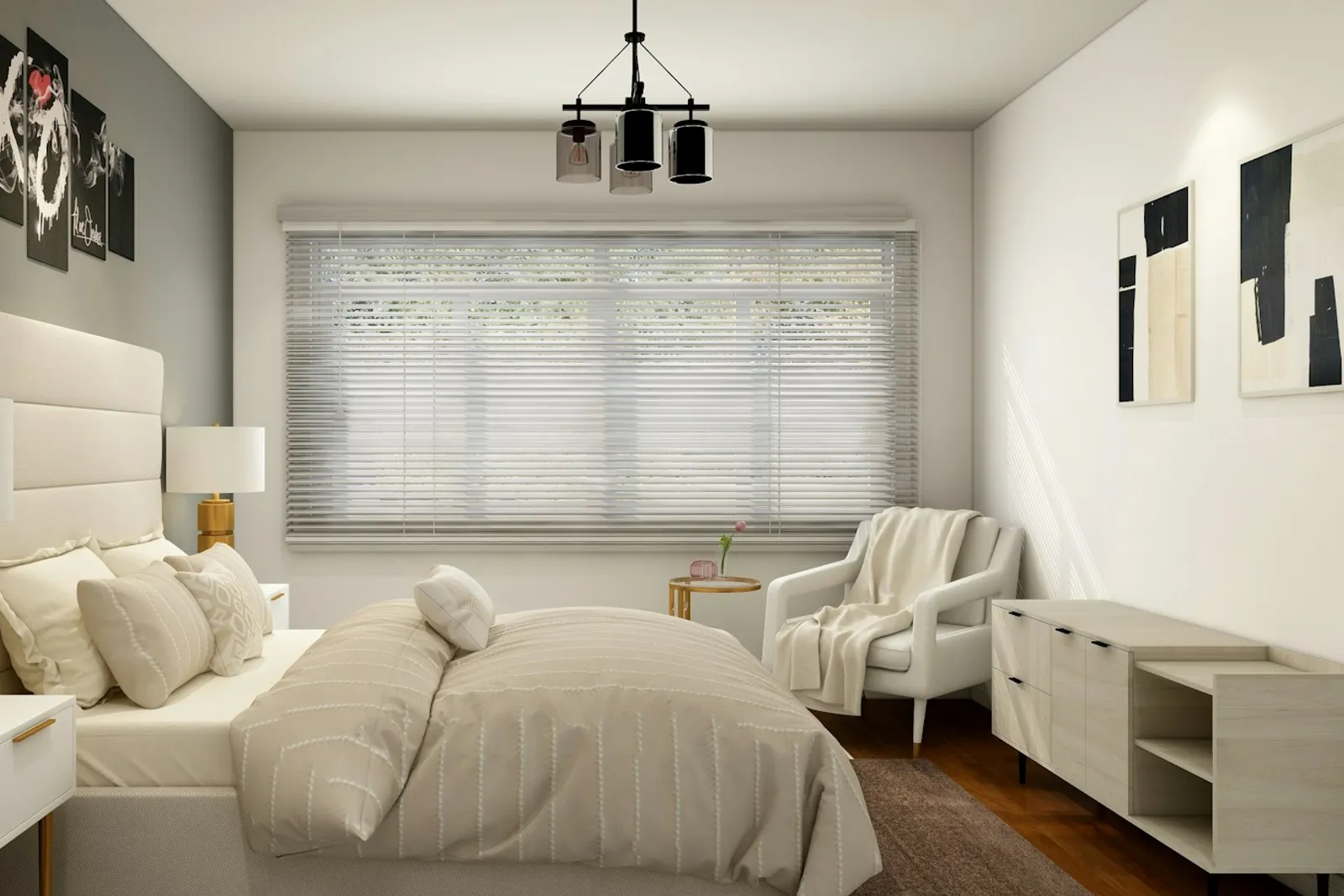 Blackout Blinds or Blackout Curtains for a Singapore Bedroom?
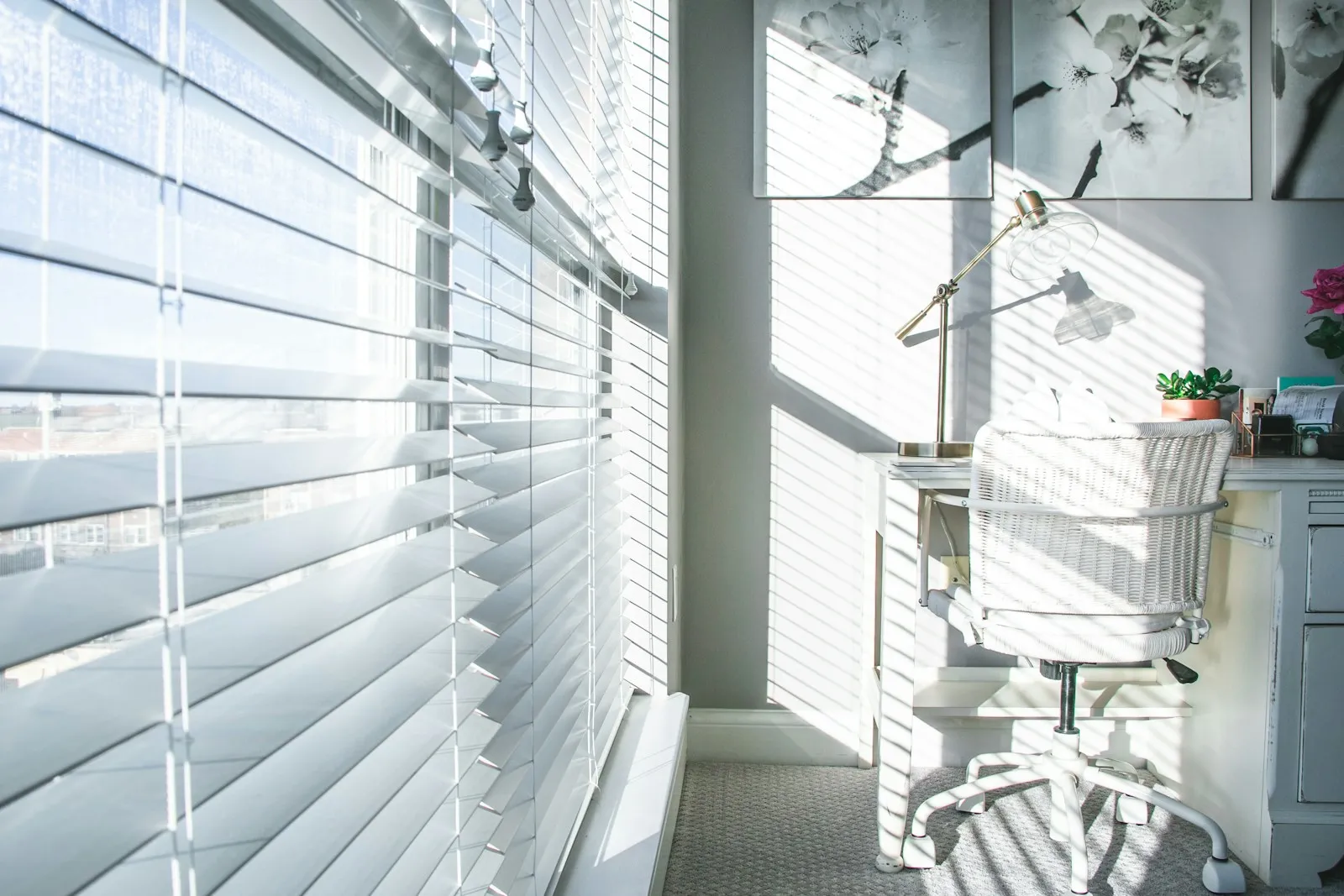 Blinds for Offices in Singapore: Glare, Screens and Meeting Rooms
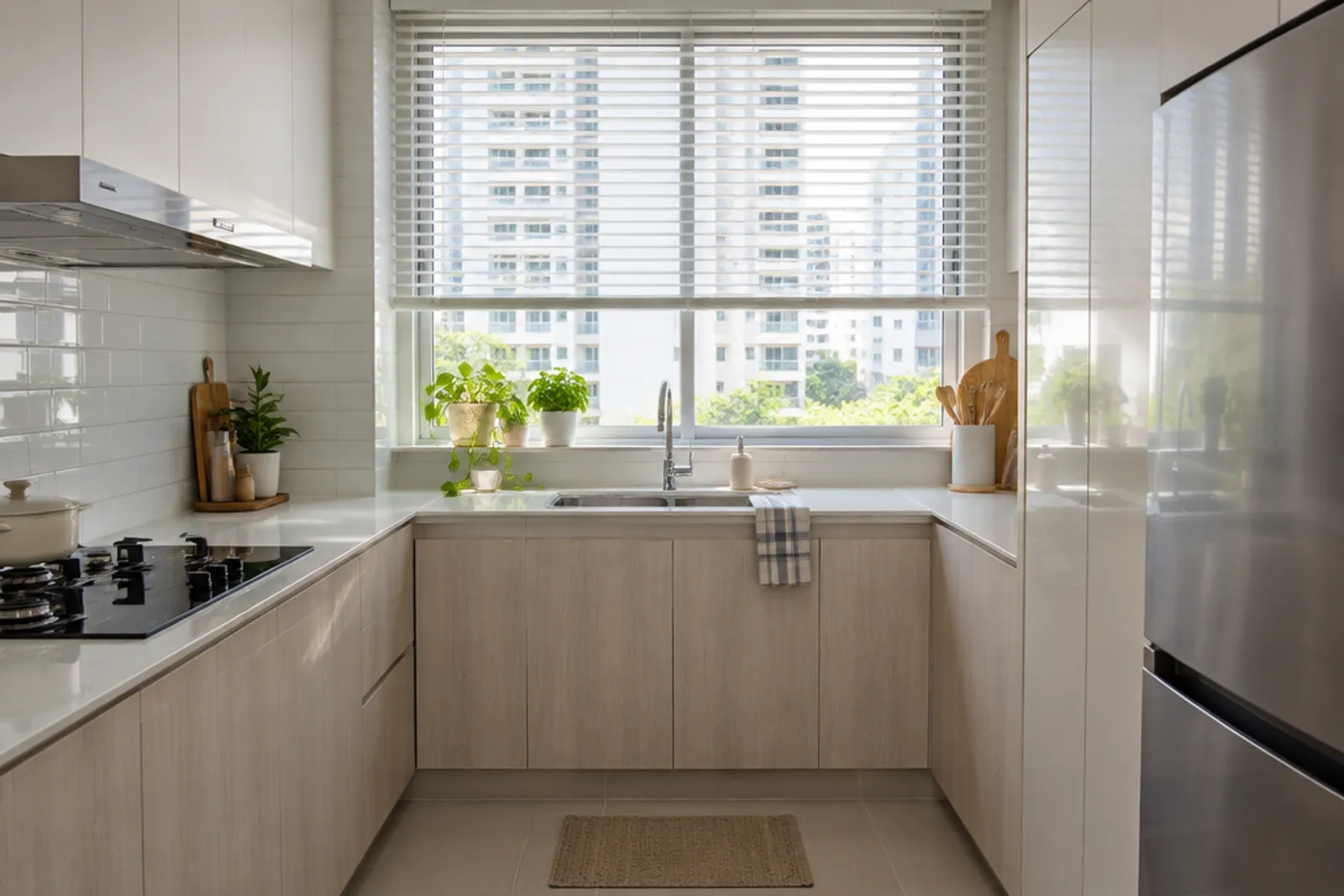 8 Kitchen Window Ideas for HDB and Condo Kitchens