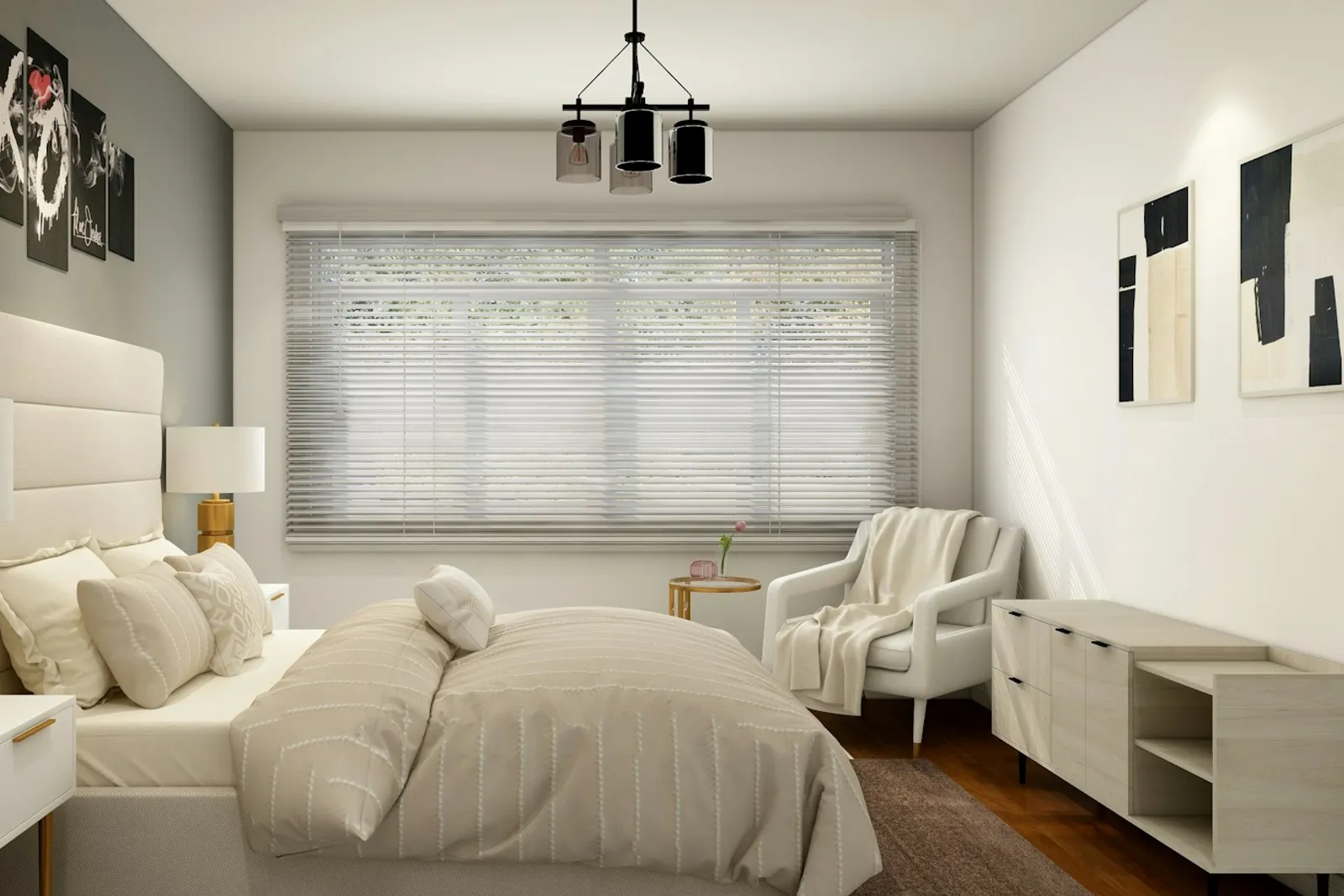
Picture a common HDB bedroom. The window faces the corridor or the next block, the street lamp outside stays on all night, and the sun comes up on the glass a little after 7am. You want the room dark enough to sleep, but the space is tight, the bed is pushed close to the wall, and there is an air-conditioner or a wardrobe near the window. Both blackout blinds and blackout curtains can block light. They differ in how much light gets past the edges, how much space they take, and how they cope with heat and Singapore humidity.
Where light gets into a blacked-out bedroom
A blackout fabric stops light passing through the cloth. A dark bedroom also depends on light not slipping around the fabric, and this is where blinds and curtains behave differently.
Light gets in at four places.
- The sides, between the fabric and the window frame or wall.
- The top, above the blind roller or curtain track.
- The bottom, between the fabric and the sill or floor.
- The middle, where two curtain panels meet.
A blackout blind mounted inside the window recess needs a small clearance on each side so it can roll up and down without catching. That clearance shows as a thin line of light on each edge. On an east-facing window at sunrise, those lines can be bright enough to wake a light sleeper.
A blackout curtain on a track mounted above the window and extended past the frame on both sides covers those edges with fabric. The extra width overlaps the wall, so light coming around the frame hits the curtain instead of the room. The weak points for curtains are the top, if the track sits below a gap at the ceiling, and the centre, if the two panels do not overlap.
If you want to understand how much light different fabrics let through before thinking about gaps, our guide to blackout vs dim-out curtains explains the difference.
Blackout roller blinds
A blackout roller blind is one sheet of coated or multi-layer fabric that rolls onto a tube at the top of the window. It is the most common blackout blind in Singapore bedrooms because it is compact and simple to use.
It suits windows where there is little room for curtains, such as a window directly beside a wardrobe or a bed headboard, or a window above a study table. It also suits a child’s room, since there are no long panels for small hands to pull on, and a motorised or cordless version removes the chain.
The limitation is the edge gap described above. You can reduce it in a few ways. Mounting the blind outside the recess, on the wall above the window and wider than the frame, lets the fabric overlap the edges. Some systems also use side channels, which are slim tracks that the fabric edges run inside, so light cannot pass around them. A cassette or pelmet over the roller hides the light that escapes over the top.
Blackout roller fabrics are usually wipeable, which helps in a humid bedroom. See our roller blinds page for fabric and mounting options.
Blackout roman blinds
A roman blind folds into soft horizontal pleats when raised. With a blackout lining sewn behind the face fabric, it gives a softer, more furnished look than a roller blind while still darkening the room.
Roman blinds suit bedrooms where you want the feel of fabric but have no space for curtains to stack beside the window. They have the same edge-gap issue as rollers when mounted inside the recess. Because the lining is stitched to the face fabric, small pinholes of light can show along the stitch lines on some constructions, so ask to see a sample against a bright window.
Wide roman blinds become heavy to lift, and the folds can sag over a long span, so a wide bedroom window often works better as two narrower blinds. Most roman blinds are not machine washable because of the lining and the rods inside the folds, which means cleaning takes more care than a roller. Our roman blinds page shows the lining choices.
Honeycomb blackout blinds
Honeycomb blinds, also called cellular blinds, are made of fabric folded into rows of hollow cells. In the blackout version, the inside of each cell is lined with a light-blocking layer.
The cells trap a layer of air between the room and the glass, which helps reduce the heat coming off a sun-warmed window. They also stack very small when raised, which suits windows where you want as much view and daylight as possible during the day. Some honeycomb blinds can be lowered from the top and raised from the bottom, so you can cover the lower part of the window for privacy and leave the top open for light.
They share the edge gap of other blinds mounted inside a recess, and the cells collect dust, so they need regular vacuuming with a soft brush. They are also less common than rollers, so check fabric and colour options before you decide on them.
Blackout curtains
A blackout curtain is a curtain made with a blackout fabric or with a blackout lining behind the face fabric. It hangs from a track or rod above the window and draws to the sides.
For the darkest result from a single layer, a curtain usually does better than a blind, provided it is set up well. Mount the track close to the ceiling, or use a curtain pelmet to cover the top. Extend the track past the window on both sides so the curtain overlaps the wall when closed. Ask for an overlap where the two panels meet, and let the curtain fall to the floor or just above it. A curtain that stops at the sill leaves a strip of light at the bottom.
Curtains need space. When drawn open, the fabric stacks beside the window, so you need wall space on each side, and the curtain should not be blocked by a bedside table, an air-conditioner pipe or a wardrobe door. In compact HDB bedrooms, that space is often the deciding factor. See our blackout curtains page for fabric and lining options.
Comparing blackout blinds and curtains
| Option | Darkness from one layer | Edge light | Space needed | Heat from the glass | Cleaning |
|---|---|---|---|---|---|
| Blackout roller blind (inside recess) | Fabric blocks light well | Thin lines at the sides | Very little | Some reduction | Wipe down |
| Blackout roller blind (outside recess or side channels) | Very dark | Small to minimal | Very little | Some reduction | Wipe down |
| Blackout roman blind | Dark, check stitch lines | Thin lines if inside the recess | Little | Some reduction | Spot clean or professional cleaning |
| Honeycomb blackout blind | Dark | Thin lines at the sides | Very little | Air in the cells helps | Vacuum with a soft brush |
| Blackout curtain on a wide, high track | Very dark | Minimal if it overlaps the wall | Stacking space beside the window | Thicker fabric and lining help | Wash or professional cleaning, depending on fabric |
| Blind plus blackout curtain | Darkest | Minimal | Space for both | Two layers help most | Both routines |
Using a blind and a curtain together
If you need a very dark bedroom, combining a blackout blind with a blackout curtain is the most reliable setup. The blind sits close to the glass and blocks most of the light. The curtain hangs in front, covers the lines of light at the blind’s edges, and adds a second layer against the warm glass.
A common pairing is a blackout roller blind inside the recess with a blackout curtain on a ceiling-mounted track. Another is a sunscreen or Korean combi blind for daytime privacy with a blackout curtain for the night, which keeps the room bright in the day without needing a second blackout layer. Our guide to day and night curtains covers layered setups in more detail.
Before committing, check that the recess is deep enough for the blind, that the curtain track clears the blind’s bracket and controls, and that there is space for the curtain to stack. A home measuring visit can confirm these details on site.
Shift workers and babies
If you sleep in the day, you face the hardest version of this problem, because you need darkness at noon, when the light outside is strongest. Edge gaps that are hardly noticeable at 6am become obvious under midday sun. For day sleepers, the blind plus curtain combination is usually the best starting point, or a blind with side channels if there is no room for a curtain.
For a baby’s room, darkness helps daytime naps, and safety is as important as light. Choose cordless or motorised blinds, or curtains on a track with no loose cords. Keep any chain or cord well out of reach of the cot. A roller blind with side channels gives a dark room with no cords and no long fabric to pull on.
Heat from west-facing bedrooms
Singapore’s typical daytime maximum temperatures sit around 31 to 33°C across the year, according to the Meteorological Service Singapore. A west-facing bedroom catches the afternoon sun, and the glass can stay warm well into the evening.
Any blackout layer blocks direct sun from reaching the room, which reduces the heat you feel near the window. Thicker curtains with a lining, honeycomb blinds and two layers together tend to help more than a single thin blind, because they add more material and trapped air between you and the glass. How much difference you notice depends on the glass, the fabric, the gaps and your air-conditioning, so treat any blackout option as a help and not a fixed cooling figure. Our article on whether blackout curtains keep heat out goes into this further.
Humidity, mould and cleaning
Singapore’s mean annual relative humidity is around 82%, according to the Meteorological Service Singapore. Bedrooms with the window closed and the air-conditioner off during the day can feel damp, and condensation can form on cold glass when the air-conditioner runs at night. Fabric that touches wet glass or a damp sill can develop mould spots over time.
Blinds made from coated blackout fabric are easier to wipe and dry, which suits windows prone to condensation. Keep the blind slightly clear of the glass if possible, and raise it for part of the day to let the window dry out during the monsoon months.
Blackout curtains need more care. Some can be machine washed on a gentle cycle, while others with a bonded or coated lining should not be soaked or tumble dried, as the coating can crack. Check the care label before washing. Our guide on how to wash curtains covers fabric types, and we also offer curtain cleaning on site or taken away and rehung.
Common questions
Are blackout blinds as dark as blackout curtains?
The blind fabric can block light as well as a curtain fabric, but a blind mounted inside the recess usually lets thin lines of light past its edges. A blackout curtain on a wide track overlaps the wall and covers those edges. Side channels or mounting the blind outside the recess close most of that gap.
Which is better for a small HDB bedroom?
A blackout roller blind usually suits a small bedroom better because it takes up almost no space and needs no stacking room beside the window. If you have wall space on both sides, a blackout curtain gives a darker room. You can also add a curtain later if the blind alone is not dark enough.
Do blackout blinds help with heat?
They block direct sun from reaching the room, which reduces the heat near a west-facing window. Honeycomb blackout blinds help more than a thin roller because of the air in their cells. For the most effect, pair a blind with a lined curtain.
Can I wash blackout blinds?
Most blackout roller blinds are wiped down with a damp cloth and mild soap, not washed in a machine. Roman blinds usually need spot cleaning or professional cleaning because of their lining and rods. Always check the fabric’s care instructions first.
What is the darkest setup for a day sleeper?
A blackout blind close to the glass with a blackout curtain on a ceiling-mounted track that extends past the window on both sides. The blind blocks most of the light and the curtain covers the edges. If space is tight, a roller blind with side channels is the next best option.
Quiz
Blackout or dim-out: which do you need?
Five quick questions about the room and how you sleep. Open the full quiz
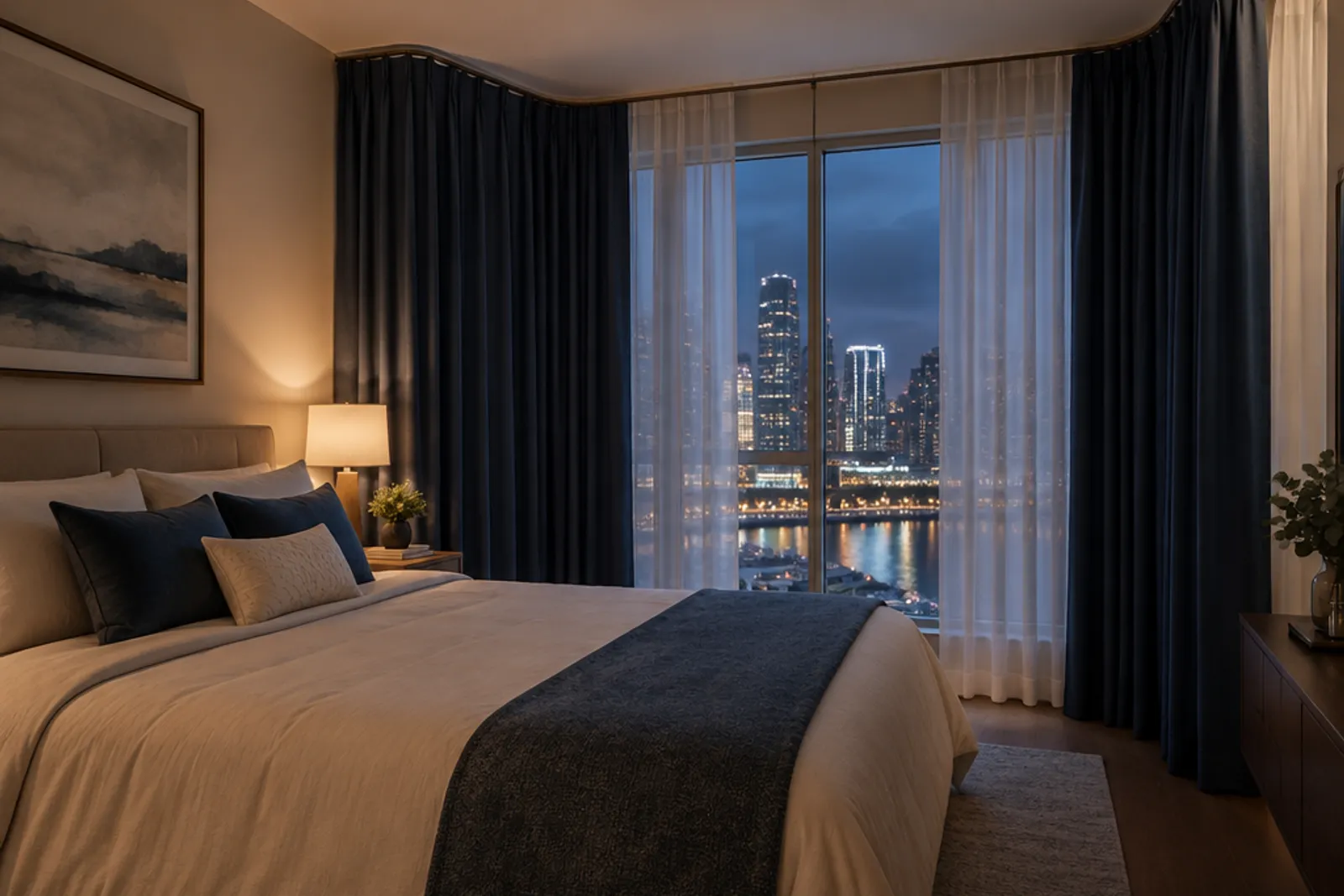 12 Bedroom Curtain and Blind Ideas for Better Sleep in Singapore
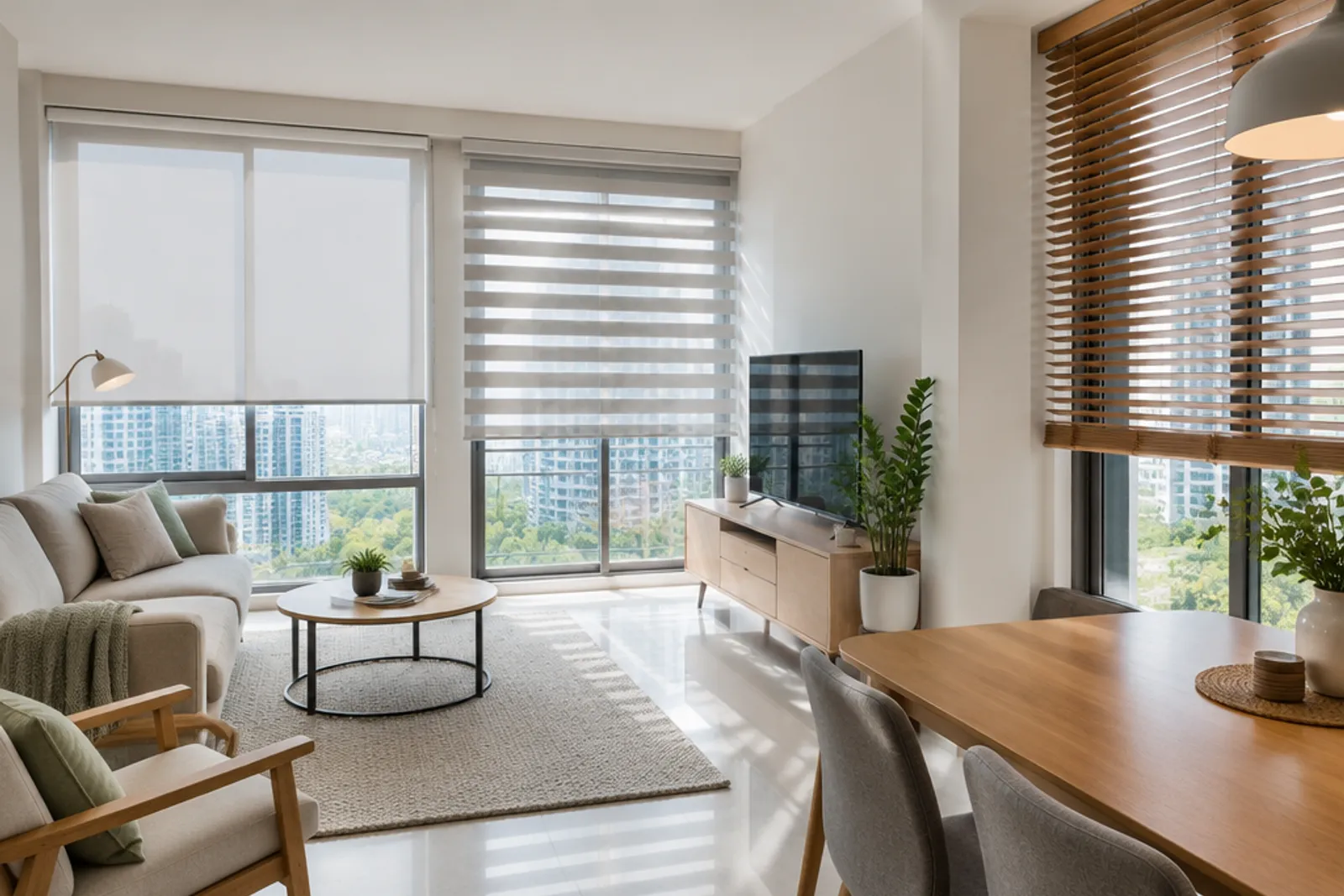 Types of Blinds in Singapore: 9 Options Compared
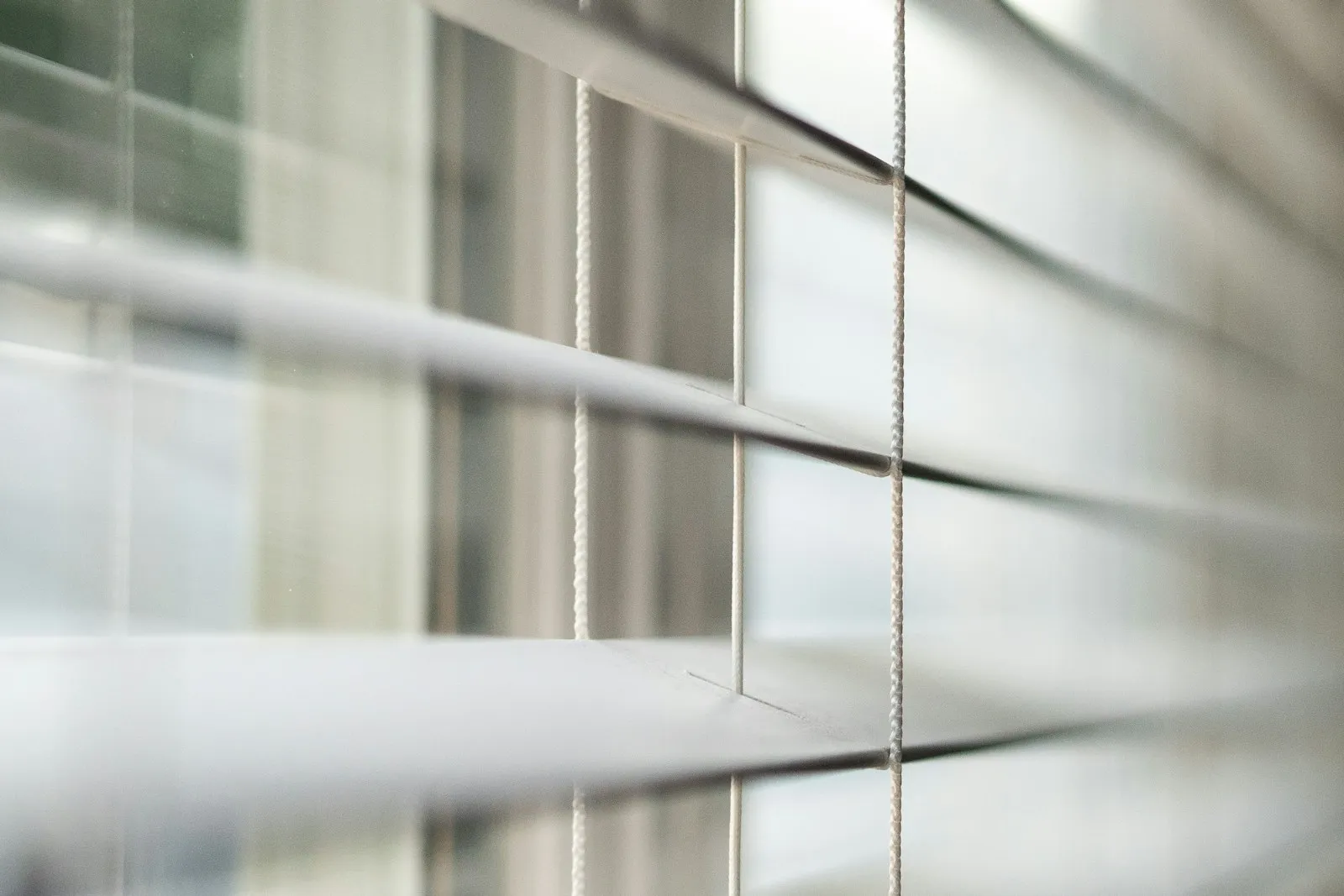 How to Clean Blinds in Singapore: Venetian, Roller and Korean Combi