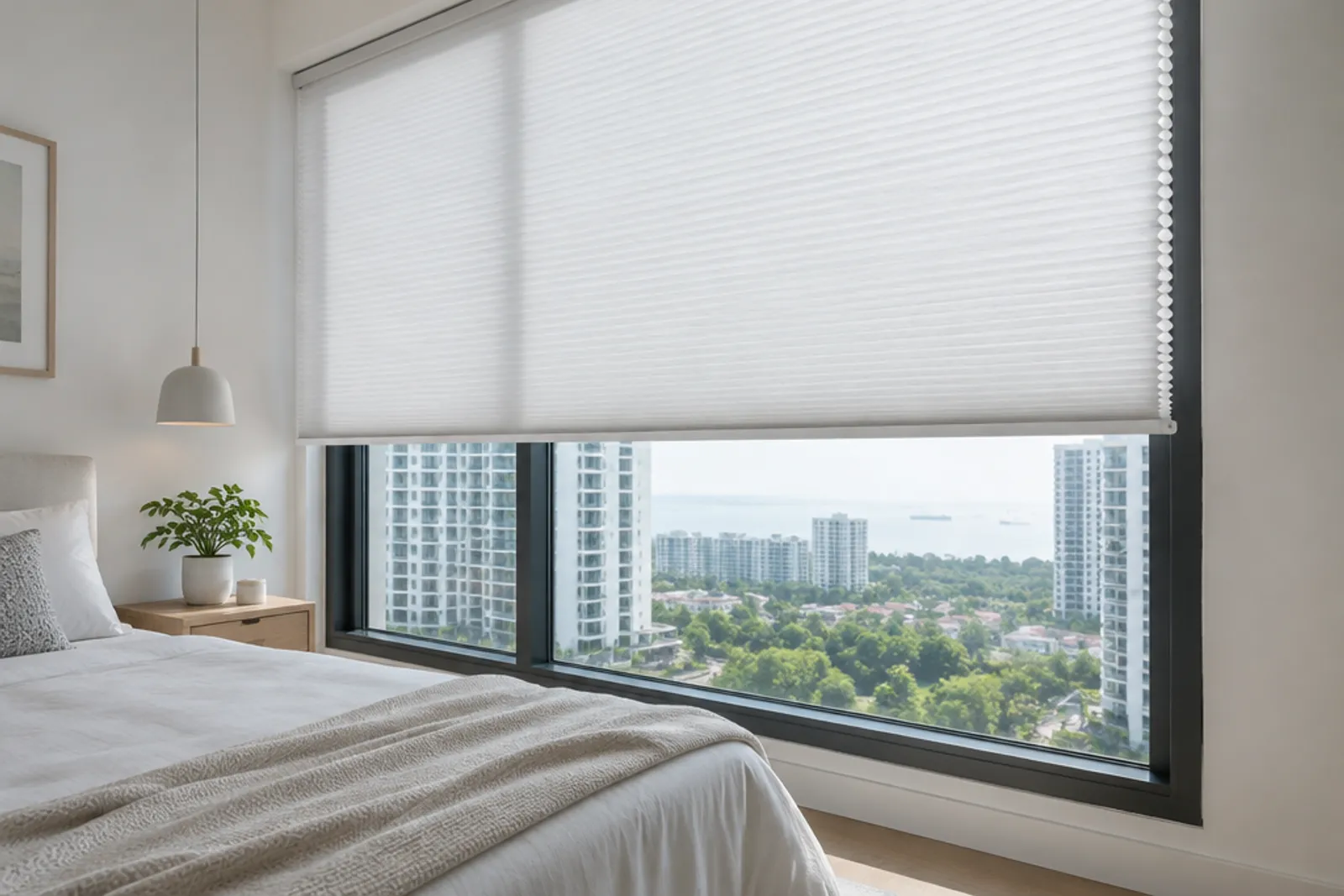
Picture a bedroom in an HDB flat with the window facing the next block. In the day you want the room bright, but you would rather not have the neighbours looking straight in while you change. In the afternoon, the glass warms up in the sun and the room near the window feels stuffy. Honeycomb blinds can help with both. They are less common in Singapore homes than roller or Korean combi blinds, so here is how they work, where they do well, and where another blind would serve you better.
How a honeycomb blind is built
A honeycomb blind, also called a cellular blind, is made of two or more layers of pleated fabric bonded together. Seen from the side, the layers form a row of hollow cells that look like a slice of honeycomb. When the blind is lowered, these cells open up into pockets of trapped air. When it is raised, the pleats fold flat and stack neatly at the top of the window.
That pocket of air is the main reason people choose them. Air that sits still slows the transfer of heat between the warm glass and the room. A flat sheet of fabric, such as a roller blind, has no such layer built in. The cells also give the blind a soft, textured face from inside the room, and the fabric stays crisp because the pleats are set into the material.
Honeycomb blinds are light for their size, and the stack at the top is compact. A raised blind takes up only a few centimetres of the window, which helps on a short window where you want to keep as much of the view as possible.
Single cell or double cell
You will usually be offered single-cell or double-cell fabric.
A single-cell blind has one row of cells. It is lighter and slimmer when raised. It suits most bedrooms, study rooms and living-room windows that do not face strong direct sun.
A double-cell blind has two rows of cells stacked front to back, so there are two pockets of air between the glass and the room. That adds insulation and a little more sound softening, and the blind looks fuller. The trade-off is a deeper stack when raised and a slightly heavier blind, which you notice more on a wide window.
For a west-facing room, double cell is the one to look at first. For a north- or south-facing window that rarely gets direct sun, single cell is normally enough.
Cell size also varies. Smaller cells give a neat, fine look that suits a narrow window. Larger cells look bolder on a big window and fold into fewer pleats.
Light-filtering or blackout
The fabric decides how much light comes through.
Light-filtering fabric lets soft daylight into the room while hiding the view in. The light is diffused evenly, so there are no bright stripes or slats, and the room keeps a calm, even glow. This works well for living rooms, study rooms and any window where you want privacy without turning the lights on in the day.
Blackout honeycomb blinds have an opaque layer inside the cells. They block light through the fabric itself, which suits bedrooms, nursery rooms and anyone sleeping in the day after a night shift. As with any blind that sits inside a window frame, a thin line of light can still come in at the sides. If you need a properly dark room, pair the blind with a blackout curtain, or mount it outside the recess so it overlaps the frame. Our guide to blackout and dim-out curtains explains the difference in light levels if you are deciding how dark the room needs to be.
Top-down bottom-up for privacy
A top-down bottom-up blind has a moving rail at both the top and the bottom. You can raise the blind from the bottom as usual, or lower it from the top so the upper part of the window is open while the lower part stays covered.
This suits Singapore flats and condos well. Many bedroom and living-room windows face another block at a similar height, or look onto a common corridor. Lowering the blind from the top lets daylight and sky into the room while the lower half blocks the line of sight from the corridor or the window opposite. It is also handy in a ground-floor or low-floor unit where people walk past.
Honeycomb is one of the few blind types that offers this easily, because the fabric folds from both ends. Roller and Korean combi blinds roll from the top only, so they cannot leave the top of the window open while covering the bottom.
The controls need a little more thought. A top-down bottom-up blind has two rails to move, so check how each one is operated and that it is comfortable to reach on a tall window.
Heat in west-facing rooms
Singapore’s typical daytime maximum temperature sits around 31 to 33°C for much of the year, according to the Meteorological Service Singapore. A west-facing window takes the low afternoon sun directly, and the glass becomes warm to the touch. That warmth radiates into the room and makes the area near the window uncomfortable.
A honeycomb blind lowered over that glass places a layer of trapped air between the window and the room. It cuts glare and slows how quickly heat from the glass reaches the room. A double-cell or blackout fabric does more than a light-filtering single cell. How much difference you notice depends on the glass, the direction, the size of the window and how closely the blind fits the frame, so treat any heat benefit as a help rather than a replacement for air-conditioning.
The fit makes a difference. A blind mounted inside the recess with small side gaps lets warm air move around the edges. One mounted outside the recess, overlapping the frame, covers more of the glass. We look at this during a measuring visit, since recess depth and window handles affect which option will work.
If your main concern is afternoon heat, our article on whether blackout curtains keep heat out covers the same question for curtains, and many west-facing rooms use a blind and a curtain together.
Humidity, mould and cleaning
Singapore’s mean annual relative humidity is around 82%. That does not tell you the humidity in your bedroom, but it is a reason to think about care before you buy.
Honeycomb fabric is usually a polyester material and it does not soak up moisture the way heavy cotton does. Even so, the cells are open at the sides, and dust or small insects can collect inside them over time. Regular care is simple. Run a vacuum with a soft brush attachment along the pleats, and blow out the cells with a hairdryer on a cool setting or a can of air every so often. Spot-clean marks with a damp cloth and mild soap, then let the fabric dry fully with the blind lowered. Check the care instructions for your chosen fabric, as some can be washed gently and others cannot.
Honeycomb blinds are not a good choice for wet areas. In a bathroom or a kitchen window above the sink, steam and splashes can mark the fabric and moisture can sit in the cells, which encourages mould. A PVC or aluminium venetian blind, or a roller blind in a moisture-resistant fabric, is easier to look after there. The same goes for a window that is often left open during the monsoon season, when rain can blow in and wet the lower pleats.
If dust allergies are a concern, the cells are harder to clean thoroughly than a flat roller fabric. Factor that in before you choose.
How honeycomb compares with roller and Korean combi blinds
Roller and Korean combi blinds are the two types people most often weigh up against honeycomb.
A roller blind is one flat sheet of fabric. It is easy to wipe clean, simple to operate and available in sunscreen fabrics that keep the view out to the next block during the day. It has no built-in air layer, and it can only open from the bottom.
A Korean combi blind uses two layers of striped fabric. You shift the stripes to let light in or cover the gaps, so you can change the light without raising the blind. It is a strong choice for living rooms, though the sheer stripes still let some light through when closed.
| Feature | Honeycomb (cellular) | Roller | Korean combi |
|---|---|---|---|
| Insulation from sun-heated glass | Best of the three, especially double cell | Limited, depends on fabric | Limited, two thin layers |
| Light options | Light-filtering or blackout | Sunscreen, dim-out or blackout | Adjustable sheer and solid stripes |
| Privacy with daylight | Very good with top-down bottom-up | Sunscreen gives daytime privacy only | Good, adjust the stripes |
| Opens from the top | Yes, with top-down bottom-up | No | No |
| Stack when raised | Compact pleats | Compact roll | Compact roll |
| Cleaning | Vacuum and blow out the cells | Wipe the flat fabric | Wipe or vacuum the fabric |
| Wet areas | Not suitable | Suitable in moisture-resistant fabric | Not ideal |
| Best placed | Bedrooms, west-facing rooms, windows facing a block | Kitchens, offices, TV walls | Living rooms, bedrooms |
Our guide to blinds for living rooms compares these and other types for wide windows and balcony doors.
Where honeycomb blinds fit best
Honeycomb blinds suit:
- bedrooms where you want privacy from the block opposite but still want daylight
- west-facing rooms that heat up in the afternoon
- nursery rooms and rooms for day sleepers, in blackout fabric
- low-floor or corridor-facing windows, with top-down bottom-up
- skylights and high windows, since the fabric is light and can be fitted with guide cords or motorised
They are a weaker fit for bathrooms, kitchens and balcony doors you walk through often. A sliding door is easier with vertical blinds or curtains that draw to the side.
Many honeycomb blinds can be motorised, which helps on high windows and lets you lower a blind on a west-facing window on a schedule. Our guide to smart curtains and blinds covers motor and control options. Plan any power point before renovation work closes up the wall.
Common questions
Are honeycomb blinds and cellular blinds the same thing?
Yes. Both names describe the same blind made of bonded pleated fabric that forms hollow cells. Some suppliers also call them pleated cellular shades.
Do honeycomb blinds keep a room cooler in Singapore?
They help by placing a layer of trapped air between sun-heated glass and the room, and they cut glare. A double-cell or blackout fabric does more than a single-cell light-filtering one. They will not replace air-conditioning, and the effect depends on the window, its direction and how closely the blind fits.
What does top-down bottom-up mean?
It means the blind has a moving rail at the top as well as the bottom. You can lower the blind from the top to let daylight in above while the lower part of the window stays covered for privacy. It suits windows facing another block or a corridor.
How do I clean honeycomb blinds?
Vacuum along the pleats with a soft brush attachment and blow dust out of the cells with a hairdryer on a cool setting. Spot-clean marks with a damp cloth and mild soap, then let the fabric dry fully. Check the care instructions for your fabric before washing it.
Can I use honeycomb blinds in a bathroom?
It is better not to. Steam and splashes can mark the fabric, and moisture can collect in the cells and lead to mould. A PVC venetian blind or a roller blind in moisture-resistant fabric is easier to keep clean in a wet area.
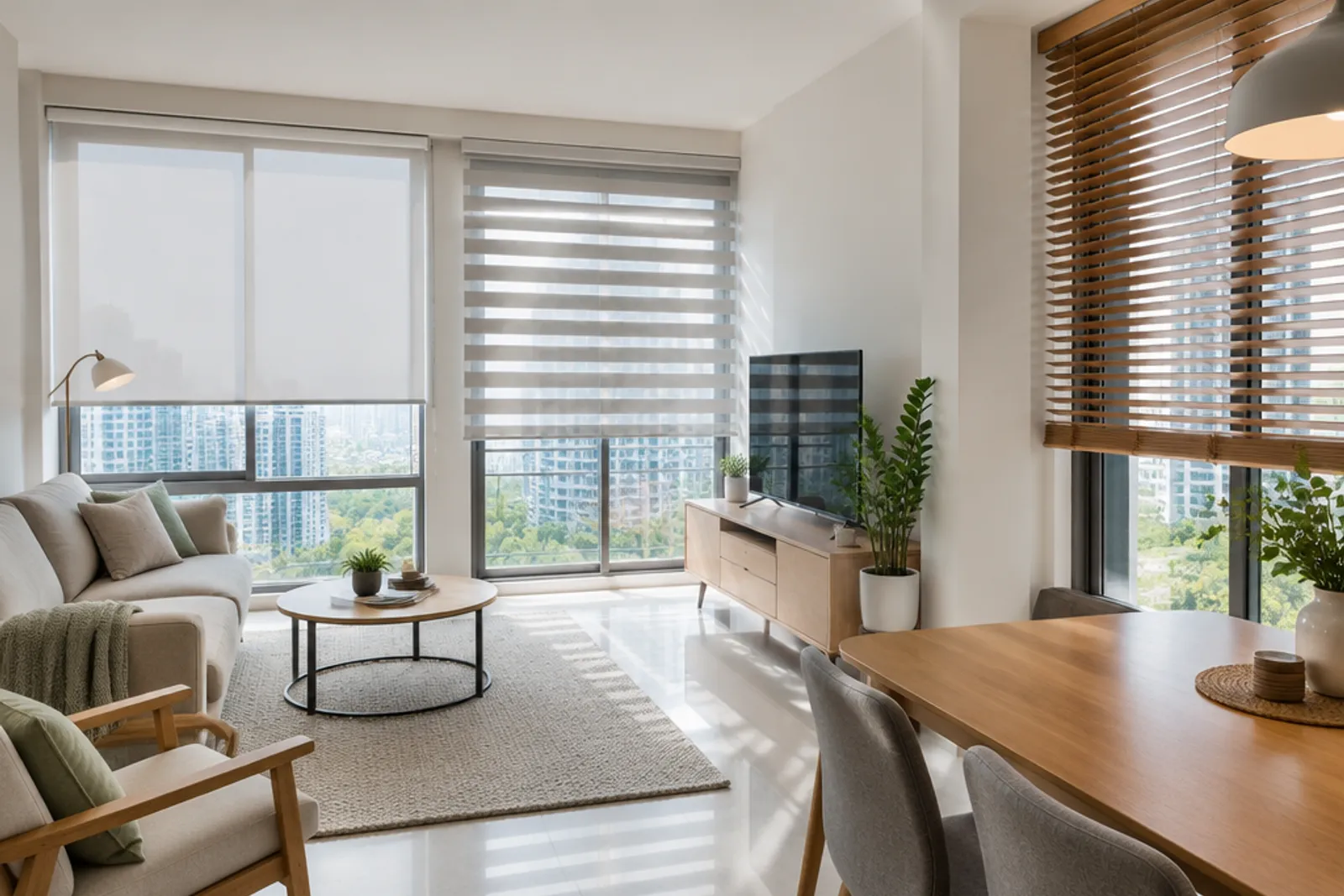 Types of Blinds in Singapore: 9 Options Compared
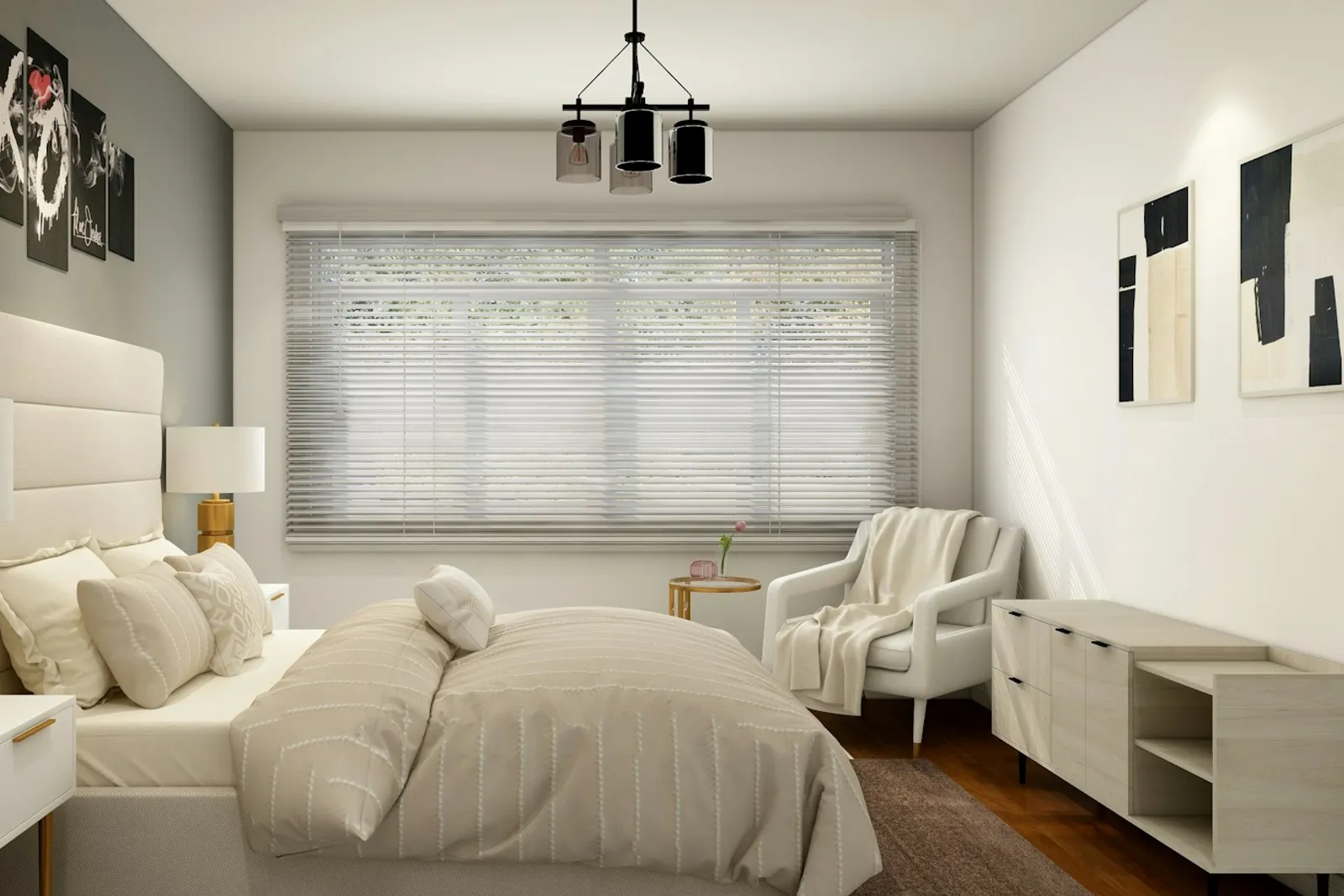 Blackout Blinds or Blackout Curtains for a Singapore Bedroom?
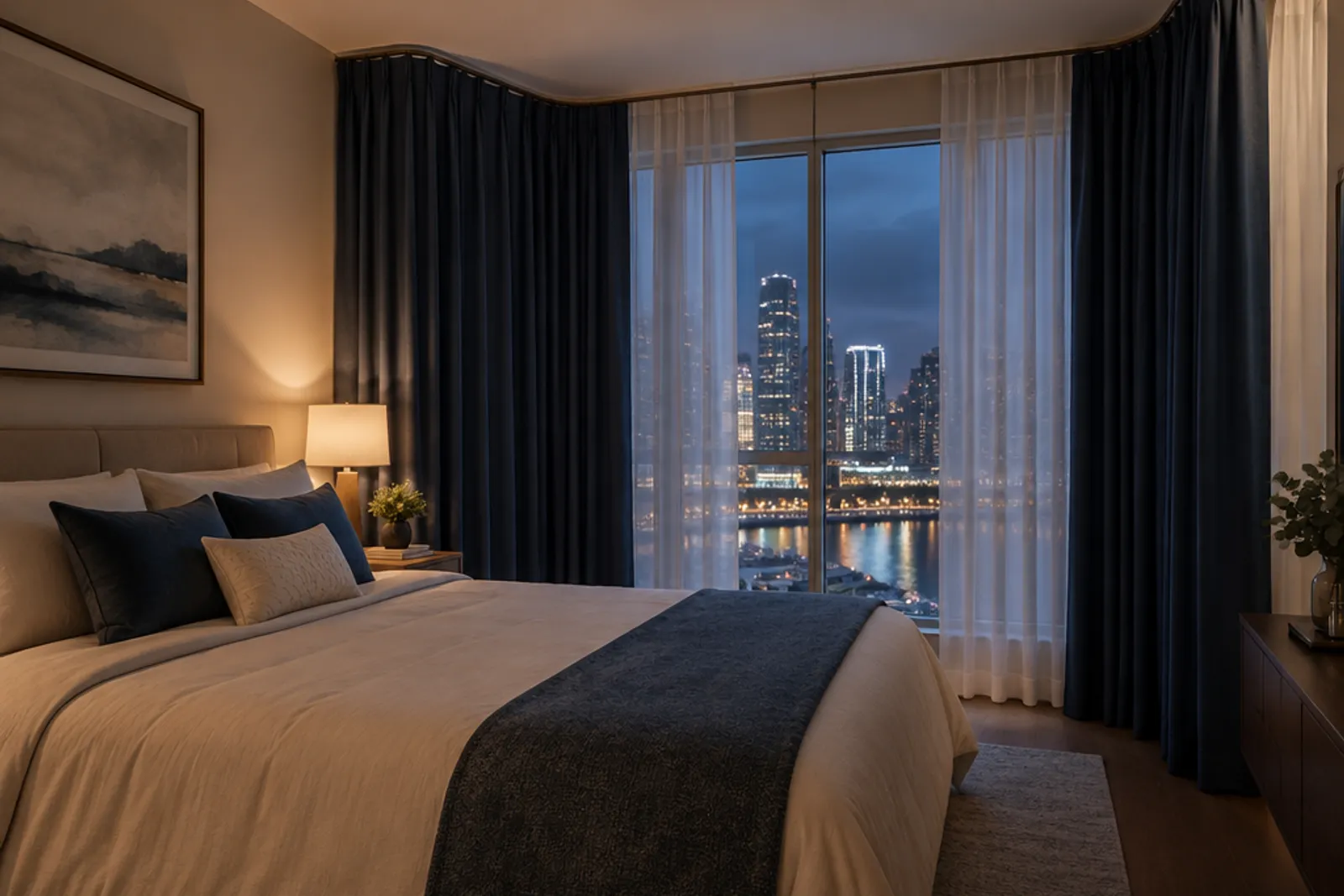 12 Bedroom Curtain and Blind Ideas for Better Sleep in Singapore