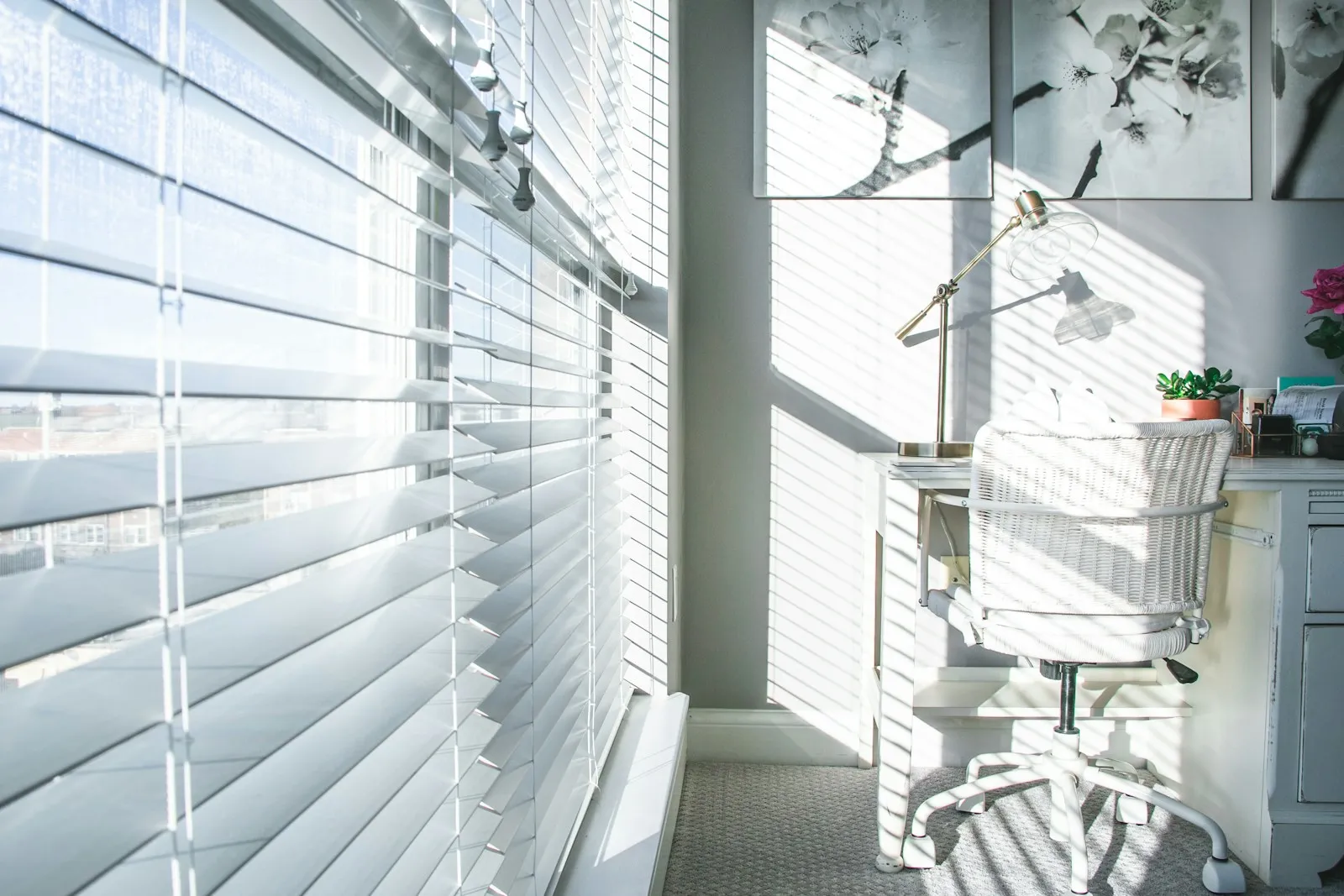
An office window has a harder job than a window at home. Staff sit facing screens for most of the day, the sun moves across the glass, and a meeting room may need to go dark for a presentation at short notice. Many Singapore offices also have wide glazing, full-height glass or windows that face a busy road or another tower. The blinds you choose decide whether people can work near the window or end up pulling their desks away from it.
Start with how each area of the office is used
Walk through the office at different times of day before choosing anything. Note three things for each window.
- Who works there and what they look at. A row of desks with monitors needs glare control first. A reception area or pantry can put appearance and view first.
- Which way the glass faces. West-facing windows take strong afternoon sun, and east-facing ones catch it early in the morning. North and south faces get less direct sun but can still reflect glare off nearby buildings.
- Whether the room needs to go dark or private. Meeting rooms, interview rooms and training rooms often need blackout or full privacy from the corridor or the next building.
An office usually ends up with two or three blind types, matched to these areas, rather than one type everywhere. Keeping the fabric colour and bottom rails consistent across them makes the façade look tidy from outside.
Screen glare and why sunscreen roller blinds are common
Glare on a monitor comes from bright light hitting the screen or from a bright window behind it that the eye has to adjust to. Closing a solid blind solves the glare but leaves staff working under lights all day with no view out, which many people dislike.
A sunscreen roller blind is the usual answer. It is a single sheet of woven fabric, often PVC-coated polyester, with small gaps in the weave. It cuts the brightness of the window and reduces glare on screens, while staff can still see out. Because it is one flat sheet on a tube, it looks neat on a long run of windows and is quick to raise and lower. See our roller blinds page for fabric options.
What openness factor means
Sunscreen fabrics are sold by openness factor, which is the share of the fabric that is open weave, given as a percentage. A lower openness means a tighter weave. It lets in less light and glare, and gives a little more daytime privacy, but the view out becomes dimmer. A higher openness keeps more of the view and daylight but lets more glare through.
For desks facing a west window with monitors, a tighter weave is usually the safer choice. For a pantry or reception area where nobody looks at a screen, a more open fabric keeps the space brighter. Fabric colour also changes the result. Darker fabrics tend to give a clearer view out and less glare from the fabric itself, while lighter fabrics reflect more sun back towards the glass but can look bright and hazy when the sun hits them.
Ask to see samples held up against your own windows in the afternoon. The same fabric can look very different on a north-facing window and a west-facing one.
The night privacy limit
A sunscreen fabric works because the outside is brighter than the inside. After dark, with office lights on, the balance reverses and people outside can see in. For offices that close by early evening, this causes little trouble. If your office faces a residential block or runs evening shifts, consider a double roller with a sunscreen fabric and a blackout or dim-out fabric on one bracket.
Vertical blinds for wide glazing
Vertical blinds hang as a row of vanes from a track and draw to one side. The vanes rotate to control light. They are a practical choice for very wide windows, curtain-wall glazing and glass doors to a balcony or terrace, because a single track can run a long span and the vanes can be angled to follow the sun through the day.
They also suit offices where staff want different settings along one long window. Angled vanes let in daylight while blocking the direct line of the sun, and the full set can be drawn back when the sun moves off that side of the building.
The trade-offs are appearance and movement. Vertical blinds look functional rather than decorative, and vanes near an air-conditioning outlet or an open door can sway and knock together. Fabric vanes can be wiped, though cleaning a long run vane by vane takes time. See our vertical blinds page for vane materials.
Venetian blinds for private offices
Aluminium venetian blinds have long been used in offices, and they still suit private offices and smaller windows. Tilting the slats lets you send light up to the ceiling while blocking the view in from a corridor or the next building. Aluminium copes with Singapore humidity and air-conditioned rooms without warping.
On a long run of glazing, venetian blinds take more effort. Wide blinds are heavy to raise, and slats collect dust from air-conditioning, so they need regular wiping. Our venetian blinds page covers slat widths and materials.
Meeting rooms, projectors and privacy
A meeting room that uses a projector needs to get dark enough for a clear image during the day. A blackout roller blind is the simplest way. Blackout fabric blocks light passing through it, but light still comes in around the edges of the blind, so for rooms where the image has to be sharp, ask about side channels or mounting the blind outside the recess so the fabric overlaps the frame.
Glass-walled meeting rooms that face the open office need privacy more than darkness. A light-filtering or dim-out roller on the internal glass gives staff privacy for interviews and client meetings without making the room feel shut. A Korean combi blind is another option for a smaller room, since its alternating sheer and solid stripes let you switch between a view and privacy without raising it. See our Korean combi blinds page.
If the room uses a large TV or a video conference screen rather than a projector, full blackout is often unnecessary. A tight sunscreen fabric may be enough to keep glare off the screen and the camera exposure even.
Comparing blinds for offices
| Type | Glare on screens | View out | Privacy | Wide or tall glazing | Cleaning | Best placed |
|---|---|---|---|---|---|---|
| Sunscreen roller | Good, depends on openness | Kept in daytime | Limited after dark | Split into several blinds or motorise | Wipe or vacuum the fabric | Open-plan desks, west-facing windows |
| Blackout roller | Blocks it fully | None when lowered | Good | Split into several blinds | Wipe the fabric | Meeting and training rooms with projectors |
| Double roller | Sunscreen by day, blackout when needed | Kept with sunscreen layer | Good with blackout layer | Split into several blinds | Wipe both fabrics | Rooms used day and evening |
| Vertical | Good with vanes angled | Partial | Good when closed | Suits long spans and glass doors | Vane by vane | Wide glazing, terrace doors |
| Aluminium venetian | Fine control by tilting | Partial | Good with slats angled | Heavy on wide spans | Slat by slat | Private offices, smaller windows |
| Korean combi | Moderate | Kept with stripes aligned | Good with stripes closed | Better on standard windows | Wipe or vacuum the fabric | Small meeting rooms, glass partitions |
Motorised blinds for tall glass
Tall windows and double-height lobbies are hard to reach by hand. A long chain on a high blind is awkward to use, and a row of blinds across a façade means someone has to walk along and adjust each one. Motorised blinds can be raised and lowered together from a wall switch, a remote or an app, and some systems can run on a timer, such as lowering the west-facing blinds before the afternoon sun.
Motorisation also removes loose chains from desks and walkways, and gives a uniform line across the glass since every blind stops at the same height. Plan the power supply early. Wired motors need power points near the head of each blind, which is far easier to arrange during a renovation than after the ceiling is closed. Battery motors avoid the wiring but need recharging. Our guide to smart curtains and blinds explains the control options.
Fire safety and building rules
Commercial buildings often have their own requirements for window furnishings, and fabric used in offices may need to meet a fire-performance standard. Requirements vary by building and use, so check with your building management or fit-out contractor before you choose a fabric. Ask whether they need a fabric certificate or specification sheet, and whether the landlord has rules on blind colour as seen from outside, since some buildings ask for a uniform look on the façade.
Bring those requirements to the fabric selection, so you only compare fabrics that the building will accept.
Cleaning and durability
Singapore’s mean annual relative humidity is around 82% (Meteorological Service Singapore). Offices are air-conditioned during working hours, but some rooms sit closed and unconditioned over weekends, and windows near pantries or balconies get damp air. That is when mould can start on fabric blinds, especially on the side facing the glass where condensation forms.
A few habits help blinds last.
- Choose fabrics that can be wiped or vacuumed for open-plan areas, and check the supplier’s care instructions before ordering.
- Vacuum fabric blinds with a soft brush attachment every few months to remove dust from the air-conditioning.
- Leave sunscreen blinds partly raised over long weekends in rooms that get damp, so air moves behind them.
- Wipe aluminium slats and the bottom rails of vertical blinds, which collect the most dust.
- Report stiff chains or a blind that drifts down early, since a small fix is easier than replacing a mechanism.
If the office also has curtains, such as in a boardroom or reception, we offer curtain cleaning on site or by taking them away and rehanging them after cleaning.
Planning installation around office hours
Installing blinds means ladders, drilling and some dust near desks, which is disruptive during working hours. When you request a quote, ask whether installation can be scheduled for early morning, evening or a weekend, and confirm what access the building allows. Many commercial buildings require advance notice, a work permit or a lift booking for contractors, so check this with building management before you fix a date.
It also helps to confirm which windows are affected, whether furniture near the glass needs to be moved, and who on your side will let the installers in. Our installation page explains what happens on the day.
Common questions
What are the best blinds for an office in Singapore?
Sunscreen roller blinds suit most open-plan areas, since they cut screen glare while keeping the view. Add blackout rollers for meeting rooms with projectors and vertical blinds for very wide glazing or glass doors.
Are vertical blinds good for offices?
Yes, especially on wide windows and curtain-wall glazing. One track can run a long span, and the vanes can be angled to block direct sun while letting in daylight. They look more functional than roller blinds and can sway near air-conditioning vents.
What openness factor should I choose for office sunscreen blinds?
A lower openness, meaning a tighter weave, gives more glare control and is the safer choice for desks with monitors near sunny windows. A higher openness keeps more view and daylight and suits areas without screens. Compare samples on your own windows before deciding.
How do I make a meeting room dark enough for a projector?
Use a blackout roller blind, and reduce light around the edges with side channels or by mounting the blind outside the recess so it overlaps the frame. If the room uses a TV screen instead, a tight sunscreen fabric may be enough.
Do office blinds need to be fire-rated?
It depends on the building. Many commercial buildings have their own requirements for window furnishings, so check with your building management or fit-out contractor and ask whether they need a fabric certificate before you choose.
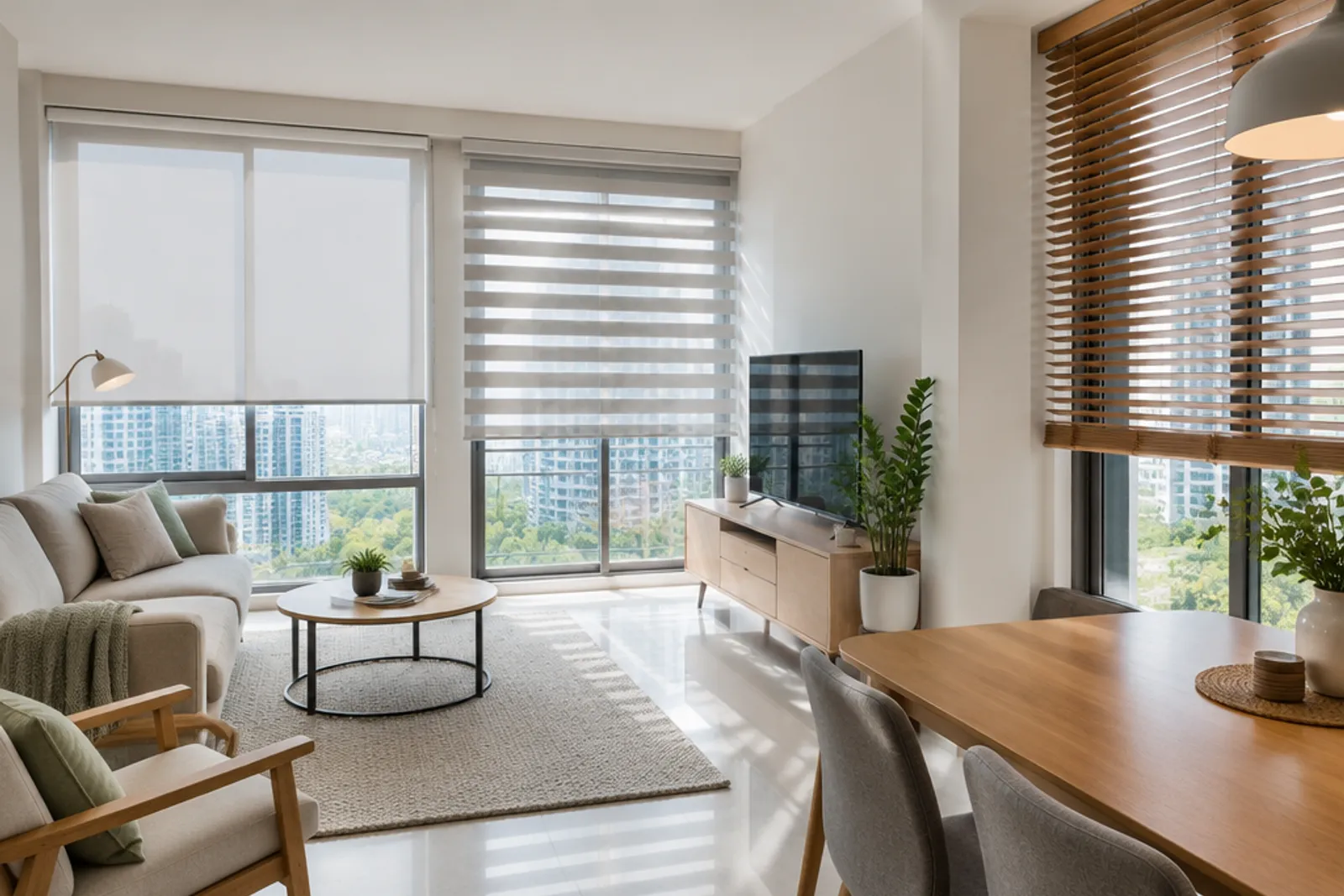 Types of Blinds in Singapore: 9 Options Compared
 How to Clean Blinds in Singapore: Venetian, Roller and Korean Combi
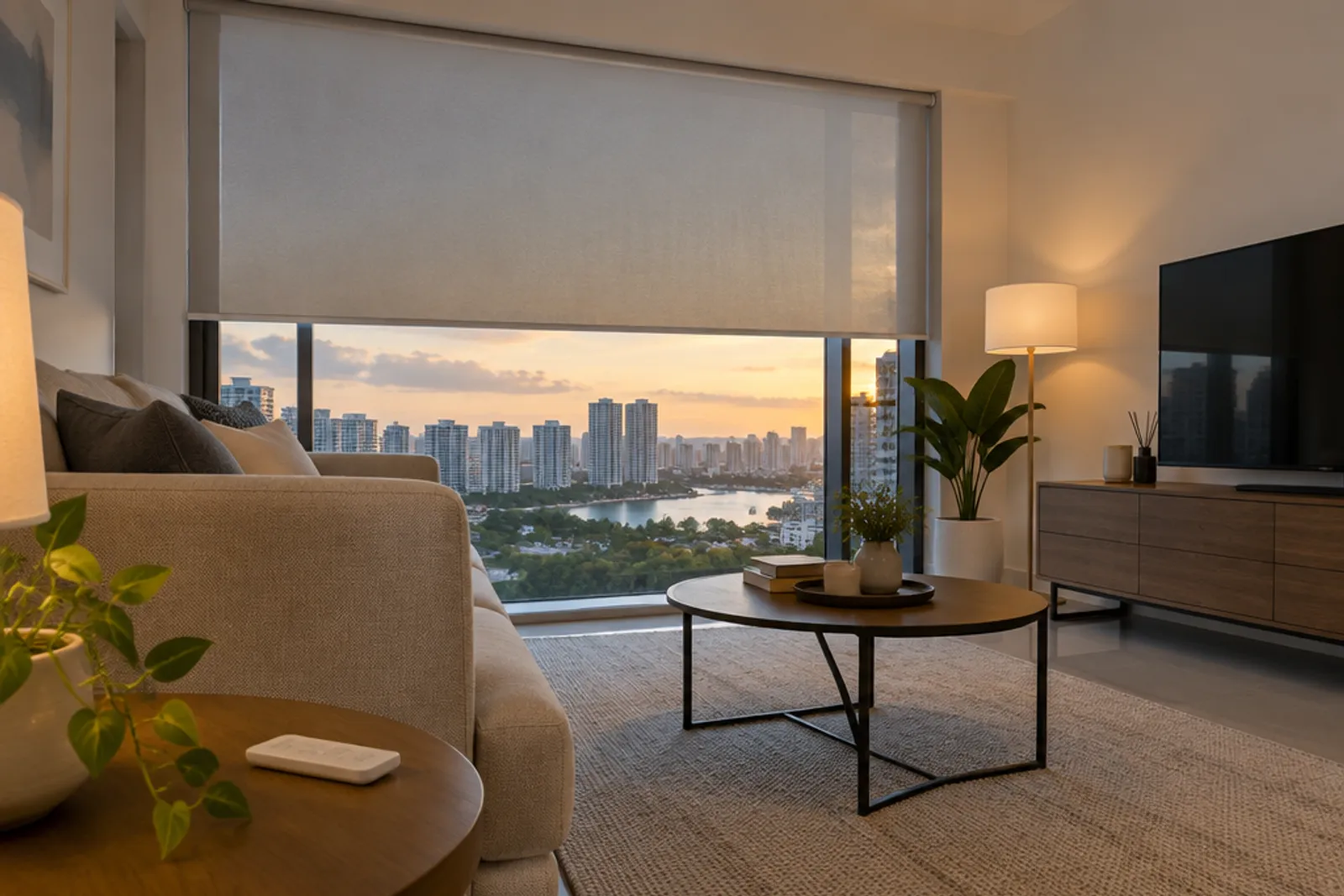 Motorised Blinds and Curtains in Singapore: What to Plan Before Renovation