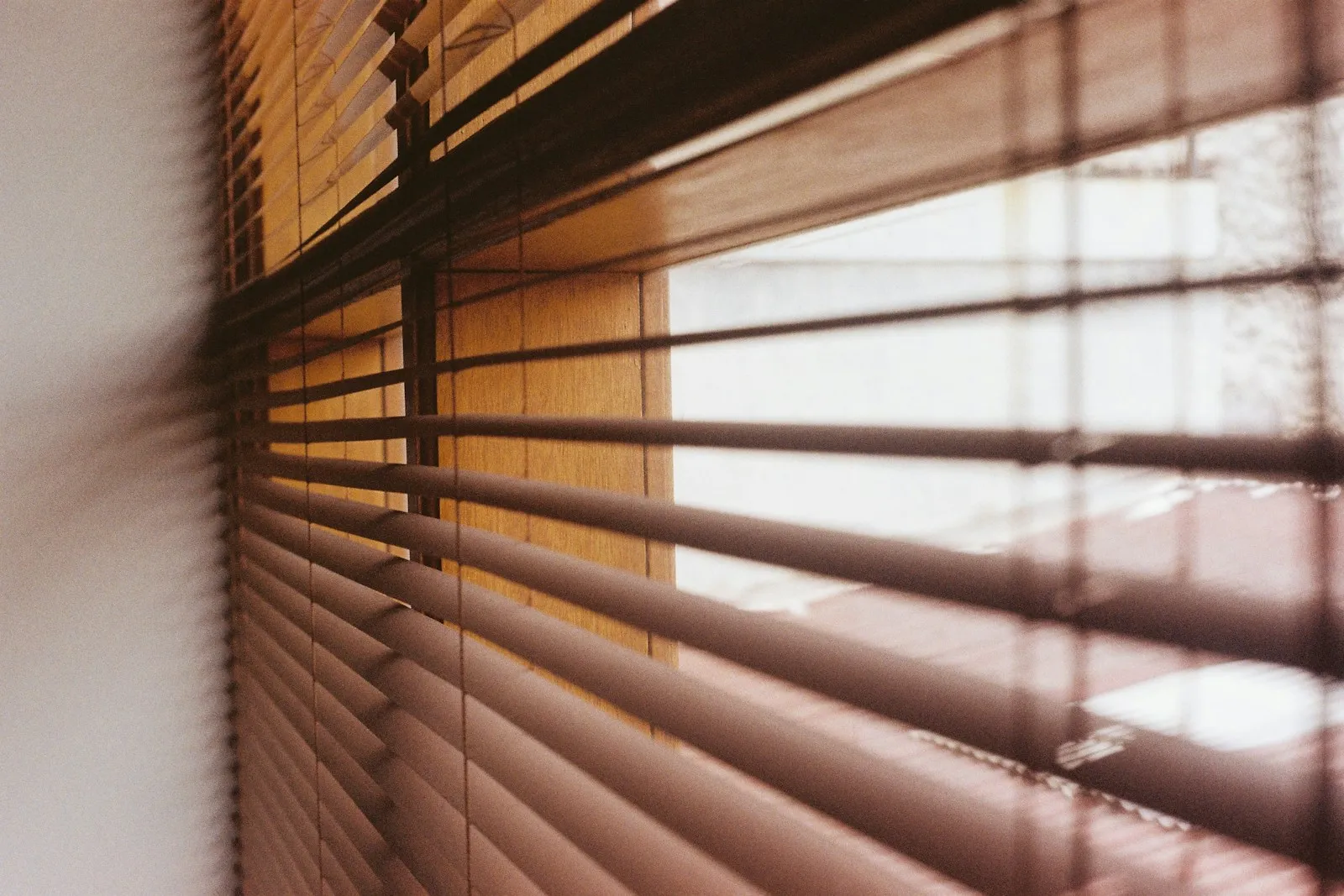
Wooden blinds look warm and solid in a bedroom or study, and they are often the first venetian blind people ask about. In Singapore, the question that follows is whether real timber can cope with the air. Meteorological Service Singapore puts the mean annual relative humidity at around 82%, and a flat that stays shut while everyone is at work, or a bathroom that steams up twice a day, can feel damper than that. Wood, aluminium and PVC all make good venetian blinds, but they react to moisture, heat and daily handling in different ways. Choosing by room rather than by look alone saves a lot of frustration later.
How the three materials differ
All three are venetian blinds. They use horizontal slats on ladder cords, tilt to control light and view, and lift up to clear the window. The difference is what the slats are made of.
Real wooden blinds use thin slats of timber, usually basswood or a similar light hardwood, sealed with a paint, stain or lacquer finish. They have natural grain, a slightly matte surface and a solid feel.
PVC blinds, often sold as faux wood blinds, use slats made from PVC or a PVC composite, moulded or embossed to look like painted or stained timber. From a few metres away, a good faux wood slat is hard to tell apart from timber.
Aluminium blinds use thin, curved metal slats with a baked-on colour coat. They look lighter and more modern, and come in a wide range of colours, including metallic and wood-print finishes.
What Singapore humidity does to each slat
Real wood
Timber takes in moisture from the air and releases it again as conditions change. A good sealed finish slows this down, but it does not stop it completely. Over time, slats in a damp room can bow, twist slightly or lose their flat line, and a warped slat no longer closes neatly against its neighbours. The finish can also lift or crack along the edges, which lets more moisture in.
None of this means wooden blinds fail in Singapore. In a bedroom or study where the air-conditioner runs regularly, the air is drier and more stable, and wood behaves well. The problems tend to appear in rooms that stay humid for long periods, rooms that get wet, and windows that are often left open during heavy rain.
PVC and faux wood
PVC does not absorb water, so it does not swell or warp from humidity. You can wipe a faux wood slat with a damp cloth without worrying about the finish. This is the main reason faux wood blinds are popular in Singapore homes where people want the timber look near a kitchen, a bathroom or a window that catches rain.
The trade-off is heat and weight. PVC slats are denser than wood, so a faux wood blind of the same size is heavier to lift. On a very wide window, long PVC slats can also sag slightly in the middle over time, especially if they sit in strong direct sun for years. Cheaper PVC can discolour in long-term direct sun as well, so ask about the slat quality for a west-facing window.
Aluminium
Aluminium does not absorb moisture, swell or warp. The coated slats wipe clean with mild soapy water, which makes them the most forgiving option for wet and greasy rooms. They are also the lightest of the three, so they stay easy to raise even on wider windows.
Aluminium has its own weaknesses. The thin slats can dent or crease if they are knocked, pulled unevenly or grabbed by a child or pet. They can tap against each other in a breeze from an open window. And the look is cooler and more functional than timber, which suits some interiors better than others.
Mould on venetian blinds
Mould needs moisture and something to feed on. On a blind, the food is usually the film of dust, cooking grease and skin cells that settles on top of each slat. That is why mould can appear on any venetian blind in a humid room, including aluminium and PVC.
The difference is what happens next. On aluminium and PVC, surface mould sits on the coating and wipes off with a mild detergent. On real wood, mould can take hold in any spot where the finish is worn or cracked, and it is harder to remove without marking the timber. A wooden slat that has been stained by mould may need to be replaced.
To keep mould away from any blind, keep the room ventilated, dust the slats regularly so there is less for mould to grow on, and avoid leaving the blind fully closed against a damp window for days. If your home sees mould on walls or ceilings during the monsoon months, choose aluminium or PVC for those rooms.
Kitchens and bathrooms
Kitchen windows in HDB flats are often next to the stove or above the sink, and the window opens onto a corridor or service yard. Steam, oil and splashes reach the blind every day. Aluminium is the most practical choice here, because grease wipes off the coated slats and they will not swell if they get splashed. PVC also works, though grease on an embossed faux wood surface takes a little more effort to clean.
Bathrooms, especially windows above or beside the shower, are the hardest place for any venetian blind. PVC and aluminium both cope with the steam. Real wood should be avoided in a bathroom. If the window is very small and sits inside the shower area, a roller blind in a moisture-resistant fabric may be easier to keep clean than a slatted blind.
For service yards and windows that let in rain, the same rule applies. Use a material that does not mind getting wet.
Slat widths: 25mm and 50mm
Venetian slats come in different widths. The two you will see most often are 25mm and 50mm.
Narrow 25mm slats are the standard size for aluminium blinds. They stack into a compact bundle at the top when raised, which suits windows with shallow recesses and small windows in kitchens and bathrooms. When closed, the narrow slats give a fine, even look. With more slats per metre of height, there are more edges to dust.
Wide 50mm slats are the usual size for wooden and faux wood blinds. They give a bolder, more furniture-like look and a clearer view out when tilted open, because there are fewer slats crossing the window. They also stack deeper at the top, so a 50mm blind needs more headroom and a deeper recess if you want it to sit inside the window frame. Some ranges offer 35mm or other sizes in between.
As a rough guide, small windows and tight recesses suit 25mm, and larger windows in living rooms and bedrooms suit 50mm, if the recess has room for it.
Weight on wide windows
A wide HDB living-room window or a condo bedroom window can easily be wider than a single venetian blind should go. Wood and especially PVC slats add up quickly in weight. A long, heavy blind is harder to raise on a cord, puts more strain on the lifting mechanism and can rise unevenly if one side catches.
There are a few ways around this. You can split the window into two or three blinds side by side, so each one is a manageable size and you can raise one section at a time. You can choose aluminium, which is much lighter for the same width. Or you can choose motorised operation, which takes the effort off your arms and removes the cords. Our guide on smart curtains and motorisation covers what to plan before choosing a motor.
For a full-height balcony door or a wall of glass, venetian blinds in any material are awkward. Vertical blinds or curtains draw to the side and handle wide spans more easily. Our living room blinds guide compares the options for those windows.
Comparing wooden, PVC and aluminium blinds
| Real wood | PVC / faux wood | Aluminium | |
|---|---|---|---|
| Humidity | Can warp in damp rooms | Does not absorb moisture | Does not absorb moisture |
| Mould | Can stain worn or cracked finish | Wipes off the surface | Wipes off the surface |
| Kitchens and bathrooms | Avoid | Suitable | Most suitable |
| Weight | Moderate | Heaviest | Lightest |
| Usual slat width | 50mm | 50mm | 25mm |
| Wide windows | Split into sections | Split into sections, can sag | Copes better with width |
| Durability to knocks | Firm | Firm | Can dent or crease |
| Cleaning | Dry dust, lightly damp cloth only | Damp cloth, mild soap | Damp cloth, mild soap |
| Look | Natural grain, warm | Timber look, painted or stained | Modern, many colours |
| Best placed | Air-conditioned bedrooms and studies | Living rooms, bedrooms, damper rooms | Kitchens, bathrooms, service yards, wide windows |
Cleaning each type
Dust is the main job with any venetian blind. Close the slats flat, dust them with a microfibre cloth or a duster made for blinds, then turn them the other way and repeat. Doing this every week or two stops dust building into a sticky film, especially near a kitchen or an open window facing a busy road.
For real wood, stick to dry dusting and an occasional wipe with a cloth that is only slightly damp. Do not soak the slats, spray them or use strong cleaners, because water and solvents can lift the finish. Dry any wet patches straight away.
For PVC and aluminium, you can wipe each slat with a cloth dipped in warm water and a little dish soap, then dry it. Kitchen blinds may need this every few weeks to stop grease building up. Avoid abrasive pads, which scratch the coating.
Choosing the look
A venetian blind is on show all day, so the finish deserves thought. Real wood has a depth of grain that faux wood can imitate but not fully match up close. If you want that natural feel in a bedroom, study or a living room that is mostly air-conditioned, real wood is a fair choice.
Faux wood gives you most of that look in rooms where real timber would struggle, and white or light grey faux wood suits many HDB and condo interiors. Aluminium is the better fit for a clean, modern look, for offices, and for rooms where practicality comes first. Some homes mix materials, with wood or faux wood in the living areas and aluminium in the kitchen and bathrooms, choosing colours that tie the rooms together.
If you are still deciding between slats and fabric, our guide to curtains or blinds compares the two.
Common questions
Are wooden blinds suitable for Singapore’s humidity?
Yes, in drier rooms. Real wooden blinds suit bedrooms and studies where the air-conditioner runs regularly and the window stays dry. In kitchens, bathrooms and rooms that stay damp or catch rain, the slats can warp, so PVC or aluminium is a safer choice.
What is the difference between PVC and faux wood blinds?
They are usually the same product. Faux wood blinds are made from PVC or a PVC composite, finished to look like painted or stained timber. Some ranges use the term PVC blinds for plainer slats and faux wood for the timber-effect versions.
Which venetian blind is best for a kitchen?
Aluminium is the most practical, because grease and splashes wipe off the coated slats and the material does not absorb moisture. PVC also works if you prefer the timber look. Avoid real wood next to a stove or sink.
Should I choose 25mm or 50mm slats?
Choose 25mm for small windows, shallow recesses and kitchens or bathrooms, since narrow slats stack compactly. Choose 50mm for larger windows where you want a bolder look and a clearer view when the slats are open. Check that the recess is deep enough for a 50mm blind if you want it fitted inside the frame.
Can venetian blinds go on a very wide window?
They can, but a single wide blind becomes heavy, particularly in wood or PVC. Splitting the window into two or three blinds, choosing aluminium or adding motorised operation all make wide windows easier. For full-height glass doors, vertical blinds or curtains usually work better.
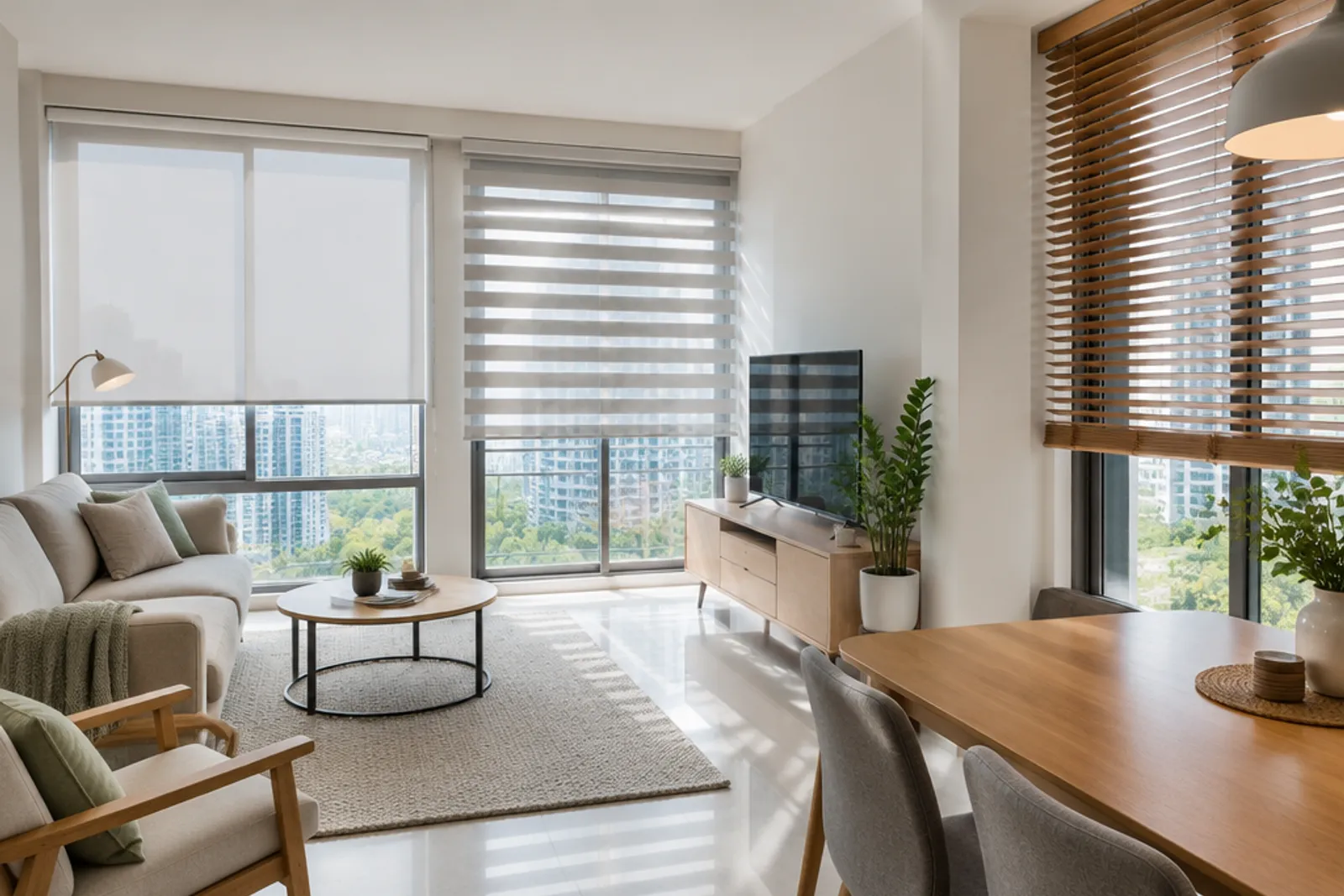 Types of Blinds in Singapore: 9 Options Compared
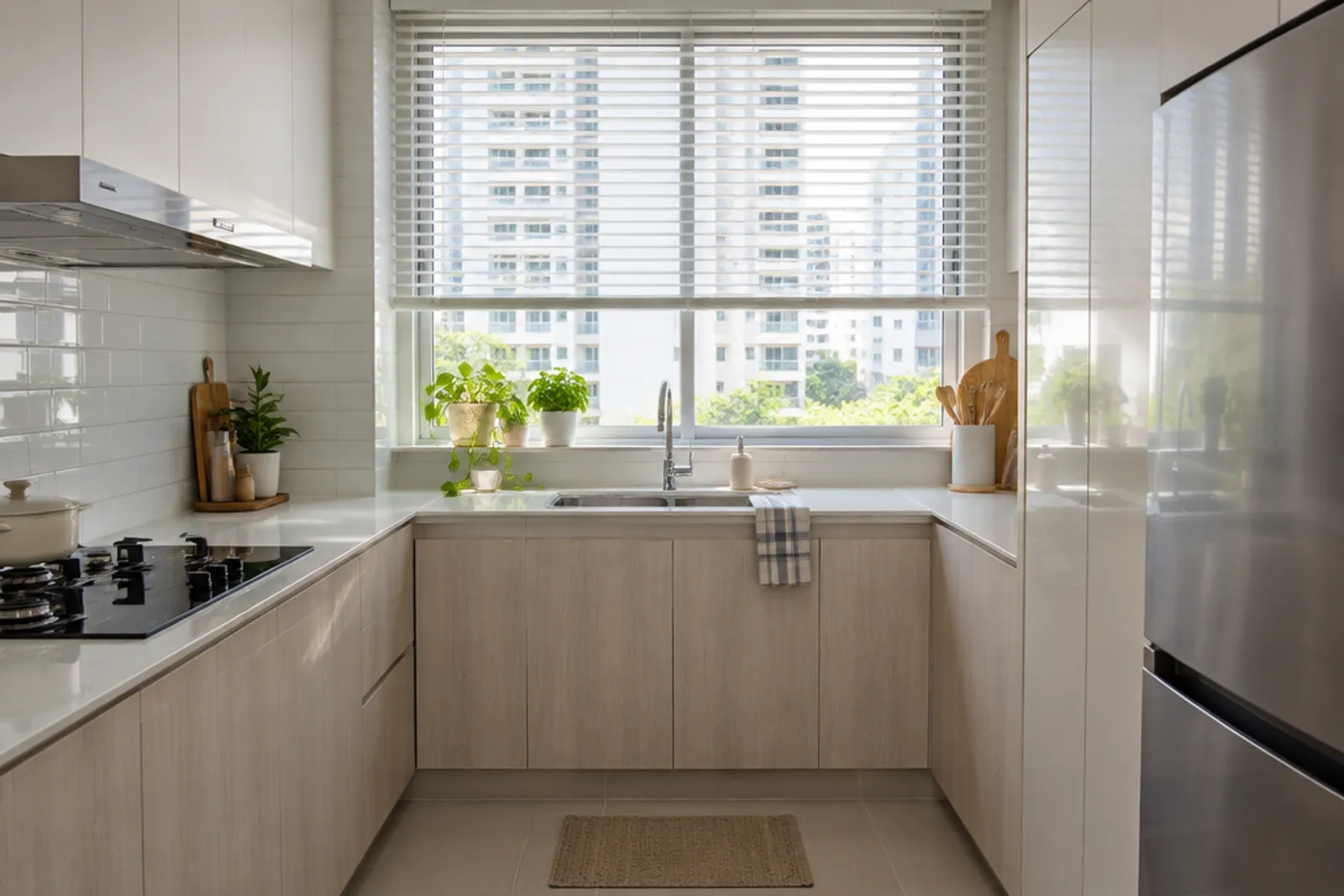 8 Kitchen Window Ideas for HDB and Condo Kitchens
 How to Clean Blinds in Singapore: Venetian, Roller and Korean Combi