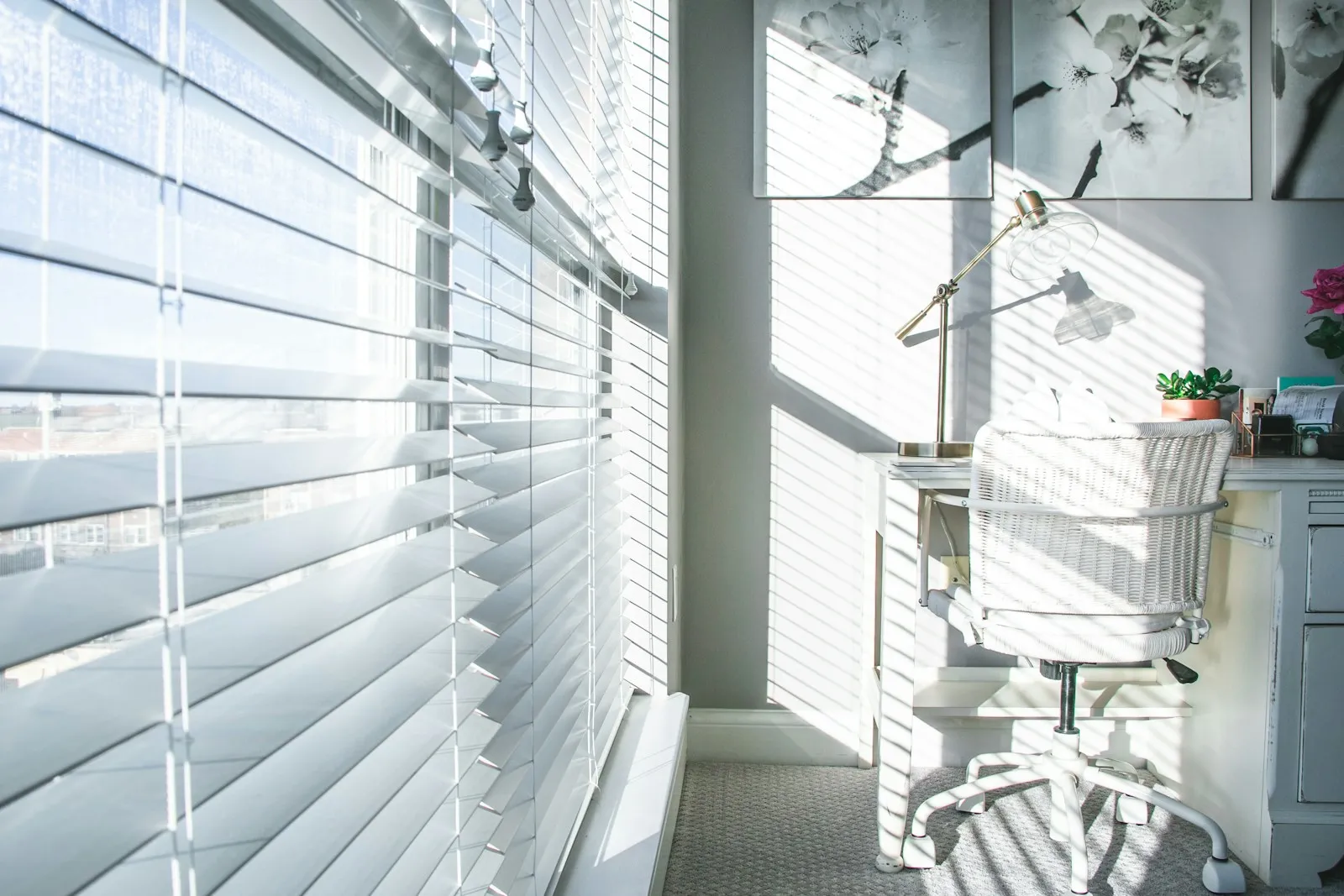
A room can be hot near the glass, a laptop can be unreadable, and a sofa can be losing its colour, all from the same window. They are not one problem. A blind that helps the screen can be a weak answer to the heat, and a cloth chosen for heat can still let a sofa fade during the hours it is raised.
Name the complaint before you pick a product. Sunscreen rollers, sometimes called solar shades, honeycomb blinds and outdoor blinds each lean toward a different one.
How to tell them apart
Use one sunny afternoon, and separate what you feel from what you see.
Heat shows up on surfaces. The pane or the frame is warm to the touch. The floor, the bed or the desk near the glass is warm. The room can stay uncomfortable after the sun has moved off the furniture, because the glass is still giving off heat. Our guide on whether blackout curtains keep heat out walks through that for curtains. The same two paths, sun on the room and heat from the glass, apply to a blind.
Glare is a contrast problem in visible light. You can see, and you squint, or a screen or a television becomes a mirror of the window. It can happen on a bright overcast day when the room does not feel hot. Stripes from venetian slats, or a pale blind that glows, are glare even when the air is tolerable.
Fading is slow. A pale patch on a sofa, a rug or a timber floor matches where the sun lands, and it has been building for months. Making this afternoon more comfortable does not put the colour back. The furniture fading guide is that subject. This page is about choosing the layer once you know which complaint is yours.
Singapore does not give you a cool season to wait for. The Meteorological Service Singapore describes the climate as high and uniform temperatures and high humidity all year, with prominent changes through the day driven by solar heating. The daily maximum usually does not rise above 31 to 33°C. A west-facing pane in the afternoon needs cover in every month of the year.
The National Environment Agency’s ultraviolet index is a different measurement. It is taken at Changi and reported every 15 minutes from 7am to 7pm. The bands are 0 to 2 low, 3 to 5 moderate, 6 to 7 high, 8 to 10 very high, and above 11 extreme. The index is about exposure of skin and eyes. It is not a temperature for your living room, and it is not a fading meter for a sofa. A high reading is a reason to cover up outdoors. It does not tell you which blind to buy.
If the problem is heat
Light-coloured sunscreen cloth reflects more near-infrared than dark cloth. That is the heat-related part of sunlight, and Mermet’s technical fabric guide states the colour difference in section 7.5. The openness and colour guide shows how to read the solar reflectance on a card instead of guessing from the percentage.
Where the shade sits matters as much as the colour. Sun that hits a blind outside the glass warms the blind in the open air. Sun that hits a blind inside the room has already passed through the pane, and the pane warms. Mermet’s guide says an exterior blind has a greater effect on the glazing system than the same idea used indoors (section 9.8). On a balcony where the development allows an outdoor blind, that is the earlier stop. Our outdoor zip blinds are the product for exposed balconies, and the open balcony guide covers the permissions. An ordinary indoor window often cannot take an exterior blind.
Indoors, a sunscreen or a lined curtain still stops direct sun landing on the floor while it is down. It does less about heat already in the glass, and gaps at the edges let warm air move. A 2019 US Department of Energy note on window attachments treats exterior shades on south- and west-facing windows as a cooling measure in US lab homes, and it marks those cooling results as preliminary and not a full-year figure. That is not a Singapore saving, and we do not quote one.
Honeycomb, or cellular, blinds add pockets of still air. A US Department of Energy factsheet on interior cellular shades says they reduce unwanted solar heat gain. The house experiments it describes focused on heating-season energy, and it says research is still needed on cooling-season control and benefits. The test house was in Tennessee. The honeycomb guide explains the cells for a Singapore room and repeats that limit. Any heat help sits beside air-conditioning. We do not quote a temperature drop.
If the problem is glare
Darker cloth and a lower openness are the fabric-maker’s glare tools, because they cut visible transmission and the glow of the yarns (Mermet, section 11.3). Their selection guide treats a visible transmittance under 8% as effective glare control on the cloths they test. Check the Tv figure. A pale blind can reflect heat and still be bright enough to wash out a screen.
Venetian blinds are the other glare tool: tilt the slats so light goes to the ceiling and the bright pane leaves your line of sight. You keep a striped pattern, which some people mind on a monitor and others do not. The sun and glare checker shows the direction of the sun on that window through the year, so you can see whether the problem is a morning pane or an afternoon one.
A hypothetical study in a north-facing room can have this complaint with almost no heat. The sky is bright, the glass is not hot, and the laptop faces the window. A dark sunscreen, or slats tilted up, answers the screen. A blackout cloth would also stop the glare, and it would put the lights on for the working day.
If the problem is fading
Visible light fades colourants, so ultraviolet is not acting alone. The Canadian Conservation Institute’s note on light separates the bands. Ultraviolet, which you cannot see, yellows, chalks and weakens materials, and it also contributes to fading. Infrared heats the surface. A filter or a cloth described only as “UV” can leave the visible light that bleaches a dye.
A blind down during the hours the sun hits the sofa reduces visible light and ultraviolet together, for those hours. Raised, it does nothing. Window film stays on the glass when the blind is up. The fading guide says we do not publish a percentage of ultraviolet blocked, because it depends on the film and the glass. The same caution applies to a sunscreen card: use the measured ultraviolet transmittance if you have it, and do not invent a block rate from the openness.
Faded cloth and faded timber stay faded. Cover the glass before the next year of afternoons.
Which layer to start with
| What you notice | Start with | Then add |
|---|---|---|
| The glass and the nearby floor are warm after lunch | A light-coloured sunscreen, or an outdoor blind where the balcony is allowed to take one | A closer fit, a lined curtain for the peak hours, or film. See the heat guide |
| A screen or the television washes out | A darker sunscreen with low openness, and a low Tv on the card | Tilted venetian slats, or move the screen off the glass |
| A pale patch on the sofa, rug or floor | Cover that pane while the sun is on it | Film for the hours the cloth is open. See the fading guide |
If you need the view in the day and a private or dark room at night, one cloth will not do both jobs. A double roller or day and night curtains is the split. Night visibility through a sunscreen is its own question: can people see through sunscreen blinds at night.
Common questions
Will a blackout blind make the room cooler?
While it is down it stops direct sun on the floor and the furniture. The glass can still be warm, and gaps let heat around the edges. We do not quote a temperature drop or an electricity saving. The heat guide explains the limits for curtains, and they apply here.
Does a high ultraviolet index mean the sofa is fading faster today?
The index describes ultraviolet at Changi for skin and eyes. Fading also follows visible light, and it follows how many hours that light lands on the sofa. A high index is not a measurement of your furniture. Covering the glass during the sunny hours is.
Can one sunscreen fix heat and glare together?
A light cloth leans toward heat and can glow. A dark cloth leans toward glare and the view, and it absorbs more heat. If both complaints are serious, use the dark cloth for the hours you need to see, and a second layer or an exterior shade for the hottest part of the afternoon. Read the card rather than expecting one openness percentage to do both.
 Do Blackout Curtains Keep Heat Out in Singapore?
 How to Stop the Sun Fading a Sofa or Floor
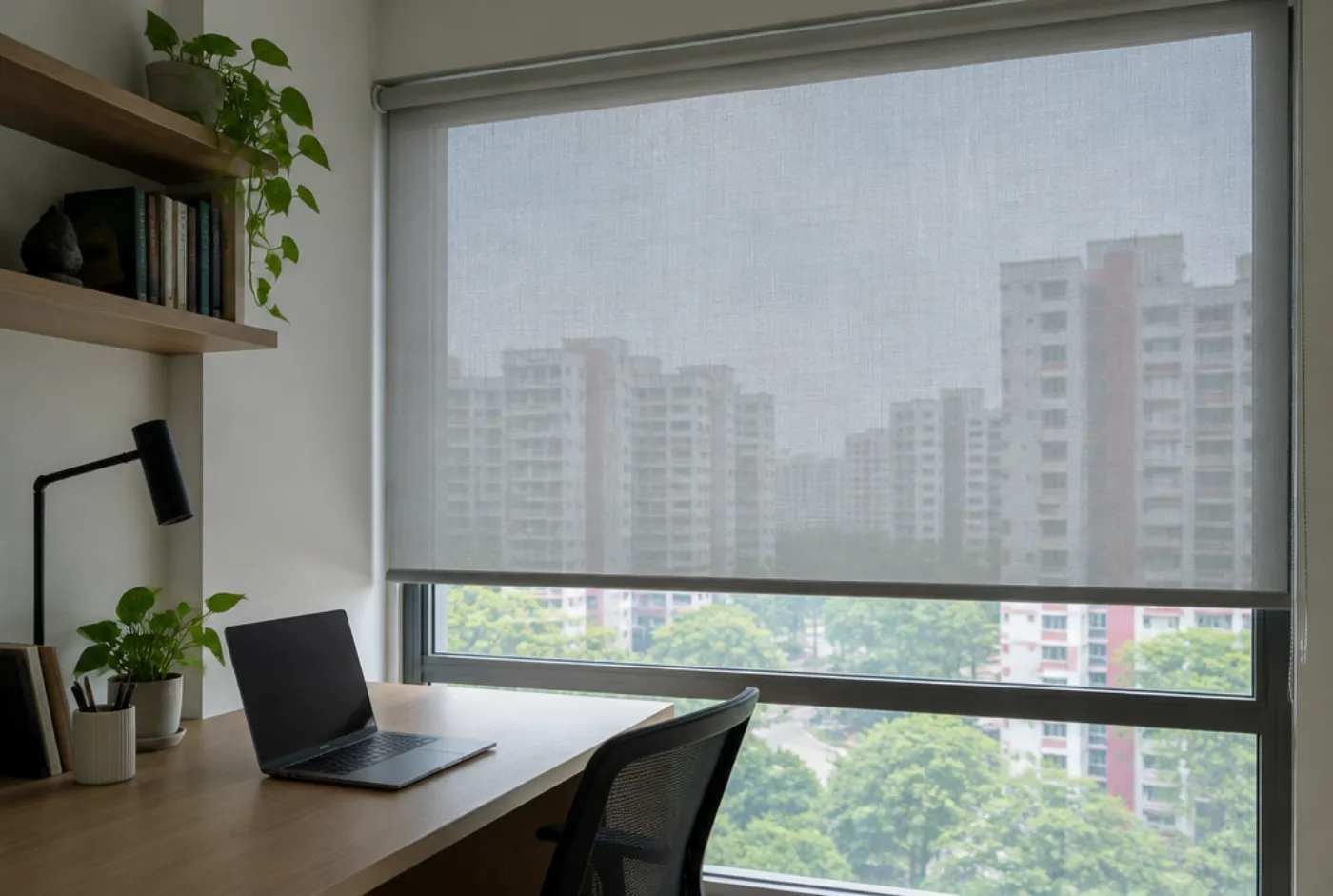 Which Sunscreen Blind Openness and Colour Should You Choose?