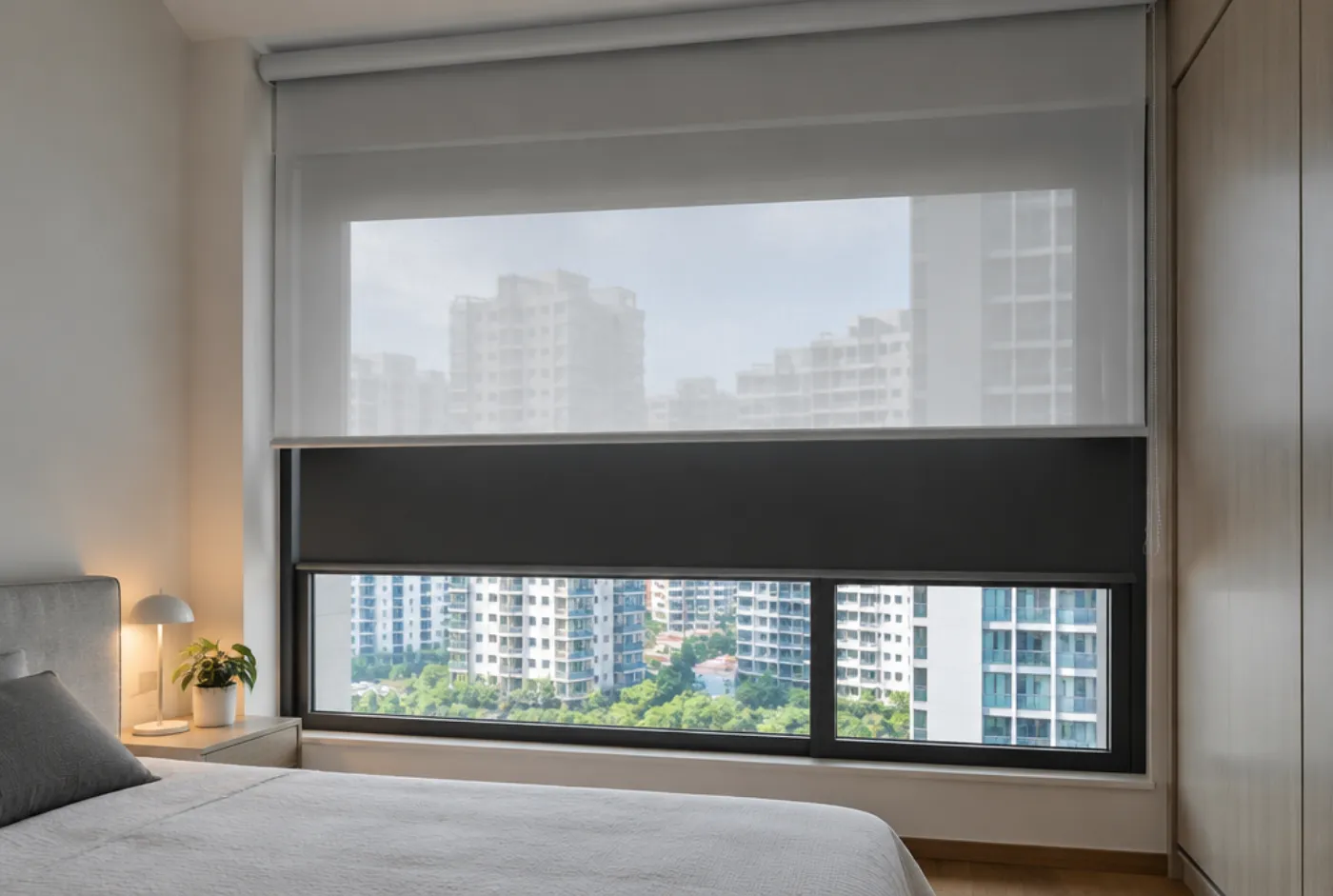
Yes. Once your room is brighter than the outside, people can see through a sunscreen blind. The cloth that looks like a solid screen at noon can show the room after dark.
That matches what our sunscreen roller blinds page already says, and it matches the way the cloth is made. Mermet’s technical fabric guide puts it directly: a fabric with good daytime privacy can appear sheer at night because the shade is backlit from inside (section 9.7). Sunscreen blinds, also called solar shades on overseas sites, are an open weave. They are built to be seen through in one direction when the light is uneven.
Why the view flips after dark
You see through the holes toward whichever side is brighter. In the day, the sky and the block opposite are the bright side. From the corridor, the blind reads as a pale screen. From your sofa, you can still make out the blocks.
At night the lamps are the bright side. The same holes that let you see out now show the room to anyone standing outside. Mermet’s glare section uses the same contrast with car headlights: barely noticeable in daylight, hard to ignore in the dark (section 11.2). A sunscreen blind is not a one-way mirror, and it does not grow a coating after sunset. The brightness swapped sides.
How much a neighbour can make out depends on the weave, the colour, how close they are, and how bright your lamps are. None of those turn an open weave into a private bedroom.
What a tighter weave changes
A cloth at about 1% openness, or tighter, can allow only a limited or muted view. That is Mermet’s wording for privacy in section 9.7, and it is still a view. The same paragraph says the cloth can look sheer once it is lit from the room. White cloth helps on a sunny day, because the bright outside and the pale yarns hide the interior. It does not hold that privacy after dark.
Choosing 1% instead of 5% is a daytime decision about glare and view, covered in the openness and colour guide. It is not a night-privacy specification. If the brief is that people in the next block, or on the common corridor, should not see in after dinner, the sunscreen layer is the wrong layer to rely on.
What closes the view
Work down this list. Stop at the first option that the window and the agreement can actually take.
A second roller with a blackout cloth is the clear night layer. A double roller puts the sunscreen and the blackout, or a dim-out, on one bracket. You leave the sunscreen down in the afternoon and lower the solid cloth when the lights come on. The blackout fabric stops the view through the cloth. It does not, by itself, close the gaps at the sides and above the roll. Those lines can still show a slice of the room. The roller light-gap guide is that fitting problem.
Dim-out is the middle cloth. It hides much more than sunscreen, and a lamp behind it can still make it glow. Our dim-out roller page describes that glow. Hold the sample up with a light on the room side before you treat it as enough for a bathroom or a ground-floor bedroom. It is not a coated blackout, and the edge gaps remain.
Korean combi blinds shift solid bands over sheer bands. With the solid bands closed, privacy is better than with the sheer bands lined up. The sheer cloth is still in the blind, and some fabrics show a faint outline when the room is lit. The combi page already says to check the sample with a light behind it. Closed bands are not a promise of an opaque window.
A curtain drawn over the sunscreen is the other night layer many flats already use. Day and night curtains keep a sheer or a sunscreen for the day and a heavier cloth for the evening. The curtain can also cover the blind’s side gaps, which a roller inside the recess does not.
Lamps and furniture change how obvious the room is, and they do not replace the cloth. A bright lamp on the window sill is the worst place. A dimmer light further into the room, and a desk that is not pressed against the glass, show less. Anyone outside can still tell the room is occupied if the sunscreen is the only layer.
Rooms to settle before you order
Bedrooms that face another block at a similar height. Bathrooms, including a small pane beside a shower. Ground-floor rooms and any window onto a common corridor, where people pass close to the glass. A living room you use with the lights low, and that does not face a walkway, is a milder case. You may still want the second layer for the evenings you do turn the lights up.
Take a hypothetical common-room window in an HDB flat, eye level with the corridor. In the day a sunscreen blind gives you light and a view of the opposite block. After dark, with the ceiling light on, a neighbour at the letterboxes can see movement. A double roller, or a curtain in front, is the fix. A tighter sunscreen is not.
Offices that run into the evening have the same reversal. The office blinds page already flags it for shops and workplaces that face homes.
Common questions
If the blind is fully down, can people still see in?
Through a sunscreen cloth, yes, when the room is the bright side. How sharp the view is depends on the weave, the colour and the lamps. Fully down does not make an open weave private.
Will 1% openness keep the bedroom private?
It can mute what you see through it. Backlit by the room, it can still look sheer. Night privacy needs a cloth that does not stay see-through, and a fit that does not leave a clear gap at the edge.
Is a dim-out or a closed combi as private as blackout?
Both are better than sunscreen alone. Dim-out can glow, and a combi still has sheer bands in the stack. A blackout cloth stops the view through the fabric. On all three, light and a sightline can remain at the sides unless the blind overlaps the frame or a curtain covers the edges.
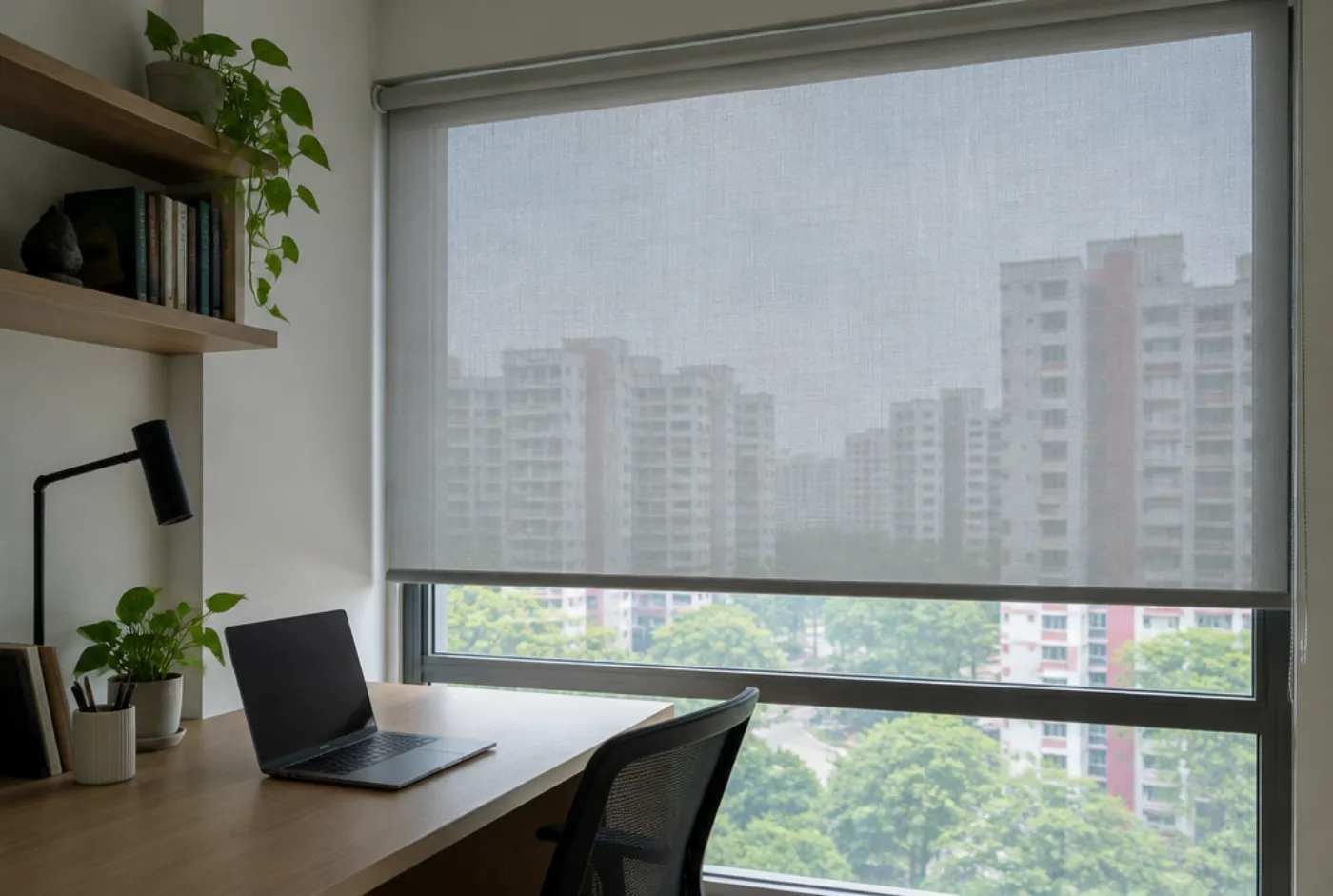 Which Sunscreen Blind Openness and Colour Should You Choose?
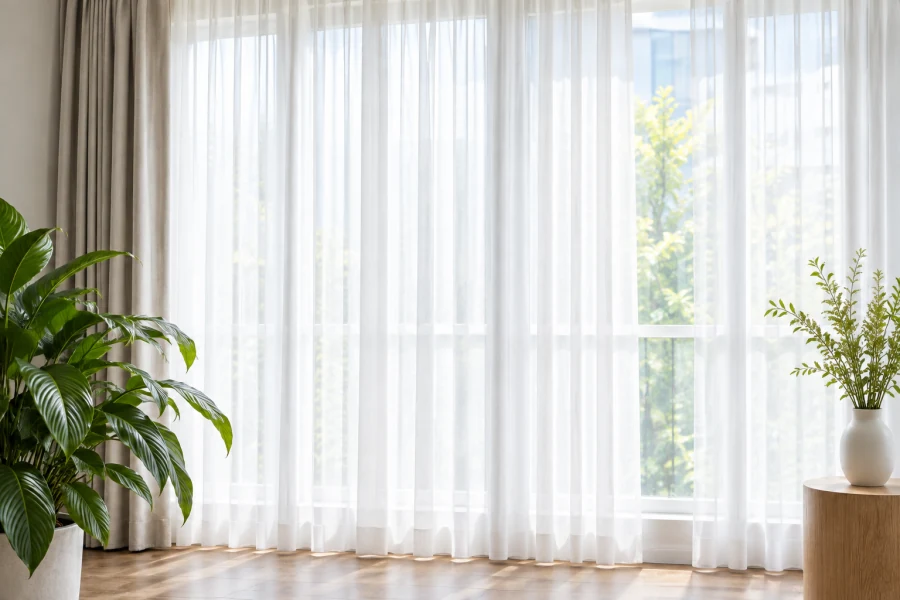 Day and Night Curtains: Layering Sheers with Blackout in Singapore
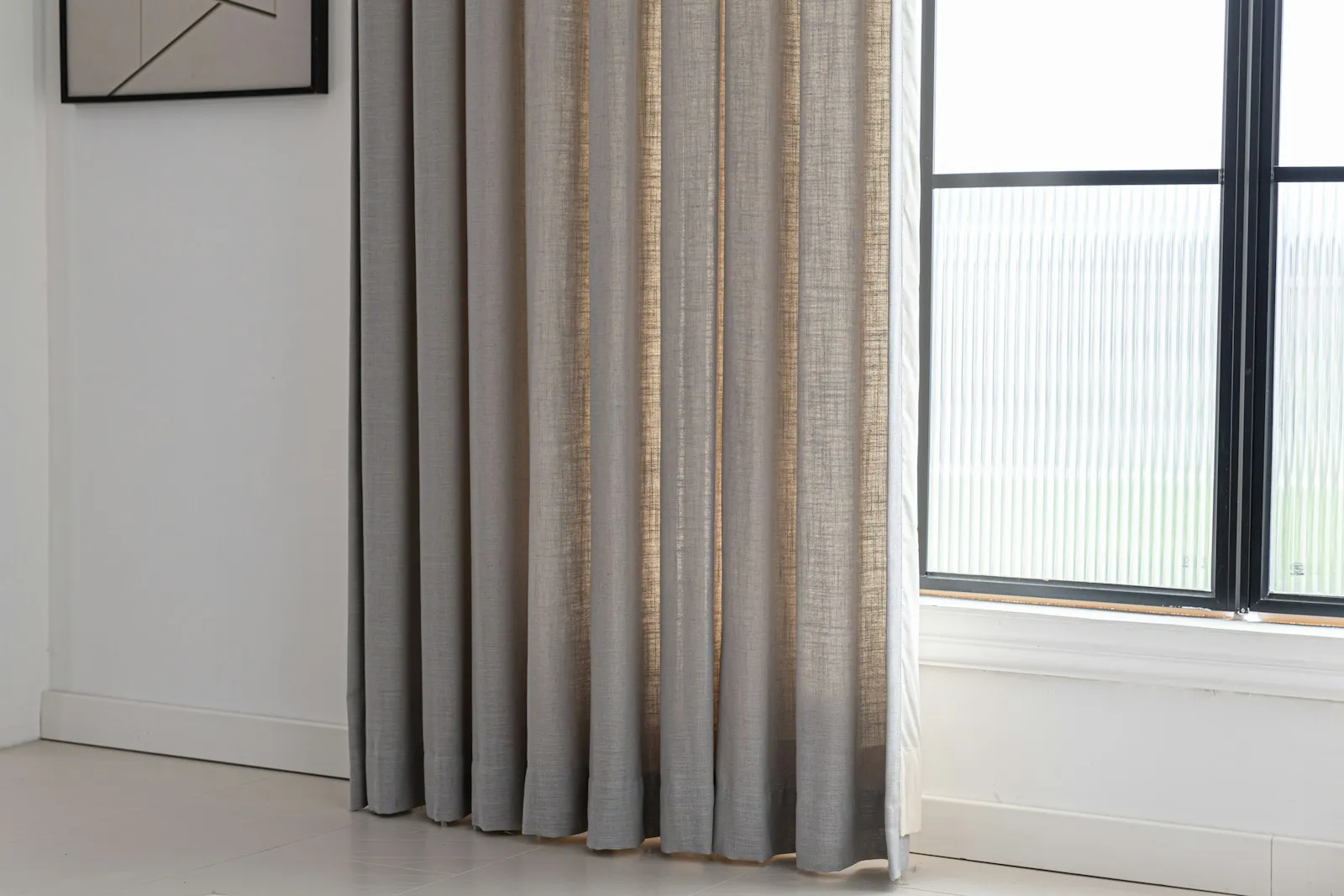 Bedroom Curtains and Blinds in Singapore: Sleep, Light and Privacy