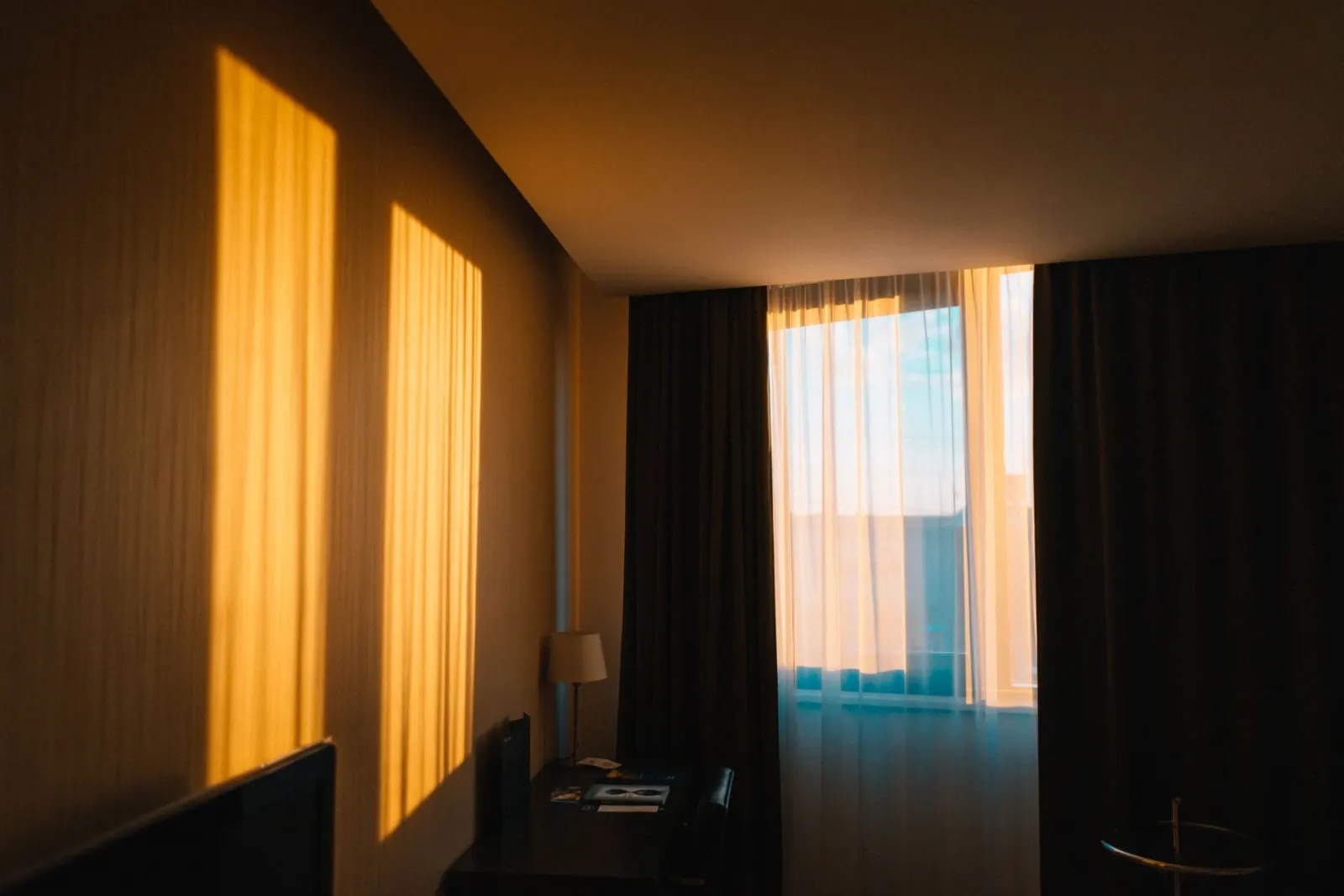
A curtain rod suits eyelet, tab top and ring curtains on a window with a solid wall above it, in a room where you want the pole on show. A track suits blackout bedrooms, S-fold curtains, sheer plus night layers and full-height glass. In a Singapore flat, the heading you choose and what sits above the window usually decide it.
You saw a black metal pole with eyelet curtains in a café and want the same in your living room. Then the contractor asks whether you want a track hidden in the curtain box instead. Both hold curtains. They look different, they suit different headings, and they handle weight and light in different ways. A curtain rod in a Singapore flat is a good choice in some rooms and a frustrating one in others, so it helps to decide before anything is drilled.
What a rod is for, and what a track is for
A rod is a pole that sits on brackets fixed to the wall, usually above the window frame. You see it, and the finials at each end, as part of the room. The curtain hangs from rings or slides straight through eyelets.
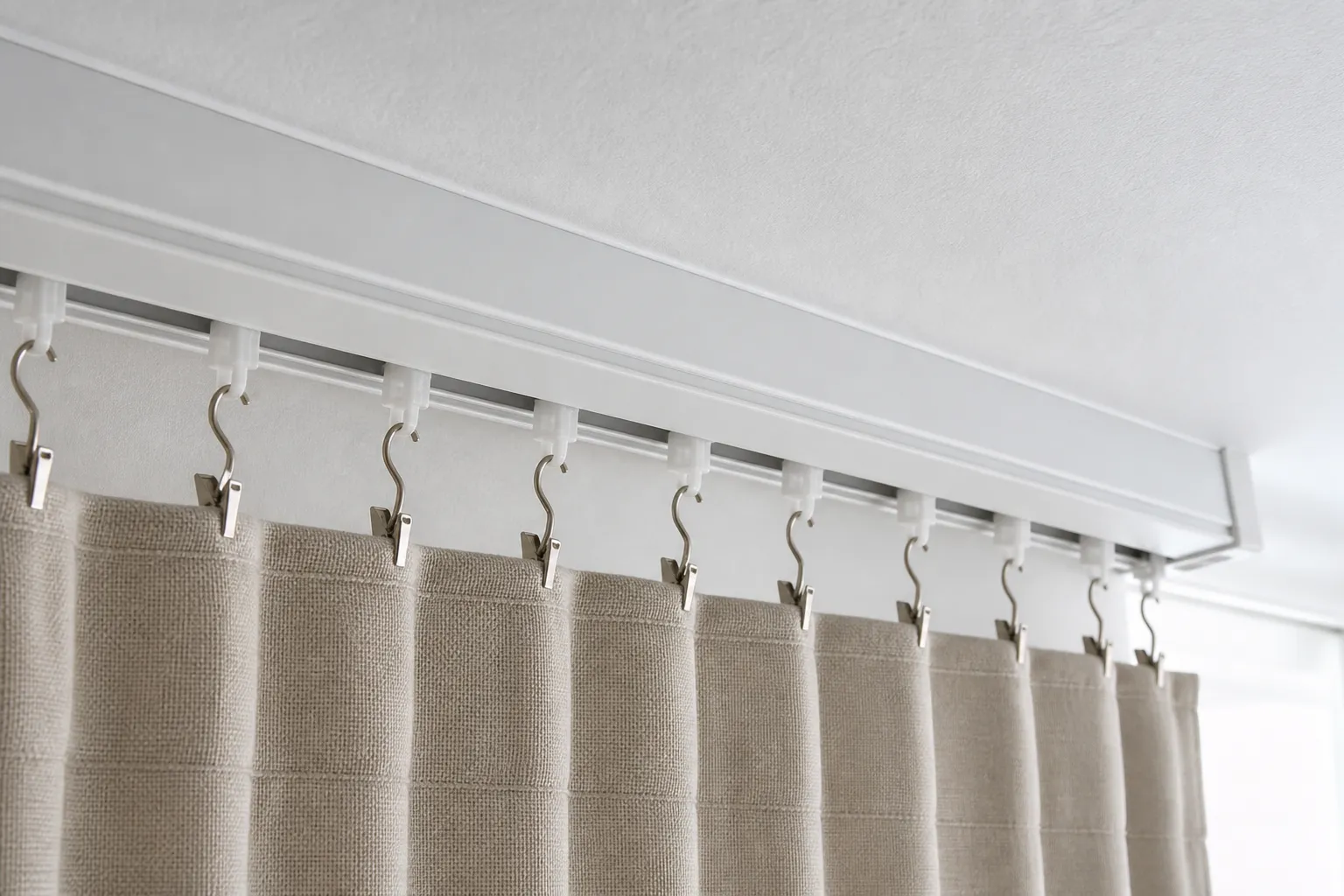
A track is a slim rail, usually aluminium, fixed to the ceiling, inside a curtain box, or on short wall brackets. Gliders or carriers run inside it. The aim is that you notice the curtain, not the hardware.
So the first question is about looks. If you want the hardware on show, a rod makes sense. If you want a clean, full-height curtain with nothing visible above it, a track usually does the job better. The rest of this page covers when that first choice runs into practical problems.
Track types, ceiling versus wall fixing and corded or motorised options are covered in our curtain track guide. This page stays with the rod-or-track decision.
Headings that expect a rod
Some curtain headings only work on a pole.
- Eyelet curtains have metal rings punched through the fabric. The rod passes through them. There is no track version.
- Tab top and rod pocket curtains are sewn to slide directly over a pole. They draw less easily and are often left half-open as a styled panel.
- Pinch pleat and pencil pleat curtains can go on either. On a rod, they hang from rings with a hook in each ring eye.
- Wave or S-fold curtains need a wave track with linked carriers. They do not belong on a rod.
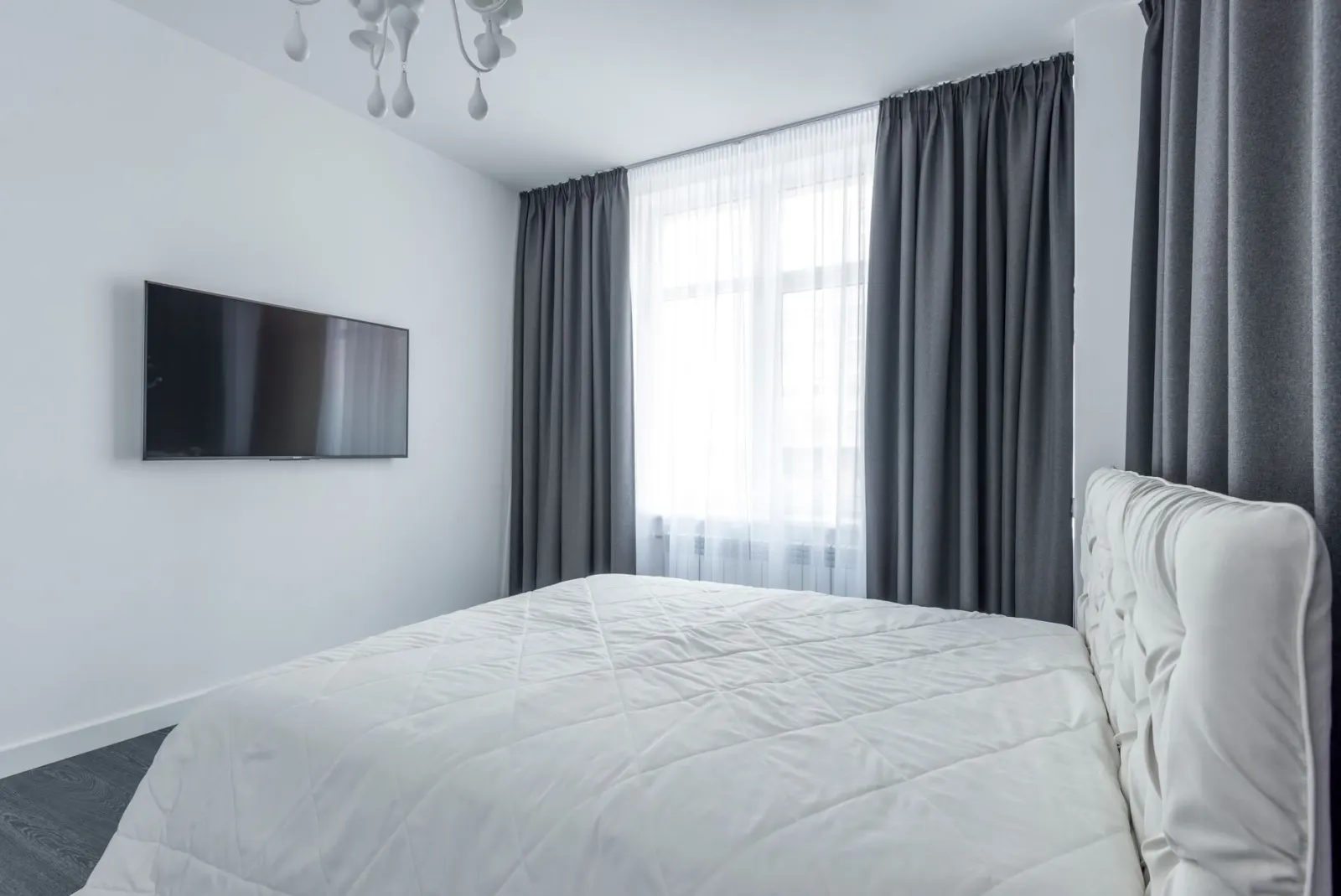
If you already know the heading you want, the hardware choice is often made for you. Our guide to types of curtain hooks shows how each heading attaches.
Weight and stacking
A rod is held by brackets at each end, plus centre brackets on a wide window. Rings cannot pass a standard centre bracket, so on a long span the curtain either stops at the bracket or you need passing brackets designed to let rings through. A track can be fixed at many points along its length without blocking the gliders.
Weight follows the same logic. A heavy lined blackout curtain pulls on every bracket. A sturdy rod with properly fixed brackets can take it, but a thin decorative pole on a long span may bow in the middle over time. I would rather fit a track with more fixing points than hang a full-height lined curtain from a slim pole across a wide living-room window.
Stacking is the other difference. Eyelets stack deeply and take more space at each side when open. Rings also bunch more than gliders. If you want the glass to be clear when the curtains are drawn back, extend the rod well past the frame.
Light gaps and blackout
A rod sits on brackets that hold it away from the wall, and the curtain hangs below the pole. That leaves a gap above the heading and at each side. In a bedroom where you want it dark, light comes over the top and around the edges.
A ceiling track or a track in a curtain box puts the heading close to the ceiling. Less light gets over the top. If blackout matters, the track is usually the more effective choice. With a rod, you can reduce the gap by mounting higher and using curtains that return to the wall at the ends, but it rarely matches a ceiling-fixed track.
For a living room where you want filtered daylight, the gap matters less. A sheer or day curtain on a rod can look relaxed and light.
HDB walls, pelmets and condo glass
A rod needs a solid wall above the window. In many HDB flats that is fine. A few situations need care.
- Curtain boxes and pelmets. If the contractor has built a box, it was usually made for a track. A rod mounted below the box looks odd and wastes the box.
- Ferrolite partition walls in newer HDB bedrooms. HDB notes say not to drill within 200mm of the ceiling or beam, and to keep drilling depth around 22mm. That limits where rod brackets can go. A ceiling track fixed to the slab avoids that wall.
- Household shelters. SCDF and HDB allow drilling into the internal face to a depth of not more than 50mm, with non-metallic inserts and removable screws. Fixtures have to come down within 48 hours if you are told to clear the shelter.
- Full-height condo glass. When the window runs from floor to ceiling, there may be no wall above it for rod brackets. A ceiling track is often the only clean option.
Rod materials for a humid flat
Singapore air is damp all year, and windows near the sea, a pool or a service yard see more moisture still. The rod material decides how it ages.
- Aluminium is light, does not rust and comes in powder-coated colours. It suits long spans if the profile is thick enough, and it is the usual material for tracks as well.
- Stainless steel looks sleek and resists rust well, though cheaper grades can still spot near the coast, for example in East Coast or Sentosa homes.
- Iron and mild steel rods look solid and are often painted matte black. Once a chip in the paint lets moisture in, rust can stain the curtain rings and the fabric behind them. Check the coating around the brackets, where it is most often scratched during fitting.
- Timber rods give a warm look in a bedroom or study. Real wood can warp or grow mould in a room that is closed up for long periods, so sealed or treated timber is safer than raw.
- Brass and gold finishes are usually a coating over steel or aluminium. They suit a styled room, and the finish wears where rings slide most.
Under a west-facing window, dark rods take more heat from the afternoon sun. That does not harm the rod, but rings can feel warm and the curtain directly below fades faster than the rest.
Brackets, finials and rings
A rod is only as steady as its brackets. Each bracket should be fixed into solid wall with the right plug for concrete or brick. On HDB precast walls, a fitter drills where the wall can take a load and avoids hidden conduits above the window.
Single brackets hold one rod. Double brackets hold two rods, one in front of the other, so you can hang a sheer behind a night curtain without a track. The front rod needs to sit far enough forward that the night curtain clears the sheer.
Finials are the end pieces. They stop rings sliding off and give the rod its style. Rings with a small eyelet at the bottom take curtain hooks, so a pleated heading can hang from a rod. Rings that rub on a metal rod can be noisy, so some have a plastic liner.
Bay and corner windows need a rod that turns. Some rod systems use elbow joints or bendable sections, but rings cannot pass the joint, so each side opens on its own. A bendable track usually gives a smoother run. Our bay window curtains guide compares both.
How wide and how high to mount a rod
Mount the rod wider than the window frame so the curtains can stack beside the glass, not over it. How far depends on the fabric and the heading. Eyelet curtains and heavy lined curtains take more space when open than a thin sheer. Our curtain track length calculator works out the stack for rods as well as tracks.
Height matters for looks and for light. A rod close to the ceiling makes the window look taller and leaves less gap at the top. A rod just above the frame leaves a band of wall and lets light over the top. Measure the drop from the top of the rod or the ring, not from the ceiling, because that sets the length of the curtain. The curtain length calculator walks through the drop for a floor-length hem.
When the look wins
A rod is the right choice in some rooms.
- A study or guest room where the curtain is mostly decorative.
- A window with a solid wall above it and no curtain box.
- A room where you like the look of a metal or timber pole and eyelets.
- A rental, where you want hardware that is easy to take down later.
A track tends to suit bedrooms where you sleep in, wide living-room windows, double layers of sheer and night curtain, and full-height glass.
If you are renting and cannot drill at all, a tension rod fixed between two walls of a window recess can carry a light curtain. It will not hold a heavy lined panel. Our guide to hanging curtains without drilling covers the options and their limits.
What to decide before the fitter arrives
| Question | Points towards a rod | Points towards a track |
|---|---|---|
| Do you want the hardware visible? | Yes | No |
| Which heading? | Eyelet, tab top, rod pocket | Wave, or pleats in a curtain box |
| How dark must the room be? | Daylight is fine | As dark as possible |
| How wide is the window? | Short span | Long span or corners |
| Is there a wall above the window? | Solid wall | Box, ferrolite wall, or full-height glass |
| One layer or two? | One | Sheer plus night curtain |
Write down the answers, measure the width you want covered, and note what is above the window.
Keeping a rod and rings running smoothly
Dust and cooking oil settle on a rod over time, especially in a flat near a main road or with an open kitchen. Wipe the rod with a dry or slightly damp cloth every few months, then dry it, so rings slide without catching. Avoid oil sprays, which collect more dust.
Check the bracket screws once a year. A heavy curtain pulled hard from one end can loosen the bracket nearest to it. On iron rods, touch up any chip in the paint before rust spreads. If rings start to stick, look for a dent in the rod or a bracket that has dropped slightly out of line. For more on rings, hooks and holdbacks, see our guide to curtain accessories.
Common questions
Can I hang made-to-measure curtains on a rod?
Yes. Made-to-measure curtains can be sewn with eyelets or with a pleated heading for rings. Tell us it is a rod before the curtains are sewn, because the drop is measured from the rod or ring, not the ceiling.
Which is better for blackout curtains, rod or track?
A ceiling or box-mounted track usually lets less light over the top. A rod can work if it is mounted high with curtains that return to the wall, but it rarely gets as dark.
How far past the window should a curtain rod extend?
Far enough that the curtains stack beside the frame when open, not over the glass. Heavy and eyelet curtains need more space than a sheer. Measure the stacked width of the curtain, or use a stack calculator, and add that on each side.
Which curtain rod material is best for Singapore humidity?
Aluminium and good-quality stainless steel cope best, since they do not rust. Painted iron looks good but needs the coating kept intact. Real timber should be sealed, especially in rooms that stay closed and humid.
Can I switch from a rod to a track later?
You can, but the old bracket holes need patching, and the curtains may need a new heading and a new drop. Eyelet curtains cannot go on a track. It is simpler to choose once.
 How to Choose a Curtain Track in Singapore
 S-Fold vs Pleated Curtains in Singapore: Ripple Fold, Pinch Pleat or Eyelet?
 Types of Curtain Hooks and Which Your Track Needs