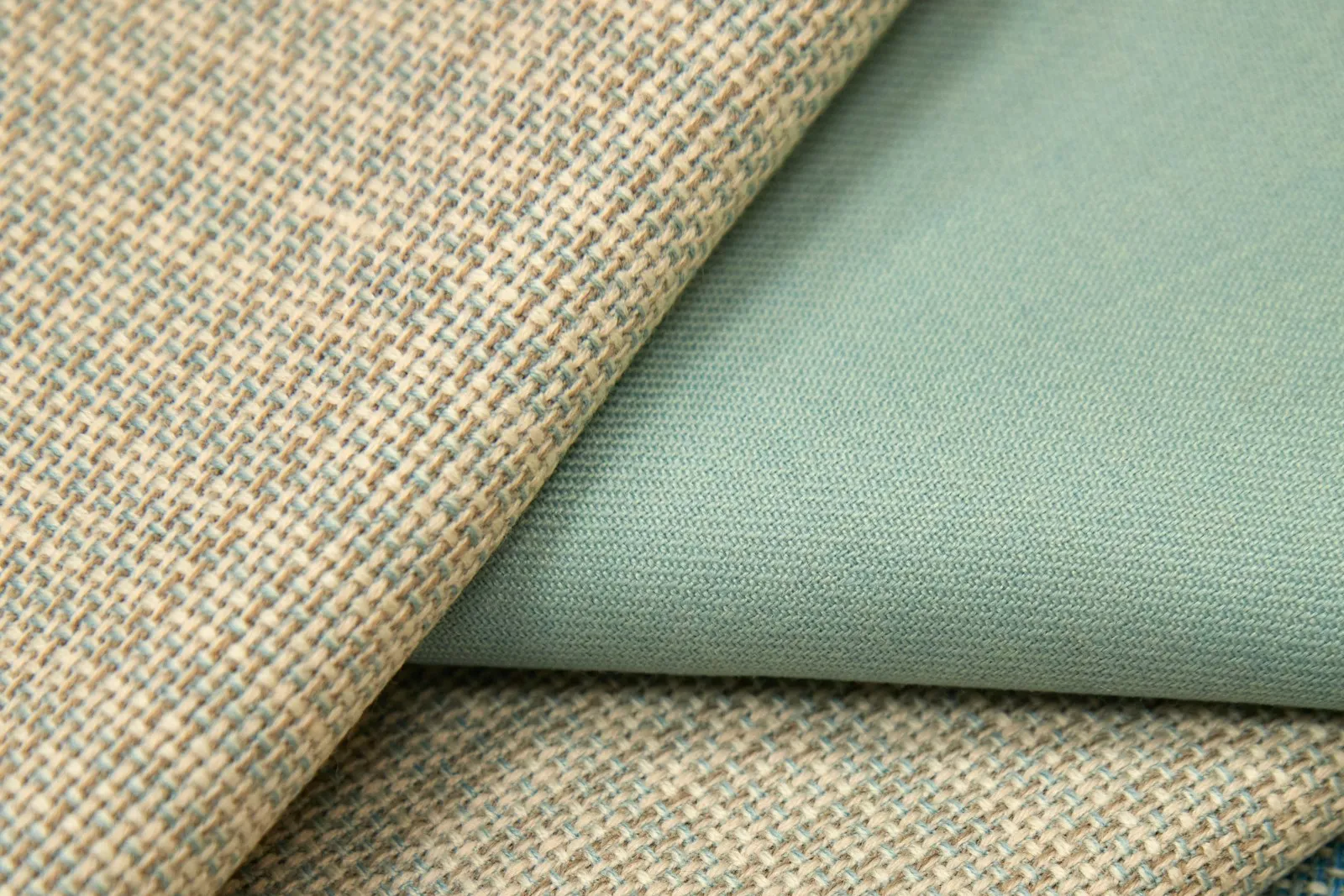
Picture a west-facing HDB bedroom. The afternoon sun reaches the window from about three o’clock, the air outside is humid for much of the year, and the curtains will be drawn and opened every day for years. The fabric you pick decides how those curtains look after a few years of that, how they behave when you wash them, and whether they block enough light for the room. A good colour choice is soon spoiled if the fabric fades, shrinks or spots with mould.
What to check before you choose a fabric
Start with the room and the window, then match the fabric to them. Four questions help.
- How much light do you want to block? A bedroom for daytime sleep needs blackout. A living room may only need to cut glare and keep privacy.
- Which way does the window face? West-facing and some east-facing windows take strong direct sun, which fades and weakens fabric over time.
- How will you clean the curtains? Some fabrics can go into a home washing machine. Others shrink, crease or lose a coating and are better cleaned professionally.
- How damp does the room get? Bathrooms, kitchens and rooms with windows that stay shut for long periods are more prone to mould on fabric.
Singapore’s mean annual relative humidity is around 82%, according to the Meteorological Service Singapore. That outdoor figure does not tell you what happens inside a particular room, but it is a good reason to ask how a fabric is cleaned and dried before you buy it.
Polyester
Polyester is the most common curtain material in Singapore homes, and for good reasons. It resists creasing, keeps its size when washed, dries quickly and does not absorb much moisture. That last point helps in a humid climate, because fabric that dries fast gives mould less time to start.
Polyester also comes in a wide range of weights and finishes. It can be woven to look like linen, brushed to feel soft, or made into sheers and blackout fabrics. Colours tend to resist sun fading better than many natural fibres, though no fabric is immune to fading on a west-facing window.
The trade-off is feel. Cheaper polyester can look flat or slightly shiny, and some people find it less pleasant to touch than cotton or linen. Better-quality polyester and blends feel noticeably softer and look less synthetic.
Linen and linen-look fabrics
Natural linen has a relaxed texture and a matte look that suits many modern HDB and condo interiors. It lets light through softly and drapes in loose folds.
It also has drawbacks that you should know before ordering. Linen creases easily, and those creases are part of its look. It can shrink when washed, especially in warm water, so many linen curtains are better dry cleaned or washed very gently. Natural fibres absorb moisture, which means linen dries more slowly than polyester and is more likely to develop mould spots if hung damp or left in a closed, humid room. Strong sun weakens and fades linen over time.
Linen-look fabrics, usually polyester or a polyester blend woven with a slub texture, give a similar appearance with fewer of these problems. They crease less, keep their size in the wash and dry faster. For a living room that gets afternoon sun, a linen-look fabric is often the more practical choice. Our linen curtains guide covers this comparison in more detail.
Cotton
Cotton is soft, breathable and takes colour well, which gives it a warm, homely look. It works in bedrooms and children’s rooms where a natural feel appeals.
Like linen, cotton can shrink when washed, especially in hot water or a hot dryer. It creases more than polyester and fades in direct sun. Cotton absorbs moisture, so it dries more slowly and is more prone to mould in damp rooms. Cotton blends with polyester reduce shrinkage and creasing while keeping some of the softness.
Velvet
Velvet has a dense pile that gives deep colour and a rich, heavy drape. It suits a formal living room, a study or a bedroom where you want a dark, quiet feel. Because the fabric is thick, it blocks a fair amount of light even without a blackout lining.
In Singapore, velvet needs some thought. It is heavy, so the curtain track and brackets must be chosen to support the weight, especially on a wide window. The pile can crush or mark, and it collects dust. Cotton velvet is warm to sit near in a humid room and is more prone to mould than polyester velvet. Most velvet curtains should be professionally cleaned. Polyester velvet is the easier option for local homes if you want the look.
Sheer and voile
Sheer and voile fabrics are light, see-through fabrics, usually polyester. They soften daylight, cut some glare and give daytime privacy, because it is harder to see into a bright room through a sheer from outside.
They do not give night privacy. Once the lights are on inside, people outside can see in. That is why sheers are often paired with a heavier curtain on a double track, so you can use the sheer in the day and draw the heavier layer at night. Polyester sheers are generally easy to wash at home on a gentle cycle and dry quickly. Our day curtains and sheers page explains the pairings.
Blackout fabrics: coated vs triple-weave
Blackout curtains are made in two main ways, and the difference affects how they look, feel and wash.
A coated blackout fabric has a layer, often acrylic or foam, applied to the back of a face fabric. The coating stops light passing through. It gives strong light blocking, but the back can feel stiff or rubbery. Over time, and especially after machine washing or tumble drying, the coating can crack or peel, letting pinpricks of light through. Coated fabrics are usually better spot cleaned or professionally cleaned.
A triple-weave blackout fabric weaves a dark yarn into the middle of the fabric, between two face layers. The blackout effect is part of the weave, so there is no coating to crack. It drapes more like a normal curtain fabric and is generally easier to wash, though you should still follow the fabric’s care label. Some triple-weave fabrics block slightly less light than a heavy coating, so check the specific fabric if the room is for daytime sleep.
Even a full blackout fabric lets light in around the edges, top and bottom of the curtain. How close the track sits to the wall or ceiling, and how far the curtain extends past the window, decide how dark the room gets. Our blackout curtains page goes into this further.
Linings
A lining is a second layer of fabric sewn behind the main curtain. It changes how the curtain behaves without changing the fabric you see from inside the room.
- A plain lining adds body, helps the curtain hang better and protects the face fabric from direct sun.
- A blackout lining turns almost any fabric, including linen or cotton, into a light-blocking curtain.
- A thermal or dim-out lining reduces light and heat from sun-warmed glass without full blackout.
A lining is especially helpful for natural fabrics on sunny windows, because the lining takes the sun first and slows fading of the face fabric. Bear in mind that a lined curtain is heavier and the two layers may react differently to washing. Many lined curtains are better cleaned professionally.
Comparing curtain fabrics
| Fabric | Look and feel | Sun fading | Shrinkage | Mould risk in humid rooms | Washing |
|---|---|---|---|---|---|
| Polyester | Smooth, wide range of finishes | Keeps colour fairly well | Low | Lower, dries fast | Usually machine washable, gentle cycle |
| Linen-look polyester | Textured, matte, linen-like | Keeps colour fairly well | Low | Lower, dries fast | Usually machine washable, gentle cycle |
| Natural linen | Relaxed, creased, matte | Fades and weakens in strong sun | Can shrink | Higher, absorbs moisture | Dry clean or very gentle cold wash |
| Cotton | Soft, warm, takes colour well | Fades in direct sun | Can shrink | Higher, absorbs moisture | Cold wash, avoid hot drying |
| Velvet | Deep colour, heavy drape | Varies, dark colours can fade | Varies by fibre | Higher for cotton velvet | Professional cleaning |
| Sheer and voile | Light, see-through | Polyester sheers resist fading fairly well | Low for polyester | Lower | Usually machine washable, gentle cycle |
| Coated blackout | Firm back, strong light blocking | Coating protects the face | Low | Lower on the face, check the coating | Spot clean or professional; coating can crack |
| Triple-weave blackout | Drapes like normal fabric | Keeps colour fairly well | Low | Lower | Usually washable per care label |
These are general tendencies. The actual fabric’s care label and supplier information decide how it should be cleaned.
Sun, shrinkage and mould: practical habits
Sun fading is gradual and uneven. The part of the curtain that faces the window when drawn fades first, which you may only notice when you open the curtains fully. On west-facing windows, a lining or a separate blind behind the curtain slows this down. Rotating panels, if they are the same size, spreads the fading.
Shrinkage mostly affects natural fibres. If you plan to wash linen or cotton curtains at home, use cold water, a gentle cycle and hang them to dry rather than tumble drying. A curtain that shrinks even slightly in length can end up above the floor.
Mould tends to start where fabric stays damp. Open the windows or run a fan in rooms where curtains stay closed for long periods, especially during the wet months of the monsoon season. Make sure curtains are completely dry before rehanging them after washing. If you see small black or grey spots, clean them early, as mould stains become harder to remove over time.
Our guide on how to wash curtains in Singapore covers home washing step by step. For heavy, lined, velvet or coated curtains, our curtain cleaning service cleans them on site or takes them away and rehangs them.
Matching fabric to the room
Different rooms in the same flat often suit different fabrics.
| Room | Common fabric choice | Why |
|---|---|---|
| Bedroom | Triple-weave blackout, or any fabric with a blackout lining | Darkness for sleep, easier care than coated |
| Living room | Linen-look polyester with sheers on a double track | Soft look, daytime privacy, practical in sun |
| Study or formal room | Polyester velvet | Rich colour, heavy drape |
| Kitchen or service yard | Lightweight polyester | Dries fast, easy to wash |
| West-facing rooms | Lined fabrics or blackout | Protects the fabric and cuts glare |
If you are still deciding on the curtain style itself, our guide to types of curtains in Singapore explains pleats, eyelets and ripplefold, which also affect how much fabric a window needs.
Common questions
What is the best fabric for curtains in Singapore?
For most homes, polyester or a linen-look polyester is the easiest to live with. It keeps its size when washed, dries quickly and resists creasing. Natural linen and cotton suit people who prefer their look and accept more care.
Do linen curtains shrink?
Natural linen can shrink when washed, particularly in warm water or a hot dryer. Washing cold on a gentle cycle or dry cleaning reduces the risk. Linen-look polyester fabrics do not shrink in the same way.
Which blackout curtain fabric is easier to wash?
Triple-weave blackout is usually easier to wash, because the light-blocking layer is woven into the fabric. Coated blackout fabrics can crack or peel if machine washed or tumble dried, so they are better spot cleaned or professionally cleaned. Always check the care label.
How do I stop curtains from getting mouldy?
Keep air moving in the room, make sure curtains are fully dry before rehanging them, and clean small spots early. Polyester fabrics are less prone to mould than cotton or linen because they absorb less moisture and dry faster.
Will my curtains fade in the sun?
Any fabric fades with enough direct sun, and west-facing windows see the most. A lining or a blind behind the curtain reduces fading. Polyester fabrics generally keep their colour longer than natural fibres.
Is velvet suitable for Singapore homes?
Yes, for rooms where you want its heavy look. Polyester velvet is the more practical choice in a humid climate. Velvet is heavy, so the track needs to be chosen for the weight, and it usually needs professional cleaning.
Quiz
Which curtain fabric suits you?
Five quick questions about your room, your home and how much cleaning you want. Open the full quiz
 12 Curtain Mistakes Singapore Homeowners Make (and How to Avoid Them)
 15 Living Room Curtain Ideas for Singapore Homes
 10 Curtain Accessories to Know: Tiebacks, Hooks, Finials and Weights