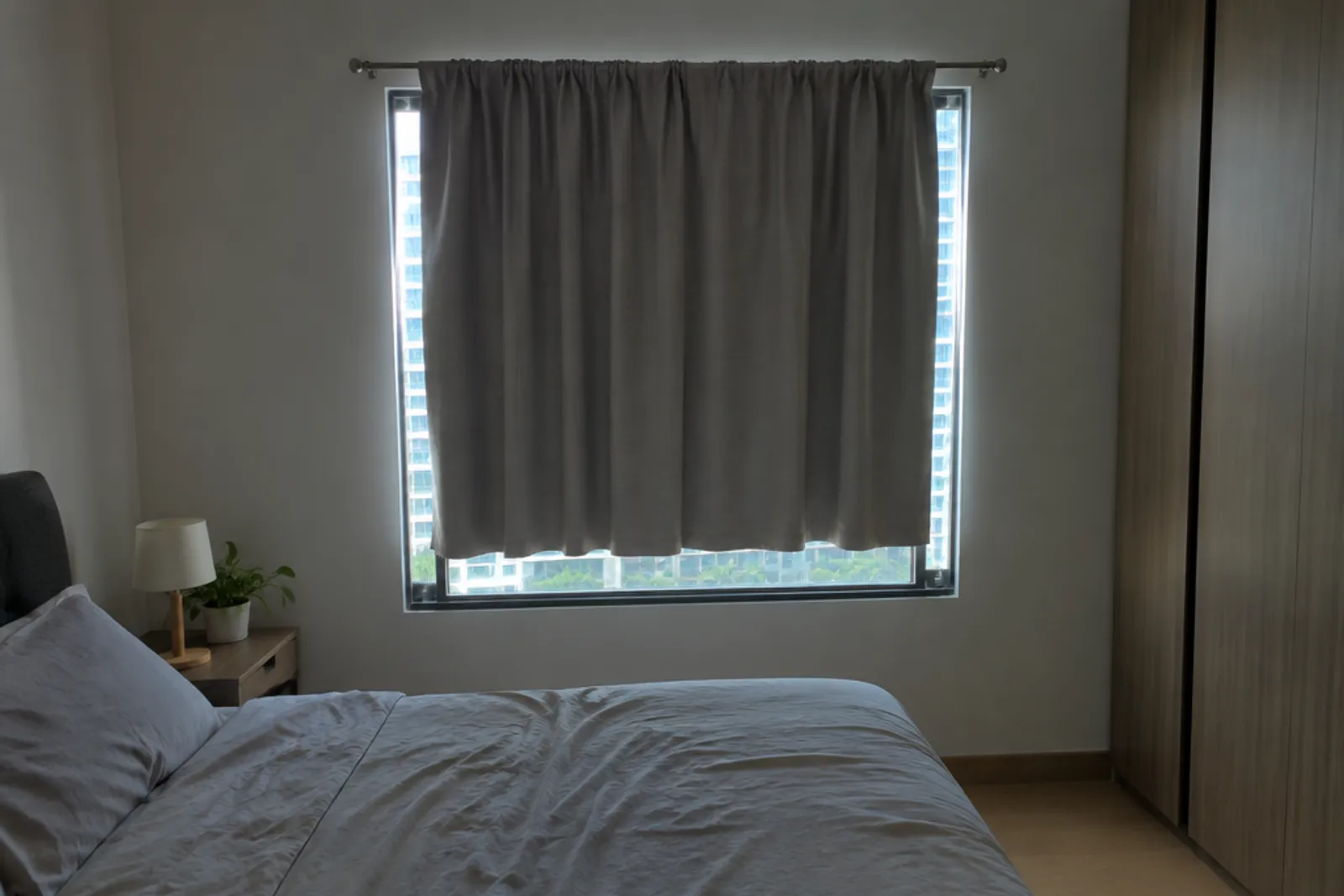
Curtains are one of the last things to go into a new or renovated home, and they are often rushed. The fabric arrives, it goes up, and only after a few weeks do the problems show. Light leaks in at 6.30am, the hem turns grey along the floor, or the curtain covers half the window when drawn open. Most of these problems are easy to prevent if you know about them before ordering.
Here are twelve common mistakes in Singapore HDB flats, condos and landed homes, with what to do instead.
1. Measuring before the carpentry and ceiling are done
Curtain measurements depend on where the track will be fixed. If the carpenter later adds a curtain box, a false ceiling or a built-in wardrobe beside the window, the drop and width can change by several centimetres. Curtains made to the old measurements end up too short, too long or too wide for the space.
Wait until the false ceiling, curtain box and any carpentry around the window are finished, then measure. If you need to plan early, give your contractor the curtain layers you want so the box is built deep enough, and treat any early measurement as a rough guide only. Our guide on BTO curtain planning sets out the order of works.
2. Ordering too little fullness
Fullness is the amount of fabric compared with the width of the track. A curtain that is only slightly wider than the window looks flat and stretched when closed, and it shows gaps between the folds.
For a pinch pleat or S-fold curtain, the fabric is usually around two to two and a half times the track width, depending on the heading and fabric weight. Sheers often need more to look soft. Saving fabric here is a false economy, because a skimpy curtain looks cheap even in a good fabric. Our curtain calculator gives an estimate of the fabric width your window needs for the heading you choose.
3. Letting hems pool on the floor
A curtain that pools on the floor can look luxurious in a magazine photo. In a Singapore home it collects dust, picks up moisture from mopping, and sits against a floor that may stay damp near an open window during monsoon rain. That damp hem is a common starting point for mould.
Aim for the hem to clear the floor by around one to two centimetres, so it hangs straight without touching. Floors in older flats are not always level, so measure the drop at several points along the window. If you already see dark spots along the hem, our guide to curtain mould explains how to deal with it.
4. Fitting a rod or track that is too short
When a curtain opens, the folded fabric needs somewhere to go. This is called the stack-back. If the rod or track stops at the edge of the window, the stacked curtain sits over the glass and blocks part of the view and daylight, even when fully open.
Extend the track past each side of the window where the wall allows, so the curtain can stack clear of the glass. A wide window with heavy lined curtains needs more room than a light sheer. In HDB flats, a side wall, a column or the aircon trunking sometimes limits the space, in which case a one-way draw to the open side can work better than a centre split.
5. Mounting the curtain just above the window frame
Hanging the track right on top of the window frame makes the ceiling look lower and leaves a strip of wall above the curtain. It also lets light spill over the top in a bedroom.
Mounting the track higher, close to the ceiling or inside a curtain box, makes the room look taller and cuts light over the top. This suits the standard ceiling heights in many HDB and condo units, where every bit of visual height helps. A ceiling-mounted track also avoids the problem of brackets clashing with the window frame or the grille.
6. Ignoring light gaps at the sides and centre
A blackout fabric only blocks light where it covers the window. Light still comes around the sides, over the top and through the gap where two panels meet. In a bedroom facing east, those gaps can wake you before your alarm.
Extend the curtain past the window on both sides, use a ceiling track or curtain box to close the top, and add an overlap or magnets in the centre. A return, where the curtain wraps back to the wall at each end, also helps. Our blackout curtains page covers these options in more detail.
7. Choosing the wrong lining for west sun
A thin unlined curtain on a west-facing window lets glare through and does little against the afternoon sun hitting the glass. Singapore’s typical daytime maximum temperatures sit around 31 to 33°C through the year, according to the Meteorological Service Singapore, so a west-facing room deals with strong afternoon sun in every month.
For these windows, consider a dim-out or blackout lining, or a thermal lining with a light-coloured back facing the glass. The lining you need depends on whether you want to keep some daylight or darken the room. Our guide to blackout and dim-out curtains explains the trade-offs between the two.
8. Forgetting power for motorised curtains
Motorised curtains and blinds need power near the track, either a power point or a wired connection planned with the electrician. Homeowners often decide on motorisation after the ceiling is closed, then find that adding a power point means hacking into a finished wall or running visible trunking.
If there is any chance you will want motorised curtains, ask your electrician to provide a power point at the top corner of the window during renovation. Preparing it during renovation is far simpler than retrofitting it later. Battery motors exist for some blinds, but they need recharging. Our guide to motorised blinds and curtains explains what to plan.
9. Washing blackout curtains in hot water
Many blackout curtains rely on a coated backing or a dense woven layer to block light. Hot water, a tumble dryer or a harsh spin cycle can crack a coating, shrink the fabric or leave permanent creases.
Always check the care label first. Where machine washing is allowed, a cool, gentle cycle and line drying in shade are usually safer than heat. Rehang the curtain while slightly damp so the folds settle, and make sure it dries fully before closing it up against the window. If you would rather not risk it, our curtain cleaning service can clean curtains on site or take them away and rehang them.
10. Choosing colour from a small swatch
A small fabric swatch looks different from a full curtain. Colours deepen across a large surface, and daylight through the fabric changes how it looks during the day. A beige that looked warm in a showroom can turn grey or yellow at home.
Hold the largest sample you can get against the actual window, and look at it in the morning, the afternoon and under your evening lights. Check it from inside the room and, for sheers, with light behind it.
11. Using hooks and tracks too weak for the curtain
A heavy lined curtain puts a lot of load on the hooks, gliders and brackets. Light plastic hooks from a ready-made curtain can bend or snap, and a thin track with too few brackets can sag in the middle over time.
Match the hooks and gliders to the heading and fabric weight, and make sure there are enough brackets along the track, including a centre support on longer runs. A plaster ceiling without timber backing needs proper reinforcement for a heavy curtain.
12. Not checking window handles, grilles and the aircon
Casement windows in HDB flats open outwards, and their handles sit on the inside of the frame. A curtain hung too close to the glass catches on the handles each time you open or close it. Aircon units mounted near the window can also blow the curtain away from the wall all day.
Before ordering, check how far the handles and grilles project and set the track far enough from the window to clear them. Note where the aircon blows and avoid placing the curtain directly in its path, or use weights and a tieback to keep it in place. These checks take a few minutes during measuring and save a lot of daily irritation.
Quick reference
| Mistake | What happens | How to avoid it |
|---|---|---|
| Measuring too early | Curtains do not fit the final ceiling or box | Measure after carpentry is done |
| Too little fullness | Curtain looks flat and gappy | Allow around 2 to 2.5 times the track width |
| Hem on the floor | Dust, damp and mould | Clear the floor by 1 to 2 cm |
| Rod too short | Curtain blocks the window when open | Extend the track past the frame |
| Track too low | Room looks shorter, light spills over | Mount near the ceiling or in a box |
| Light gaps | Early waking in east-facing rooms | Overlap, returns, ceiling track |
| Wrong lining for west sun | Glare and a hot window area | Dim-out, blackout or thermal lining |
| No power for motor | Costly retrofit later | Plan a power point during renovation |
| Hot wash on blackout | Cracked coating, shrinkage | Follow the care label, wash cool |
| Colour from small swatch | Colour looks different at home | Test a large sample at the window |
| Weak hooks and track | Sagging, snapped hooks | Match hardware to fabric weight |
| Ignoring handles and aircon | Curtain catches or blows around | Check clearances before ordering |
Common questions
What is the most common curtain mistake?
Ordering curtains that are too narrow or too short for the window. A curtain with too little fullness looks flat, and one that stops at the window frame leaves light gaps and makes the room look lower.
How far should curtains be from the floor in Singapore?
Around one to two centimetres above the floor suits most rooms. The curtain looks full length but does not touch a floor that may be damp from mopping or rain through an open window.
How wide should a curtain rod or track be?
Wider than the window, so the curtain can stack beside the glass when open. How much wider depends on the wall space and the bulk of the fabric, with heavier lined curtains needing more room.
Can I fix curtains that let light in at the sides?
Often, yes. You can extend the track, add returns that wrap the curtain back to the wall, or add a blind behind the curtain. A ceiling-mounted track or curtain box reduces light over the top.
Should I wash blackout curtains in the washing machine?
Only if the care label allows it, and then on a cool, gentle cycle with line drying. Heat can damage the coating on many blackout fabrics, so avoid hot water and tumble drying.
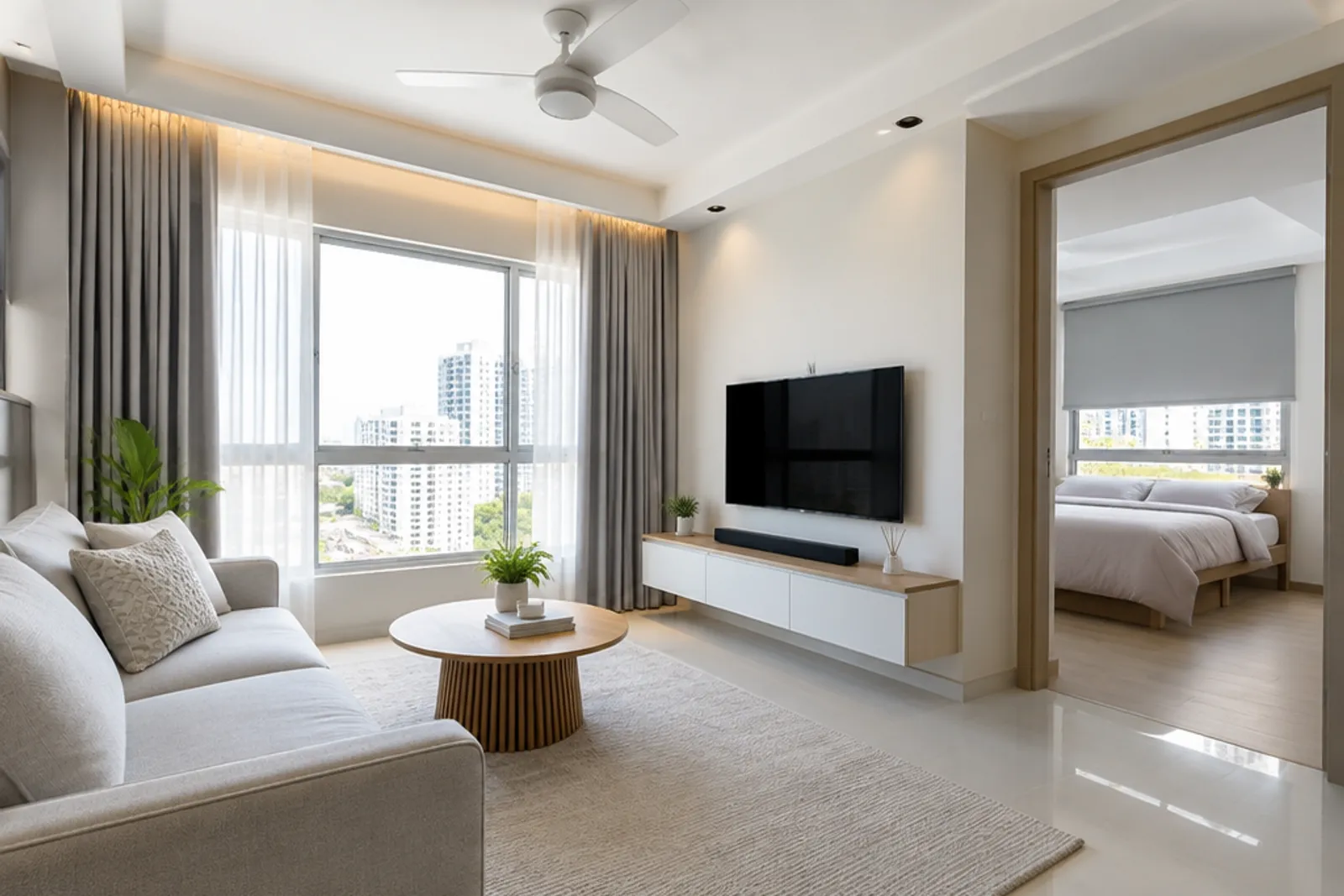 10 BTO Curtain Ideas by Room
 10 Curtain Accessories to Know: Tiebacks, Hooks, Finials and Weights
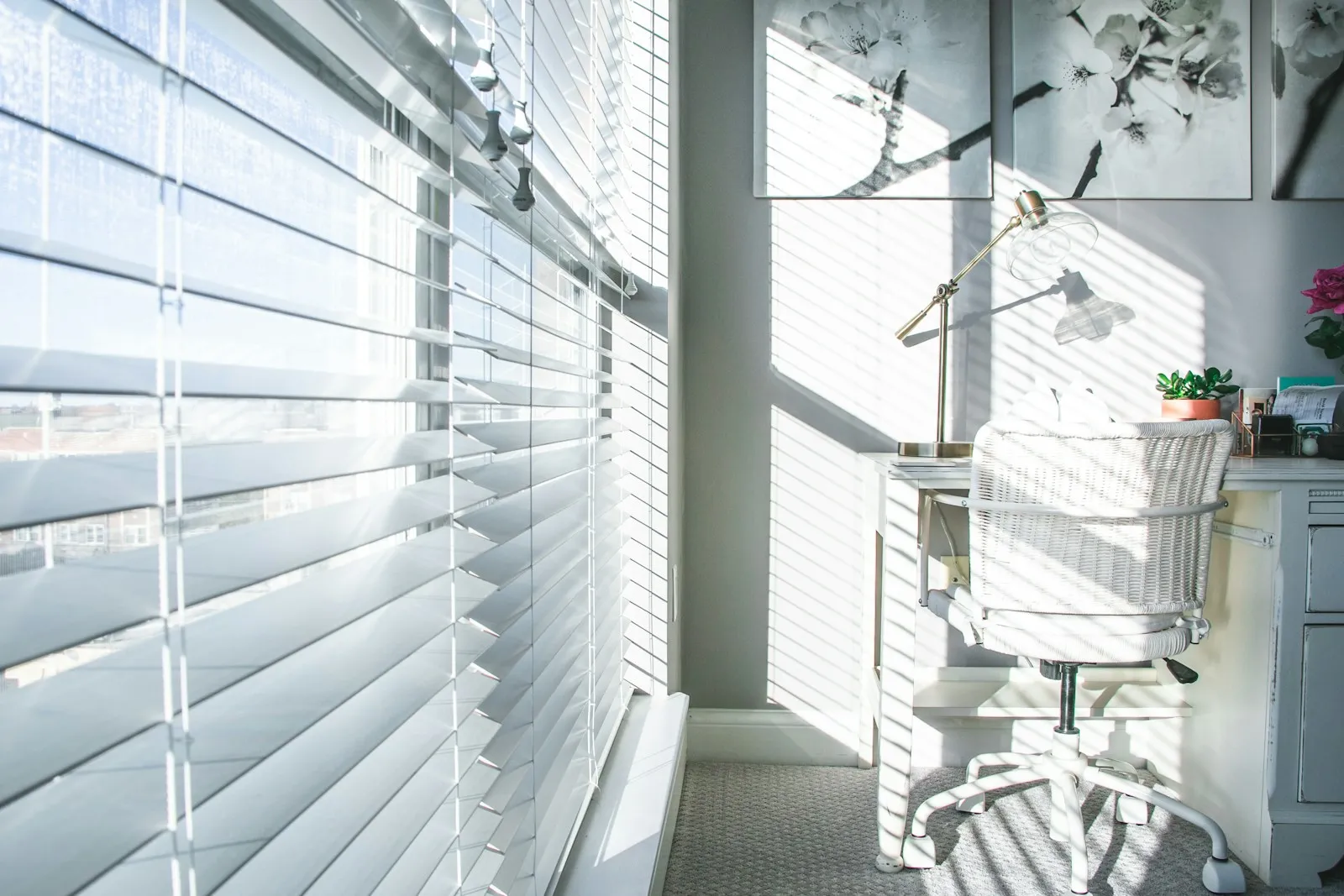 Blinds for Offices in Singapore: Glare, Screens and Meeting Rooms