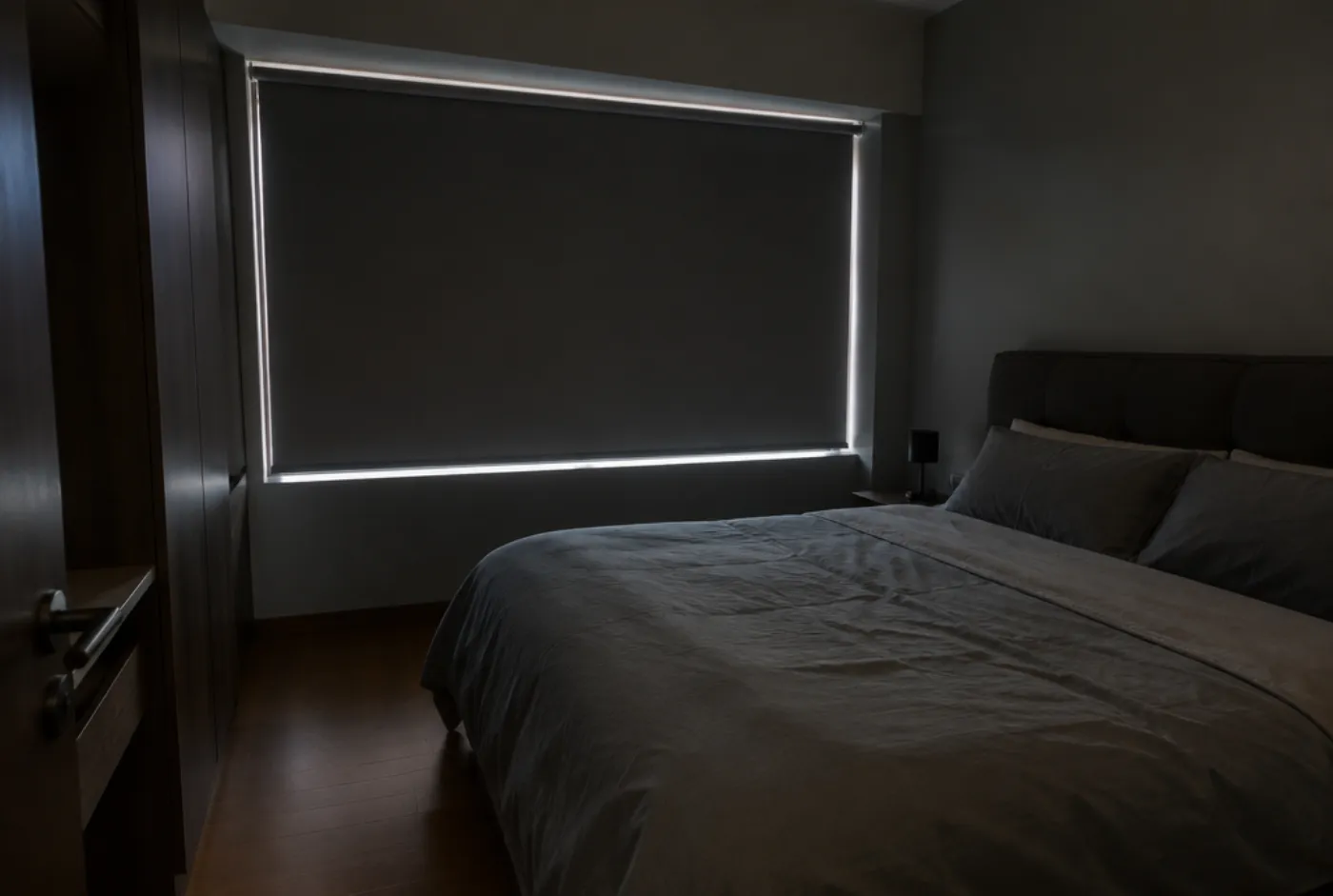
The fabric looks dark and the bedroom is not. At 7am there is a bright line down one side, a glow over the roll, or a strip along the sill. On a roller blind that line is usually light going around the cloth, or the cloth itself is dim-out rather than blackout.
This is the blind version of light leaking around blackout curtains. The gaps are in different places, because a roller is a sheet on a tube, not a pair of panels on a track.
Check the cloth before you blame the fitting
Hold the fabric up to the glass or to a lamp, away from the frame. If the cloth itself glows, no cassette and no overlap will make the room black. Dim-out is meant to leave a soft glow. Blackout cloth is the coated or layered fabric that stops light through the material.
The blackout or dim-out quiz and the blackout versus dim-out guide separate those light levels. Blackout blinds versus curtains is the comparison once you know the cloth is actually blackout and the leak is at the edges.
Where a roller lets light past
Four places account for almost every complaint.
The sides. An inside mount sits in the recess, and the fabric has to clear the frame so it can roll. The inside or outside mount guide already says that clearance shows up as a bright edge in a bedroom. Morning sun on a west or east pane makes a thin line look wider than it measures.
Above the roll. If the tube sits below the top of the glass, or the rolled cloth stands off the wall, light comes over the head and onto the ceiling. A neat recess install often leaves this line, because the head rail is tucked inside the opening rather than covering it.
Under the bottom rail. If the rail stops short of the sill, or the sill is uneven, a strip shows along the bottom. On a door, a rail that has to clear the floor leaves a similar gap on purpose.
Between two blinds. A wide window split into two or three rollers has a joint. If the cloths do not meet, or the rails finish at different heights, the joint reads as a slot of light.
Our roller blinds page says the same about side and top gaps on a blackout cloth, and that a few millimetres at each side is normal for an inside fit.
Standard roll and reverse roll
The direction the cloth leaves the tube changes the gap between the fabric and the glass.
Mermet’s technical fabric guide calls a standard roll, or regular roll, the one where the fabric falls off the tube on the window side (section 6.5). A reverse roll falls off the room side, away from the glass (section 6.6). Makers specify a reverse roll to clear a handle or a lock, or to leave a larger air gap so the cloth does not pull against the pane when heat builds behind it.
A larger gap is a reason more light can turn the corner at the edges. That follows from the geometry. It is not a measured lux result, and swapping the roll direction will not close a side clearance that the recess itself requires.
What reduces the lines
An outside mount, or face fix, fixes the brackets to the wall or the ceiling so the blind overlaps the frame. More of the glass is covered, and the side lines shrink. It needs flat wall or ceiling around the opening. The mount guide sets out when the recess is too shallow, or the brief is darkness, and an outside mount is the one to use. Overlap adds a little width. Blinds prices stay per square foot of the blind, with the 20 sq ft minimum. We measure the overlap rather than adding a standard extra in the quote.
A cassette, or a pelmet, covers the tube. That is how you deal with light coming over the roll. A cassette is a box on the blind. A pelmet is the cover used with curtains, and the pelmet guide shows how a box closes the top of a window treatment. Not every recess has depth for a cassette. We look at that when we measure.
A curtain in front of the roller covers the blind’s edges the way returns cover a curtain’s edges. The curtain light-leak guide is the fitting for that outer layer. Many bedrooms that need to be properly dark end up with both, which the blackout comparison already recommends.
Side channels hold the edges of the cloth in a track. Outdoor zip blinds work that way on balconies, so the fabric does not flap. An indoor bedroom can use a side channel only when the frame has room for it. Ask at the measure. We do not list an indoor side-channel blackout as a stocked product, and a channel is not something to screw into a casement sash.
When the window limits the options
A casement handle that turns into the recess will not accept a blind pressed against the glass. The handle clearance guide is the check. A reverse roll or an outside mount is often how the handle still closes. If you force an inside blackout into that recess, you either jam the handle or you leave a gap big enough to see.
A metal grille filling the opening has the same effect. The blind has to sit on the room side of the grille, or you use a curtain. An inside mount behind a grille that you still need to open is rarely the dark option.
None of these fittings make a promise of a fully black room. Blackout describes the cloth. The room is as dark as the largest remaining gap.
Common questions
Why is there a line of light if I ordered blackout?
The cloth can be stopping light while a gap at the side, the top or the sill lets it past. Look at the shape. A thin line follows a gap. A glow across the whole blind means the fabric is letting light through, and the fabric is the thing to change.
Will an inside mount ever go fully dark?
It needs clearance so the blind can roll, so a line at the frame is normal. Overlap outside the recess, or a curtain over the blind, is how a bedroom gets closer to dark. We do not promise a black room from a roller on its own.
Does a reverse roll make the leak worse?
It sets the cloth further from the glass, which clears handles and leaves an air space. Light can spill through that larger edge. If the brief is darkness, overlap or a curtain in front does more than changing the roll direction.
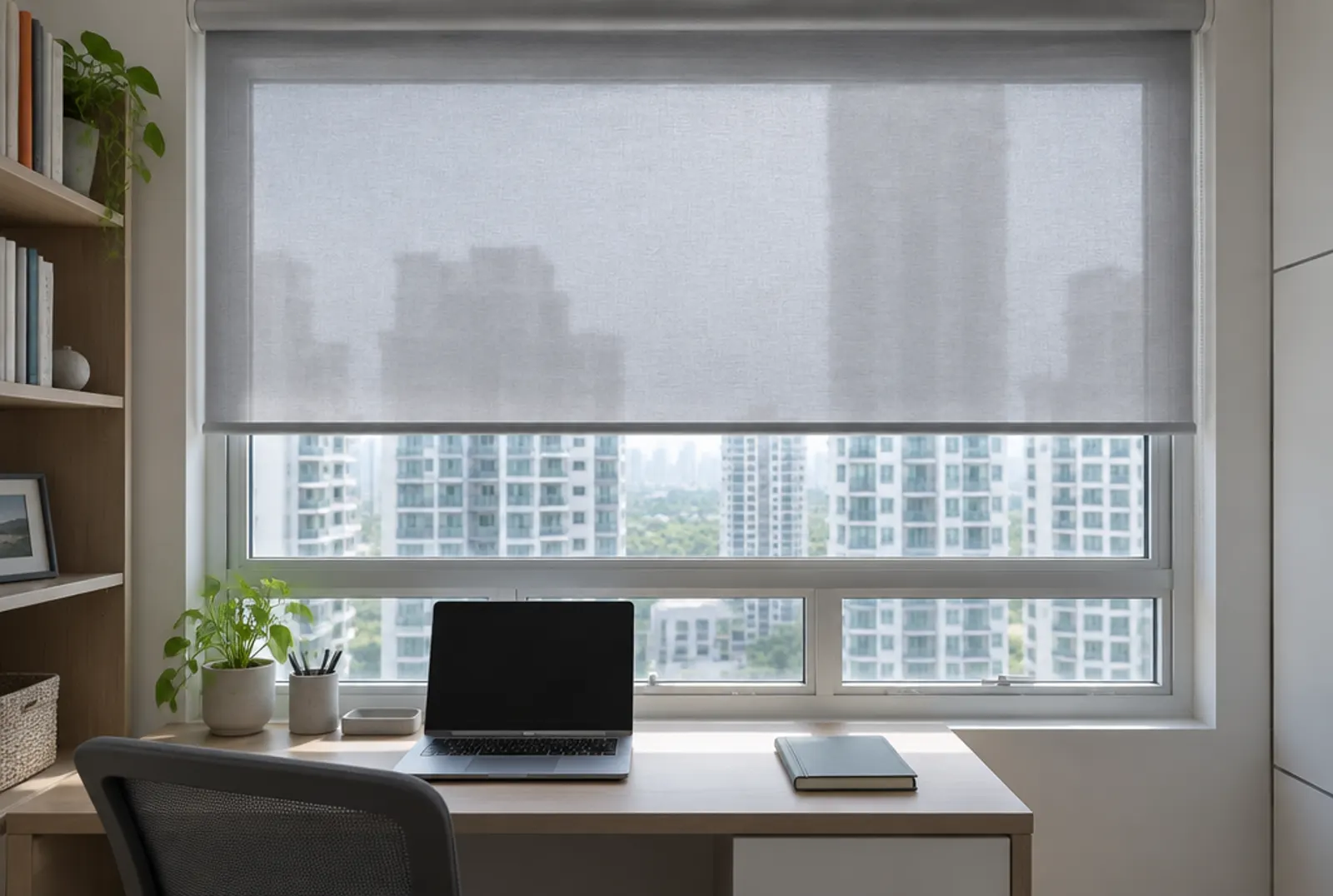 Should a Blind Sit Inside the Recess or Outside It?
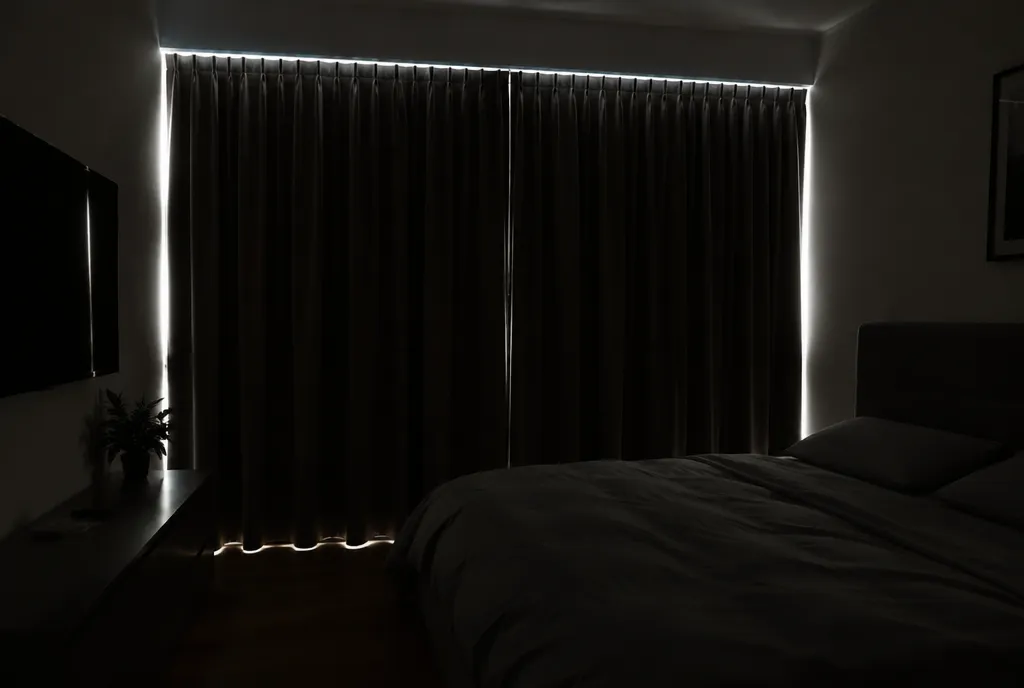 How to Stop Light Leaking Around Blackout Curtains
 Blackout Blinds or Blackout Curtains for a Singapore Bedroom?