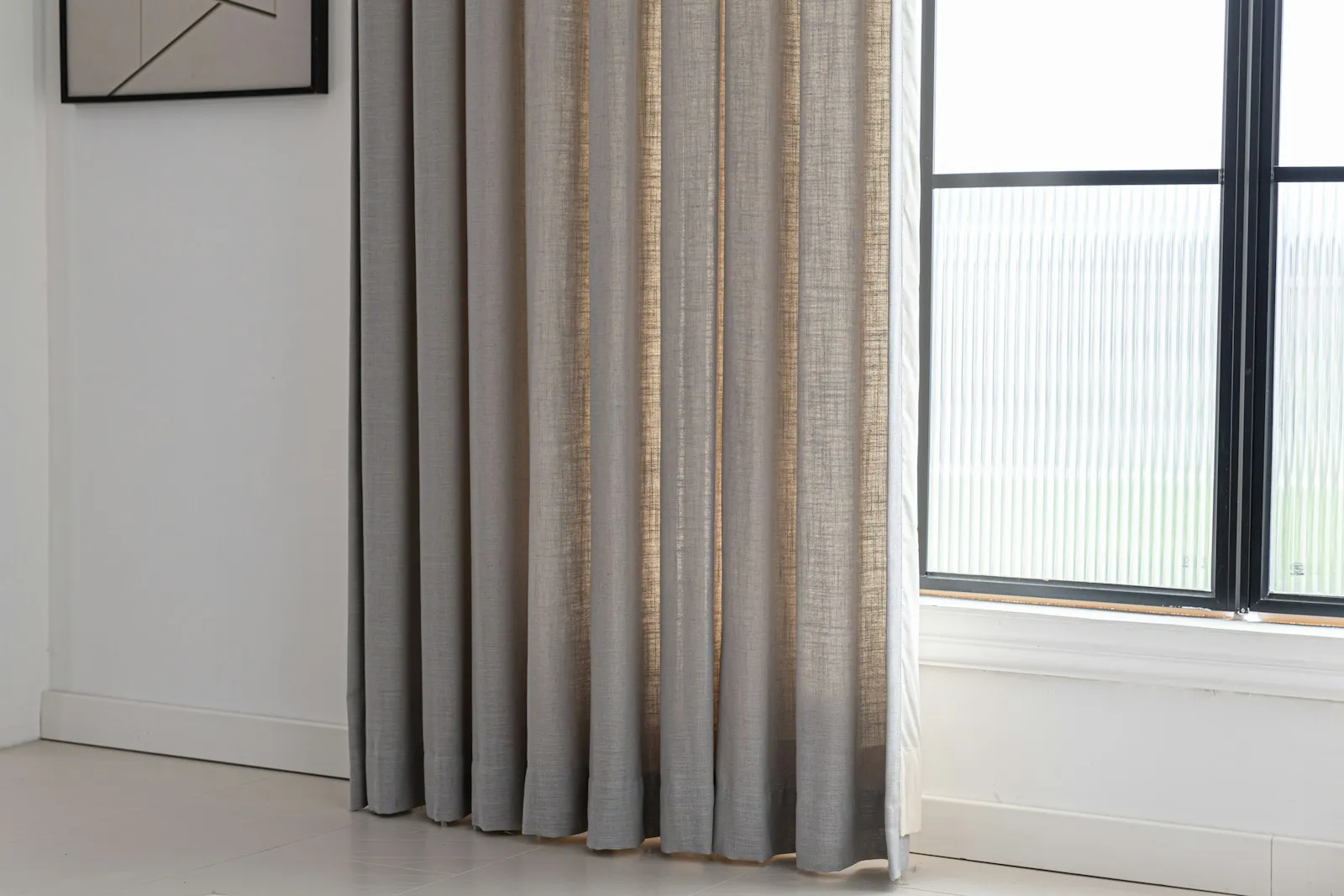
A bedroom window has to do different jobs at different hours. In the morning it should keep light off your face until you are ready to get up. In the afternoon you may want daylight without the block opposite looking in. At night, with the lights on, it needs to give full privacy, and while you sleep it should keep the room dark and cool enough for the aircon to keep up. One curtain or blind rarely does all of that on its own, so the choice comes down to which layers you need and how they are fitted.
Start with the window and how you sleep
Before choosing fabric, note a few things about the room.
- Which way the window faces. East-facing bedrooms get direct light soon after sunrise. West-facing rooms take the afternoon sun, which heats the glass and the room before you go to bed.
- What sits opposite. In many HDB estates and condos, a bedroom window looks straight at another block. That decides how much privacy you need in the evening.
- Who uses the room. A shift worker or a light sleeper needs a darker room than someone who wakes with the sun. A child’s room needs cordless controls.
- The window itself. Many HDB bedrooms have a standard casement window with a ledge, while condo bedrooms often have floor-to-ceiling glass or a bay window. The size and shape change what can be mounted where.
Blocking early light and closing the gaps
Singapore sits close to the equator, so daylight arrives at roughly the same time all year. There is no winter season of dark mornings to rely on. If your bedroom faces east, the first light will reach the window every day, and a fabric that only filters light will brighten the room early.
A blackout fabric or a blackout lining stops light passing through the cloth. In practice, though, a bedroom with blackout curtains often still has thin lines of light at the edges, and those lines are what wake people. They come from four places.
- The top. A curtain hung on a rod or a track mounted a short distance below the ceiling leaves a gap where light spills over and onto the ceiling. Mounting the track close to the ceiling, or adding a curtain box or pelmet over it, closes that gap. A curtain box also hides the track.
- The sides. A curtain that stops at the window frame lets light leak around the edge. Extending the track some distance past the frame on each side lets the curtain overlap the wall.
- The middle. Where two panels meet, light comes through unless the track has overlap arms so one panel crosses over the other.
- The bottom. A curtain that ends at the sill or hovers well above the floor lets light out underneath. A floor-length drop covers it.
Blinds behave differently. A blackout roller blind mounted inside the window recess almost always leaves a thin strip of light down each side, because the fabric has to clear the frame to roll. Mounting it outside the recess, overlapping the frame, reduces that, but it rarely gets as dark as a well-fitted curtain. For a deeper comparison, see blackout vs dim-out curtains, and our blackout curtains page for fabrics and linings.
Privacy at night when the lights are on
A sheer curtain gives good privacy in the daytime, because the outside is brighter than the room and the fabric looks mostly opaque from outside. After dark the situation reverses. With the bedroom lit and the street dark, a sheer becomes see-through from outside, and anyone in the block opposite can see shapes and movement inside.
The same is true for sunscreen roller blinds and the sheer stripes of a Korean combi blind. They are made to let light through, so they let views through when the light comes from inside.
For night privacy you need something opaque between the room and the glass after dark. The common ways to do this are:
- a blackout or dim-out curtain drawn in the evening,
- a Korean combi blind with the solid stripes closed over the sheer ones,
- venetian slats angled so the view in is blocked,
- a lined roman blind lowered at night.
Lined fabrics and dim-out fabrics give privacy without the full darkness of blackout, which suits people who like some morning light but still need cover at night.
Layering sheers and blackout curtains
The most common answer for a Singapore bedroom is a double track with two layers. A sheer curtain hangs on the inner track, close to the glass, and stays drawn most of the day. A blackout or dim-out curtain hangs on the outer track and is drawn in the evening.
This gives you three settings. With the sheer drawn and the blackout open, the room is bright but screened from the block opposite. With both drawn, the room is dark and private. With both open, you get the full view and the window can be opened for air.
When planning a layered set, check that the window has enough width either side for both curtains to stack back without covering the glass, and enough depth above for a double track or a curtain box. Our guide to day and night curtains covers the layering in more detail, and the day curtains and sheers page shows the sheer fabrics.
Blinds for the bedroom
Blinds suit bedrooms where space is tight, where a curtain would block a wardrobe or a bed headboard, or where the window sits above a ledge or a study table.
A blackout roller blind is the simplest option for darkness. It is compact and easy to wipe, though the edge gaps mentioned above mean it is less dark than a curtain unless paired with one. A double roller, with a sunscreen fabric and a blackout fabric on one bracket, gives daytime glare control and night privacy in one fitting.
Korean combi blinds adjust light and privacy without raising the blind, which suits a bedroom you use in the daytime too. With the stripes closed they give privacy at night, but the sheer bands still let some light through, so they will not make a room fully dark. Our Korean combi blinds page explains the fabrics.
Venetian blinds give fine control over light and view, but light passes between the slats, so they suit rooms where full darkness is not needed. Roman blinds look softer and can take a blackout lining, which suits smaller bedroom windows.
Comparing bedroom options
| Option | Darkness for sleep | Night privacy | Daytime light with privacy | Cords and child safety | Upkeep |
|---|---|---|---|---|---|
| Blackout curtain alone | Very dark if the gaps are closed | Good | Room is dark when drawn | No cords on a hand-drawn track | Wash or have cleaned, check care label |
| Sheer plus blackout curtain | Very dark at night | Good when the blackout is drawn | Good with the sheer drawn | No cords on a hand-drawn track | Two sets of fabric to clean |
| Blackout roller blind | Dark, with light at the edges | Good | Room is dark when lowered | Chain needs securing or a cordless option | Wipe the fabric |
| Double roller blind | Dark, with light at the edges | Good with the blackout fabric | Good with the sunscreen fabric | Chain needs securing or a cordless option | Wipe the fabric |
| Korean combi blind | Partly dim, not fully dark | Good with stripes closed | Good | Chain needs securing or a cordless option | Wipe or vacuum the fabric |
| Venetian blind | Partly dim | Good with slats angled | Good | Cords need securing | Slat by slat |
| Roller or combi blind plus curtain | Very dark | Good | Good | Depends on the blind’s controls | Two products to clean |
Kids’ rooms and cord safety
Looped cords and chains on blinds can be a strangulation risk for babies and young children, so a child’s bedroom needs more care than an adult’s. If you choose a blind with a chain or cord, fit a cord tensioner or cleat so the loop is held tight against the wall and out of reach, and keep cots, beds and climbable furniture away from the window.
Cordless and motorised options remove the loop altogether. A curtain drawn by hand on a track has no cords, and motorised curtains or blinds work from a remote or wall switch. Children also tend to pull on curtains, so a sturdy track fixed into a solid ceiling or wall is sturdier than a light tension rod.
Heat, aircon and the west sun
Singapore’s daytime maximum temperatures typically sit between 31 and 33°C, with little change through the year, according to the Meteorological Service Singapore. A west-facing bedroom collects heat through the glass all afternoon, so the room can still feel warm at bedtime even with the aircon running.
Drawing a lined or blackout curtain during the afternoon, while you are out, reduces the direct sun on the bed and floor. The fabric and lining make a difference here, and so does how the curtain is fitted, since a gap at the top lets warm air from the glass circulate into the room. Our article on whether blackout curtains keep heat out explains what to expect and what curtains cannot do. No curtain replaces the aircon, but a covered window gives it less heat to deal with.
Noise from traffic, neighbours and the void deck
Bedrooms facing a main road, an MRT line or a busy void deck pick up noise at night. Heavy, lined curtains soften echo inside the room and can take some edge off outside noise, but they do not block it the way double-glazed windows or sealed frames do. Most outside noise comes through the glass and gaps around the window, and a curtain hanging in front only partly addresses that.
If noise is your main concern, a thick lined curtain from ceiling to floor, running well past the window, helps more than a blind, though the improvement is modest.
Humidity, monsoon rain and mould
Singapore’s mean annual relative humidity is around 82%, according to the Meteorological Service Singapore. Bedroom curtains that stay drawn all day with the window shut, then are opened to humid air, can hold moisture in the folds. Opening the curtains for part of the day and letting the room air helps.
During the monsoon months, rain can blow in through an open bedroom window and wet the hem of a long curtain or the bottom of a blind. Close the window or tie the curtain back when heavy rain is coming, and let wet fabric dry fully before drawing it closed. Check the care label for each fabric, since some blackout linings and coatings should not be machine washed. Our curtain cleaning service can take curtains down, clean them and rehang them if you prefer not to do it yourself.
Common questions
What type of curtain is best for a bedroom in Singapore?
A blackout or dim-out curtain on a ceiling-mounted track, with a sheer on a second track, suits most bedrooms. The sheer gives daytime privacy and the heavier layer gives darkness and night privacy. Extend the track past the window on both sides to reduce light at the edges.
Are sheer curtains private at night?
No. Once the room is lit and it is dark outside, people can see through a sheer curtain. Pair the sheer with a blackout or dim-out curtain, or a blind, that you close in the evening.
Are blinds or curtains better for a bedroom?
Curtains usually get a room darker, because they can overlap the window and cover the edge gaps. Blinds take up less space and suit small windows, ledges and rooms with furniture near the window. Many bedrooms use a blind for daytime and a blackout curtain in front for sleep.
Why does light still come in around my blackout curtains?
The fabric blocks light, but gaps at the top, sides, middle and bottom let it in. A track close to the ceiling or a curtain box, extra track width past the frame, overlap arms in the middle and a floor-length drop close those gaps.
What blinds are safe for a child’s bedroom?
Cordless or motorised blinds remove the hanging loop entirely. If the blind has a chain or cord, fit a tensioner or cleat so the loop stays tight and out of reach, and keep beds and cots away from the window.
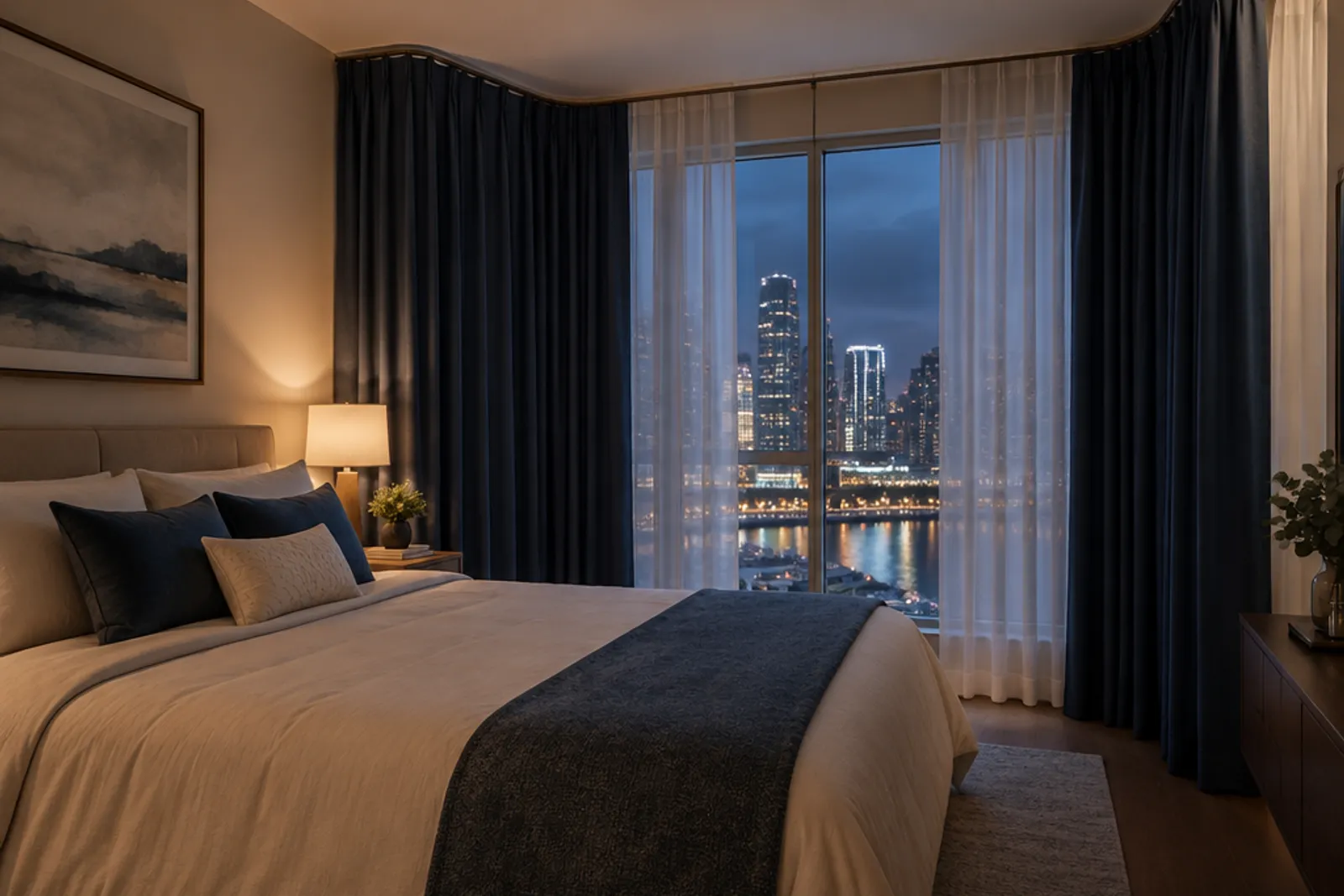 12 Bedroom Curtain and Blind Ideas for Better Sleep in Singapore
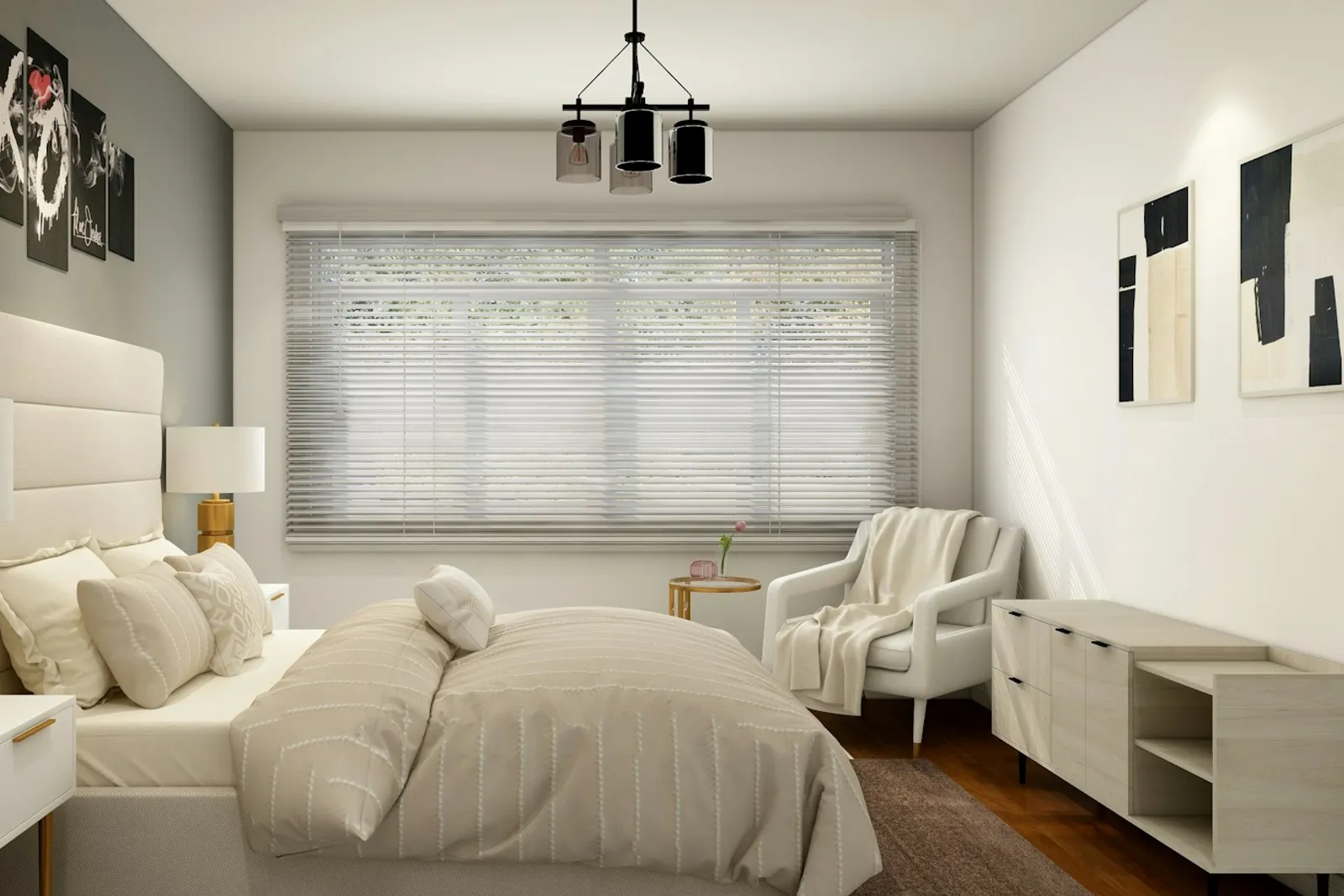 Blackout Blinds or Blackout Curtains for a Singapore Bedroom?
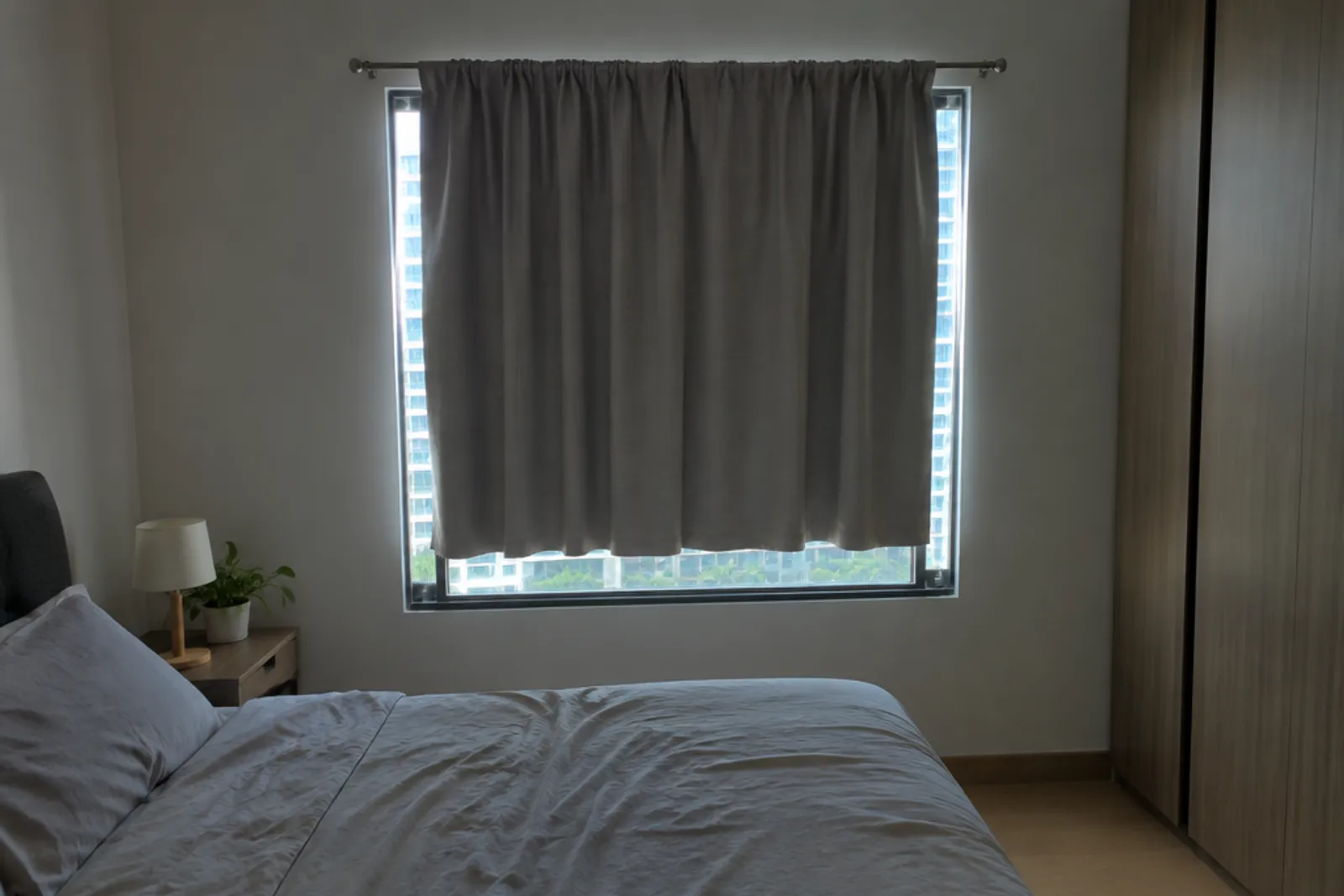 12 Curtain Mistakes Singapore Homeowners Make (and How to Avoid Them)