
Wabi sabi curtains
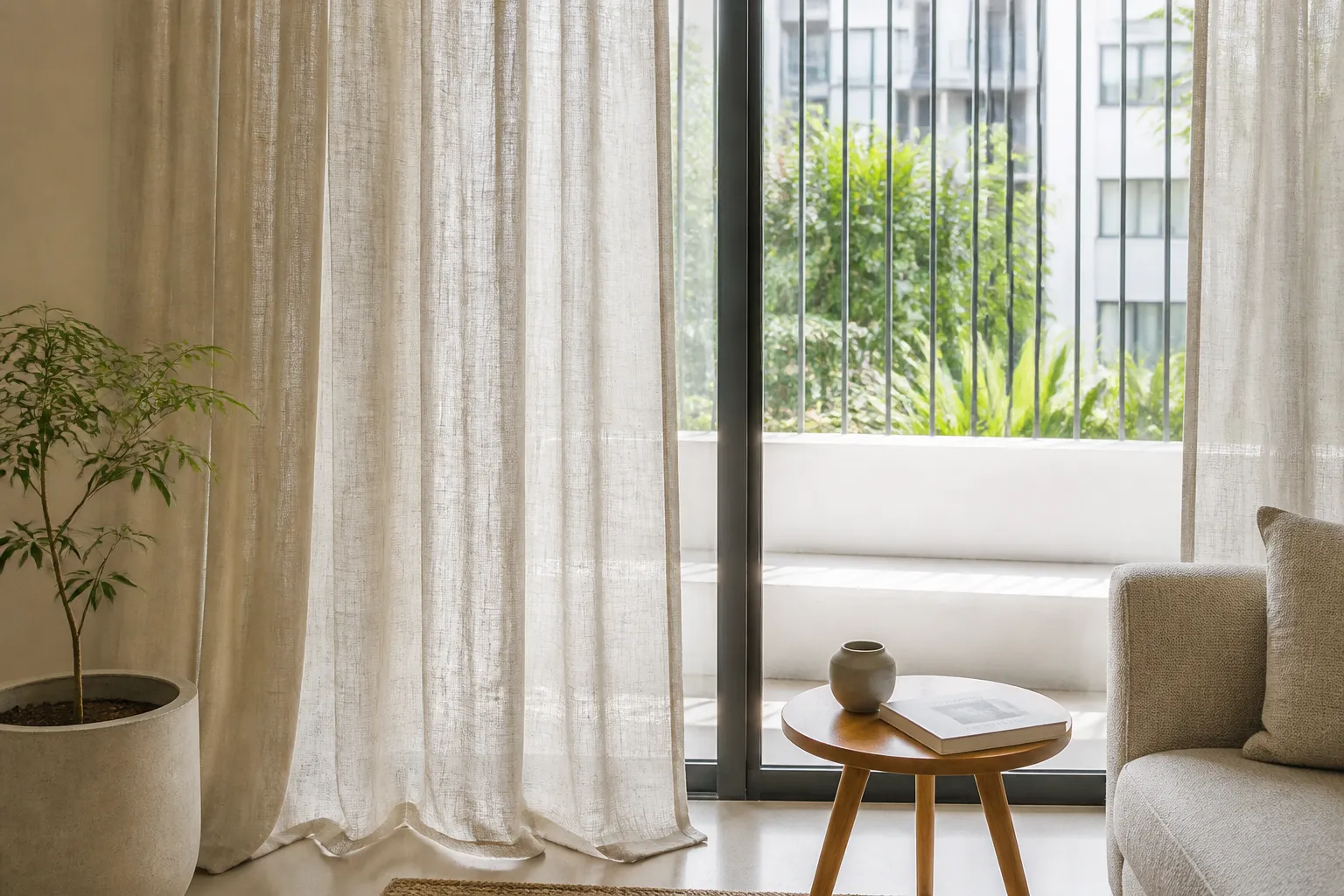
A wabi sabi room in Singapore might have limewashed or microcement walls, a travertine or terrazzo floor, handmade ceramics on a timber shelf and furniture that looks a little worn on purpose. Curtains for that kind of space should feel lived with. We supply wabi sabi curtains in textured slub linen and linen blends in earthy tones, with relaxed headings that let the fabric fall in soft, uneven folds, and we plan the fixings so they do not scar a plaster or limewash finish.
Get a quoteTexture comes before colour
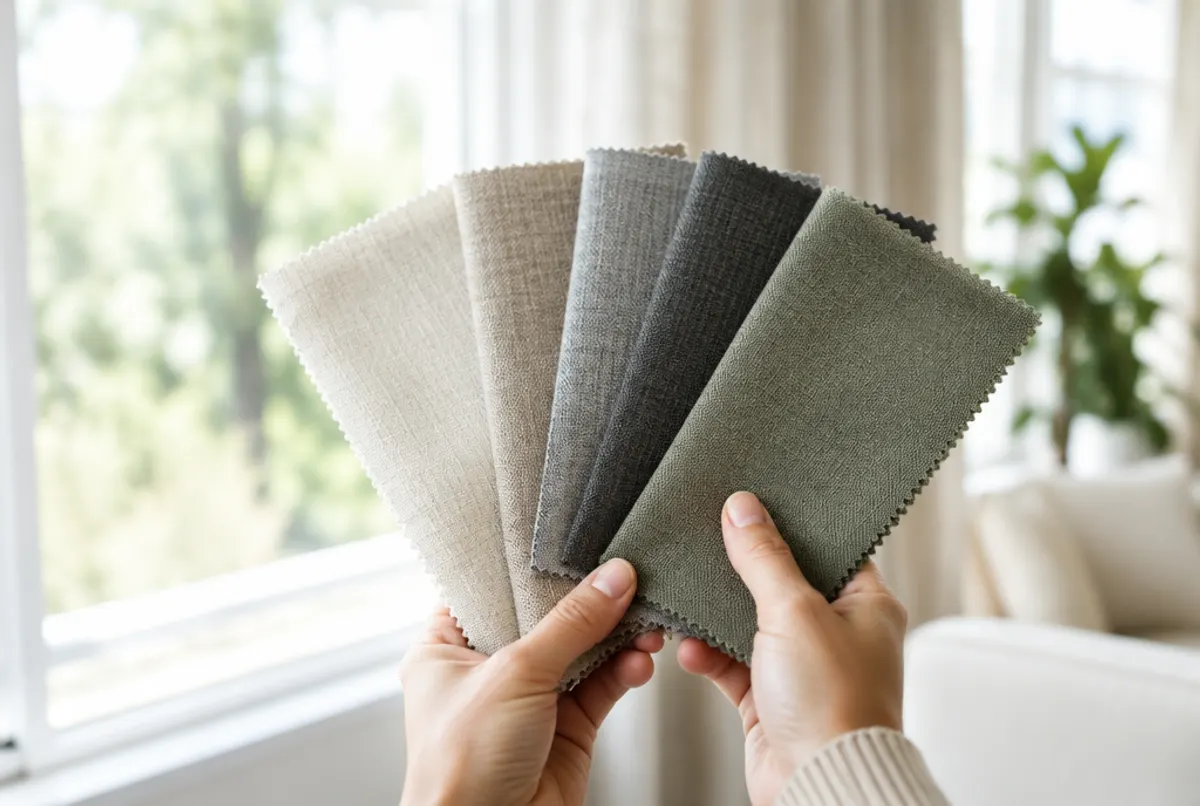
Wabi sabi values things that are imperfect and natural. In a curtain, that means you should be able to see the weave: thick and thin threads, small slubs, a slightly irregular surface that catches side light from the window. A perfectly smooth fabric, however good its colour, will look flat against a textured wall.
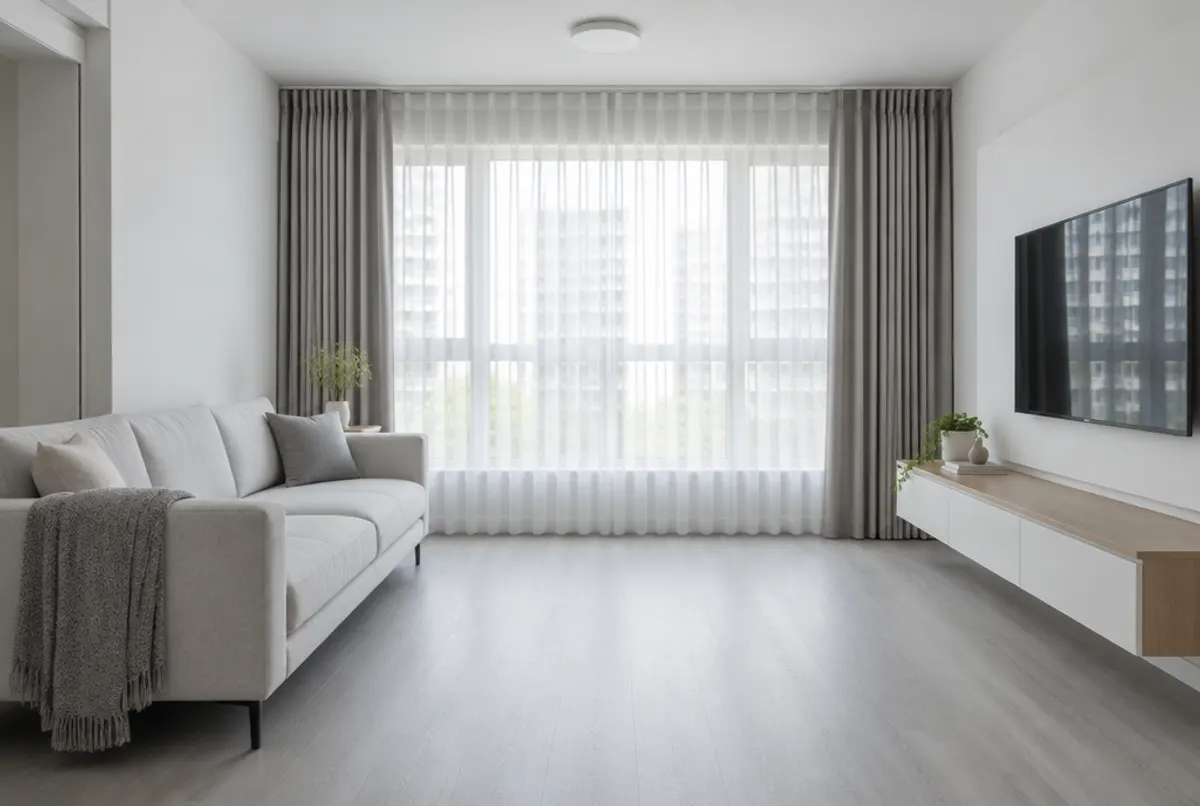
This is the main difference from Japandi, which also uses linen but prefers crisp, regular ripple folds and tidy stacks. A wabi sabi curtain is allowed to crease, wave and soften. If even folds and a neat finish matter more to you, a Japandi or minimalist approach may suit you better.
Fabrics and earthy colours
Relaxed headings and drape
Most wabi sabi curtains look best with a heading that is not too precise. A soft, unpressed pinch pleat gives gentle folds at the top that loosen towards the floor. A simple gathered heading on a slim, matt rod suits a more casual room. Ripple fold can work too if we add extra fullness so the waves look loose rather than measured.
Many wabi sabi photographs show linen pooling on the floor. In our climate, a heavy puddle stays damp, gathers dust and can develop mould spots at the hem. We usually suggest a soft break of one or two centimetres instead, which still looks relaxed and is far easier to keep clean.
 Curtain headings explainedA guide to pinch pleat, ripple fold and eyelet, with how each one falls and stacks.Learn more →
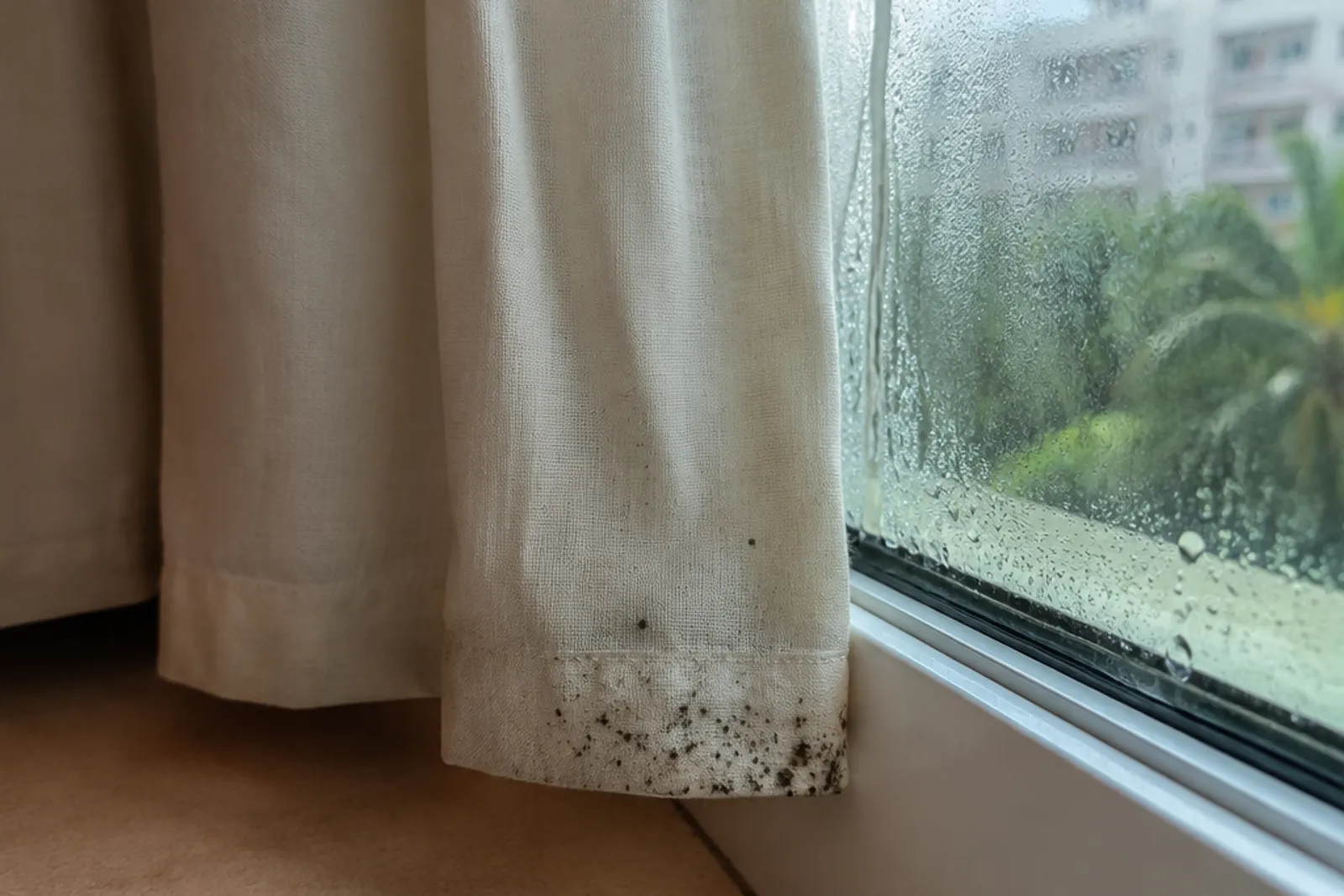 Avoiding mould on curtainsWhy hems and linings pick up mould in Singapore homes and how to prevent it.Learn more →
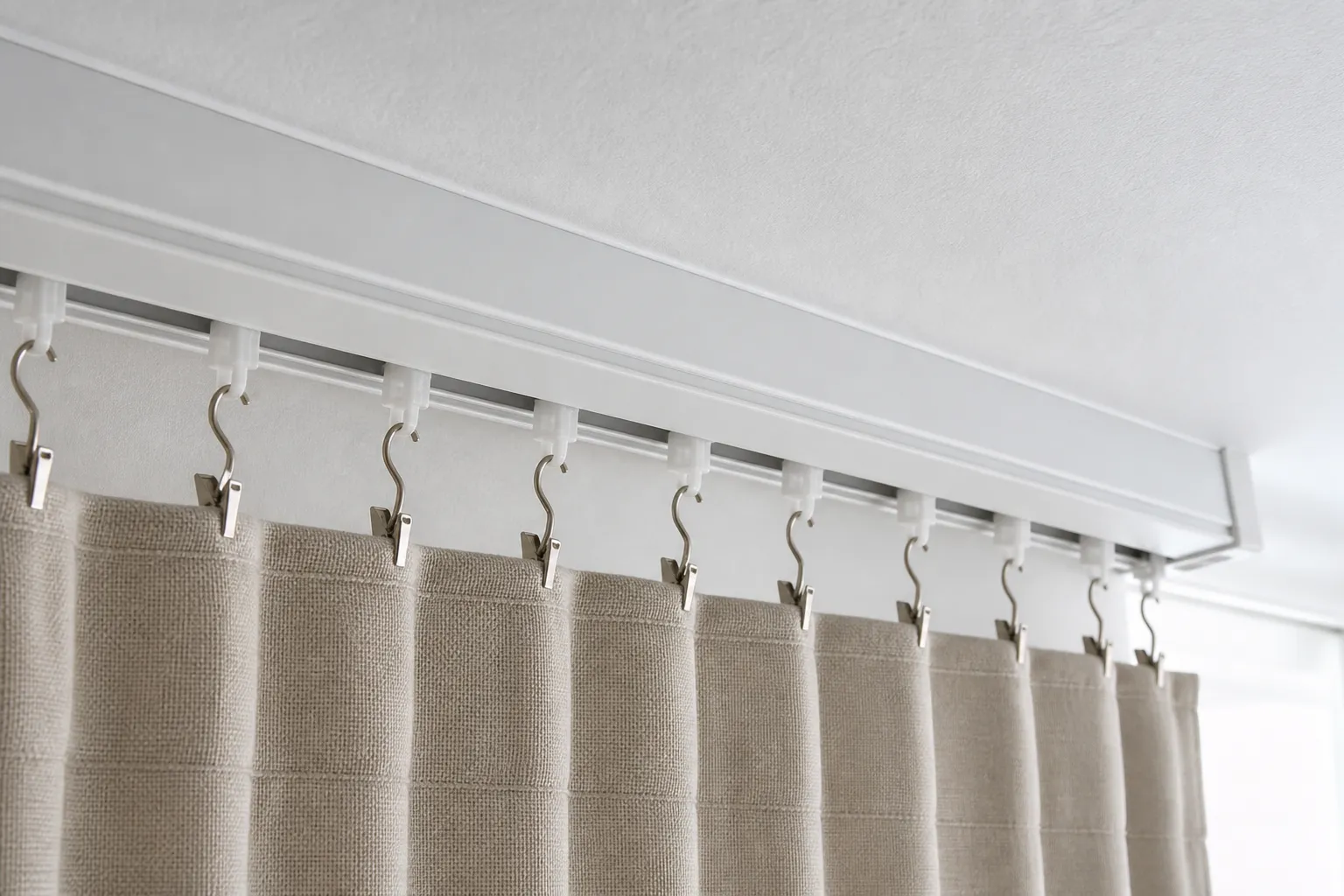 Rods or tracksA thin dark metal or timber rod is part of the look in many wabi sabi rooms. A track is smoother to draw daily and can be hidden in a curtain box.Learn more →
Plaster, limewash and fixing points
Limewash, lime plaster and microcement are hard to patch invisibly. A misplaced drill hole or a bracket that has to move can leave a mark that never quite matches. If you are still renovating, decide on rod or track positions before the final coat goes on, so the wall can be finished around them.
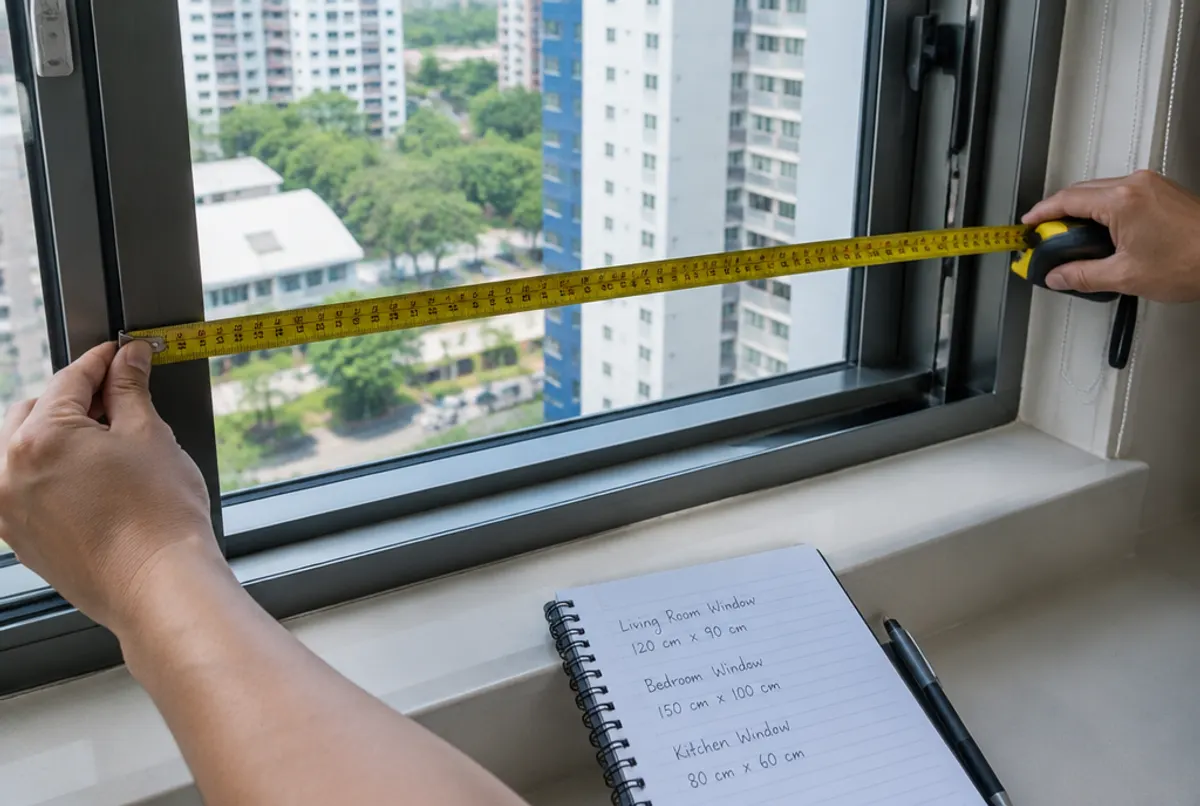
On a finished wall, we check the fixing positions with you at the measuring visit and suggest ceiling mounting where it makes sense, since the ceiling is often plain paint and easier to repair.

Bedrooms, blinds and care
Slub linen lets light through, which is part of its appeal in a living room but not in a bedroom. You can add a separate blackout curtain behind the linen on a double track, or fit a blackout roller blind inside the window and keep the linen in front for texture. A linen roman blind with a relaxed fold is another option for small windows.
Linen curtains soften with washing, but they can shrink if washed hot. We offer curtain cleaning on site or taken away and rehung, which saves you taking heavy panels down from a high track.




Quiz
What's your curtain style?
Five quick picks. You get a style, the curtains that suit it and a look to copy. Open the full quiz
Common questions
What is the difference between wabi sabi and Japandi curtains?
Both use natural fabrics and muted colours. Japandi favours neat ripple folds, tidy stacks and hidden tracks, while wabi sabi accepts creases, uneven folds and a visible, simple rod. Wabi sabi fabrics are usually coarser and earthier in tone.
Should wabi sabi curtains touch the floor?
A small break of one or two centimetres on the floor looks relaxed. A deep puddle is not practical in Singapore's humidity because the hem stays damp and gathers dust. We set the length during measuring.
Will linen curtains shrink?
Linen can shrink, especially in hot water. Pre-washed or stonewashed linen has already shrunk most of the way, and washing cool helps. Ask us about the fabric you choose before washing it yourself.
Can I hang curtains on a limewashed wall?
Yes, but plan the fixing points carefully because limewash is hard to touch up. Ceiling mounting avoids drilling into the feature wall, and during a renovation it is best to fix positions before the final coat.
How do I make a wabi sabi bedroom dark enough to sleep?
Keep the linen curtain for texture and add a blackout layer, either a second curtain on a double track or a blackout roller blind in the window. Both can be chosen in tones that match the linen.
How do I get started?
Send photos of your windows and walls through the contact page or WhatsApp +65 9071 3976. The home measuring visit needs a $50 deposit, which is credited to your order.
Tell us about your windows
Send photos and rough window sizes on WhatsApp for an early quote. When you are ready, we measure at your home and bring fabric and blind samples. The visit needs a $50 deposit, credited to your order. Found a lower quote for the same curtains? We price match. See the price match terms.