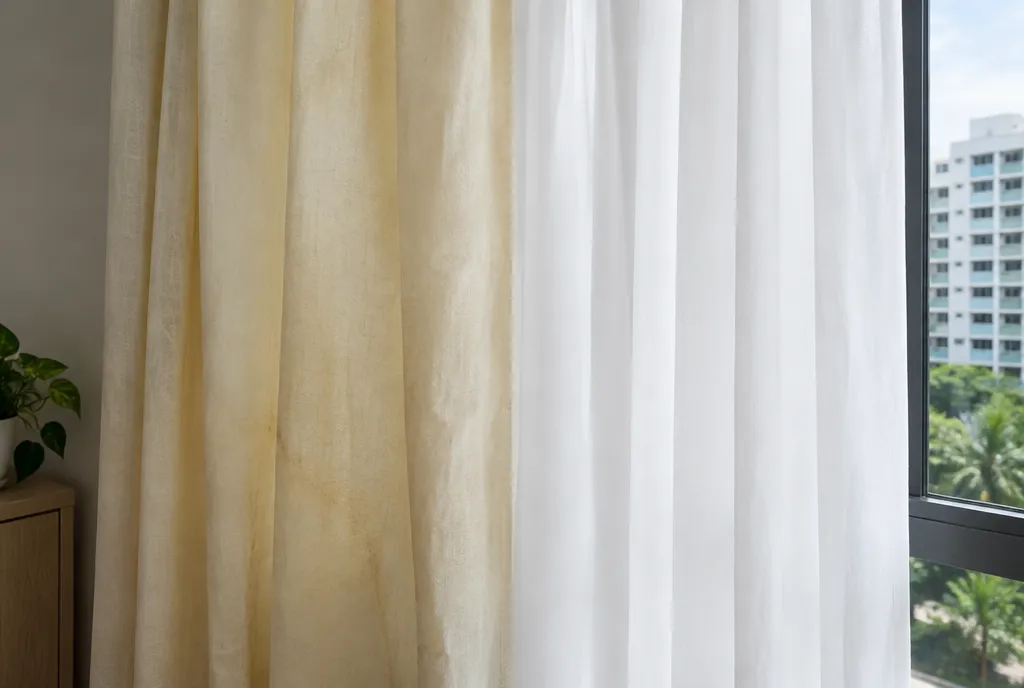
White sheers and curtains look fresh when they go up, but after a year or two many turn cream, then a dull yellow, often unevenly. The edges facing the window or the panels nearest the kitchen usually go first. The cause is rarely just age. Knowing which one applies tells you whether the yellow will wash out or whether the fabric is past saving.
Why white curtains turn yellow
Sunlight
Strong sun breaks down fibres and the optical brighteners added to make white fabric look bright. As those brighteners wear away, the fabric’s natural cream or yellow tone shows through. Sheers on west-facing windows go yellow fastest. Sun yellowing often comes with fabric that feels thinner or more brittle.
Cooking fumes
Oil and grease from cooking travel through the flat as a fine mist and settle on fabric. In Singapore flats with an open kitchen, or a kitchen beside the living room, white curtains often yellow within months. Grease also traps dust, so the yellow turns grey-brown over time.
Smoke
Cigarette smoke, incense and joss sticks leave a yellow-brown film on fabric and a lingering smell. It builds up slowly and is usually even across the whole curtain.
Detergent and softener residue
Using too much detergent or fabric softener, or not rinsing well, leaves residue in the fibres. That residue attracts dirt and can yellow over time, especially on synthetic sheers. Some curtains look more yellow after washing for this reason.
Slow drying and humidity
White fabric that stays damp for a long time can develop yellow or brown water marks and a musty smell. Drying heavy curtains folded in a closed room is a common cause. If you also see black or grey dots, that is mould; see our guide on why curtains get mouldy.
Storage and plastic
Curtains stored folded in plastic or cardboard for months can yellow along the folds.
How to whiten yellow curtains safely
Check the care label first. Some sheers and lined curtains are dry clean only, and some fabrics will not take soaking or bleach.
- Take them down and shake them out outdoors or by an open window to remove loose dust.
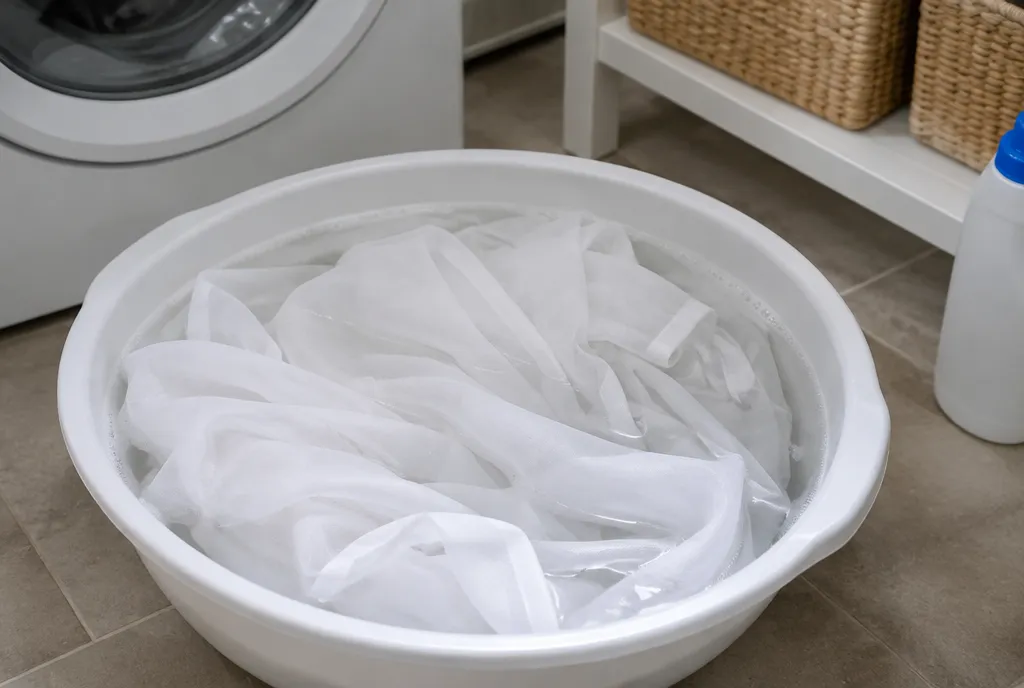
- Soak them. Fill a basin or bath with cool to lukewarm water and an oxygen-based whitener made for fabrics, following the pack instructions. Soak for a few hours, or overnight for heavy yellowing. For greasy kitchen curtains, a little dish soap in the soak helps lift oil.
- Wash gently. Use a delicate cycle with a small amount of detergent. Put sheers in a large mesh laundry bag.
- Rinse twice. An extra rinse removes detergent residue, which is often part of the problem.
- Dry quickly in the shade. Hang them in moving air. Direct sun can bleach some fabrics further but also weakens them. For sheers, hanging them back on the track while slightly damp lets the creases drop out.
- Repeat if needed. Heavy yellowing may need two rounds.
About chlorine bleach
Chlorine bleach can make polyester sheers turn more yellow, not less, and it weakens fibres. Use it only on white cotton where the label allows, diluted as directed, in a ventilated space. Never mix bleach with vinegar, ammonia or other cleaners.
Our guide on how to wash curtains covers each fabric in more detail.
How to keep white curtains white
- Wash sheers every few months, and kitchen-side curtains more often.
- Run the cooker hood every time you cook, and keep the kitchen door or sliding panel closed if you have one.
- Use less detergent than the pack suggests, and skip fabric softener on sheers.
- Dry curtains fully and quickly, and never store them damp.
- On west-facing windows, fit window film or a blind on the glass side to take the direct sun.
- Choose a polyester sheer for sunny or kitchen-side windows. It handles frequent washing better than cotton or linen.
When to replace instead
Whitening works on grease, residue and smoke. It does not reverse sun damage. Replacement is usually the better choice when:
- the fabric is yellow and feels thin, rough or brittle
- small holes or splits appear when you handle it
- the yellowing is patchy in stripes where the folds faced the sun
- two careful soaks have not made a difference

When to call a professional
If your curtains are large, lined or dry clean only, or you would rather not take them down yourself, our curtain cleaning service offers on-site steam cleaning, dry cleaning and washing, with take-down and rehang. If they need replacing, we supply made-to-measure curtains and day curtains and sheers, and bring samples to a home measuring visit so you can compare whites in your own light.
Common questions
Why do white curtains turn yellow after washing?
Usually detergent or softener residue left in the fabric, or curtains that dried too slowly. Rewash with less detergent, rinse twice and dry them quickly in moving air.
Can I use bleach on yellow sheer curtains?
Avoid chlorine bleach on polyester sheers, as it can make them yellower and weaken the fabric. An oxygen-based whitener made for fabrics is a gentler choice.
Can yellowed curtains be made white again?
Yellowing from grease, smoke or residue often lifts with a soak and careful wash. Yellowing from sun damage usually does not, because the fibres themselves have changed.
How often should white sheers be washed?
Every few months is a good routine for most rooms. Curtains near the kitchen or in a room where people smoke need washing more often.
 Blind Cord Safety: Making Blinds Safer for Young Children
 How to Stop Light Leaking Around Blackout Curtains
 Curtain Rod Sagging, Track Stuck and Broken Blinds: Common Faults and Fixes