Rain blows in through a casement left on the vent, a roller blind flaps against the frame, and the curtain hem sits in water on the sill. A balcony blind left down takes the same wind. This is a checklist for those weeks, tied to what the Meteorological Service Singapore says the season brings.
What the northeast monsoon brings
The Meteorological Service Singapore climate page describes the northeast monsoon as December to early March. In the wet phase, usually December to early January, “Monsoon surges cause widespread continuous moderate to heavy rain, at times with 25-35 km/h winds.” The dry phase is “Windy and relatively dry in the later part of the season, usually from late January to early March.” Higher rainfall occurs from November to January, February is the driest month, and December and January are the coolest months, with a 24-hour mean of 26.8°C.
That 25-35 km/h line is a description of the weather in a surge. It is not a wind rating for any blind we fit, and we do not publish one.
As of the monsoon update dated 29 October 2026, the northeast monsoon was “expected to progressively set in towards the end of November 2026 or early December 2026.” Read that page again each season. The climate page is the long-term description, not a forecast for a particular week.
A joint PUB and NEA advisory dated 18 November 2014, published on the Meteorological Service Singapore site, is a general description of a typical season. It is not a forecast for this year. It describes a wet phase between late November and January and a drier phase in February, and it puts about two to four monsoon surges in that wet phase. Those surges usually bring prolonged widespread rain lasting between two and five days, occasionally windy conditions, and cooler temperatures. The advisory’s “cooler” sits next to the climate page’s 24-hour mean of 26.8°C for December and January, which is the coolest part of a warm year.
The same advisory says heavy rain coinciding with high tides could lead to localised flash floods in low-lying areas, and it tells the public to be careful. A curtain does not keep floodwater out of a flat. The window task in a surge is to stop rain blowing onto the sill and the hem.
A checklist for a surge week
Do this before the rain arrives, and again when a surge is in the forecast.
- Close the windows, including a casement left on the vent. Rain that blows in wets the sill, the hem and any blind hanging in the opening.
- Raise a free-hanging indoor blind, or otherwise get it out of the wind, so it is not left flapping against the frame.
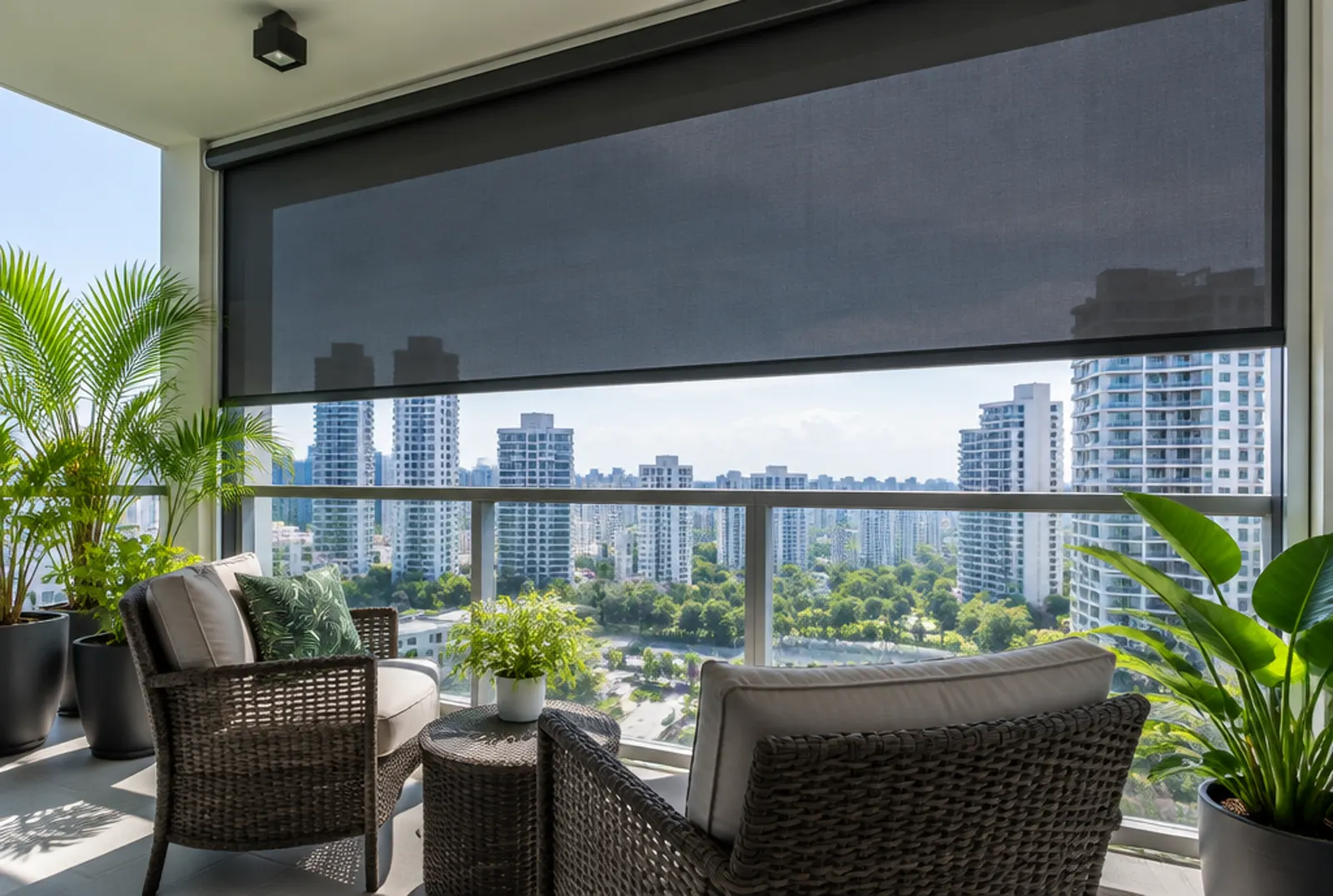
- On a balcony, raise the outdoor blind in strong wind and during a thunderstorm. An outdoor zip blind stays in side channels, so it flaps less than a free-hanging outdoor roller. The product page states the limit in plain words: no fabric blind is a storm shutter. HDB open balconies have their own rules about what may be fitted, which is separate from the weather. The balcony blinds page is the room overview.
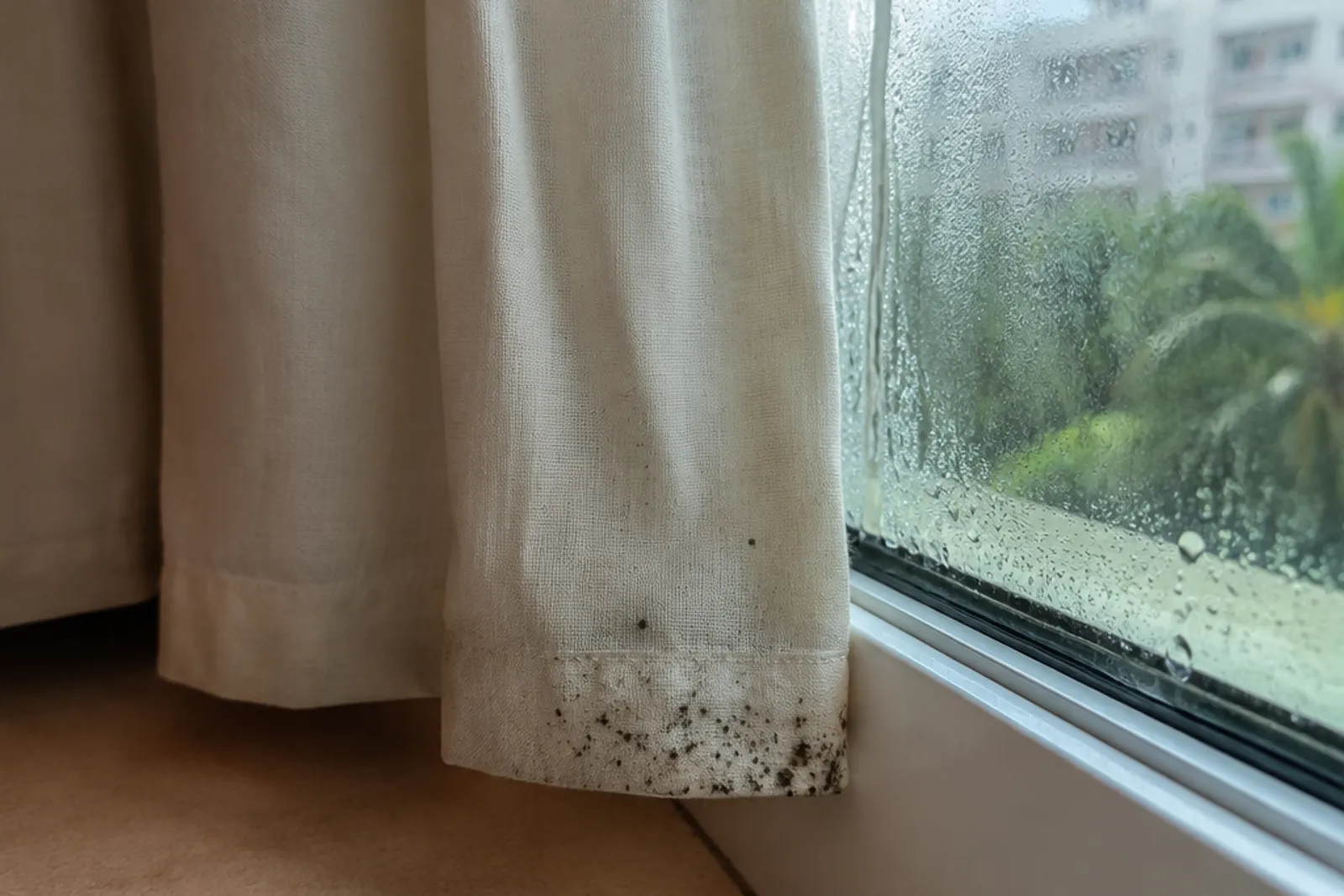
- If the hem or the sill is already wet, lift the cloth off the water. A hem or a blind that stays damp is how mould starts. The curtain mould guide and the blinds mould guide explain what to do next.
Drying a wash in a rain week
Continuous rain in a surge makes the service yard a poor place to dry curtains. The wash guide is the method, including drying in a humid flat. Get the heading and the hems dry before the curtains go back against the glass. Damp cloth left folded is the problem those mould guides already describe.
The window, separate from the curtain
Wind and rain land on the casement before they land on the curtain. BCA’s windows safety page, last updated 22 May 2026, says windows are constantly exposed to wind and rain, may deteriorate from wear and tear, and that regular maintenance is essential for safety. The homeowner steps named there are check, clean and change. If you are not confident checking your own windows, the page says to engage an approved window contractor. It links BCA’s list of approved window contractors, and it tells HDB owners to use HDB’s list.
Replacing aluminium rivets on the variable-geometry stays of a casement is described there as retrofitting. BCA says that work is for approved window contractors and trained window installers, and that aluminium rivets found on casement windows should be reported to BCA. It is not a job to attempt while you are raising a blind out of the wind.
A sash that will not close is the same practical problem as the first item on the checklist. Rain blows in. The repair belongs with a window contractor.
Common questions
What should I do with blinds before a monsoon surge?
Close the windows. Raise a free-hanging indoor blind so it is not left in the wind. On a balcony, raise an outdoor zip blind or a free-hanging outdoor roller in strong wind and in a thunderstorm. A zip blind flaps less, and it is still a fabric blind, not a storm shutter. We do not publish a wind rating.
Why do curtain hems go mouldy after heavy rain?
A hem left wet against the glass or on a damp sill can grow mould. The curtain mould guide explains curtains, and the blinds mould guide explains blinds. The cleaning steps live on those pages.
Can I line-dry curtains during the wet phase?
The wet phase is usually December to early January. A typical surge, in the 2014 advisory’s general description, brings prolonged rain lasting between two and five days. Outdoor drying is harder in that weather. Use the wash guide, and do not rehang cloth that is still damp in the hem.
Who should check a window that will not close?
BCA’s windows safety page, last updated 22 May 2026, tells homeowners to check, clean and change their windows, and to use an approved window contractor if they are not confident. Replacing aluminium rivets on casement stays is work for those contractors and trained installers.
 Why Curtains Get Mouldy in Singapore and How to Stop It
 How to Wash and Steam Curtains in Singapore