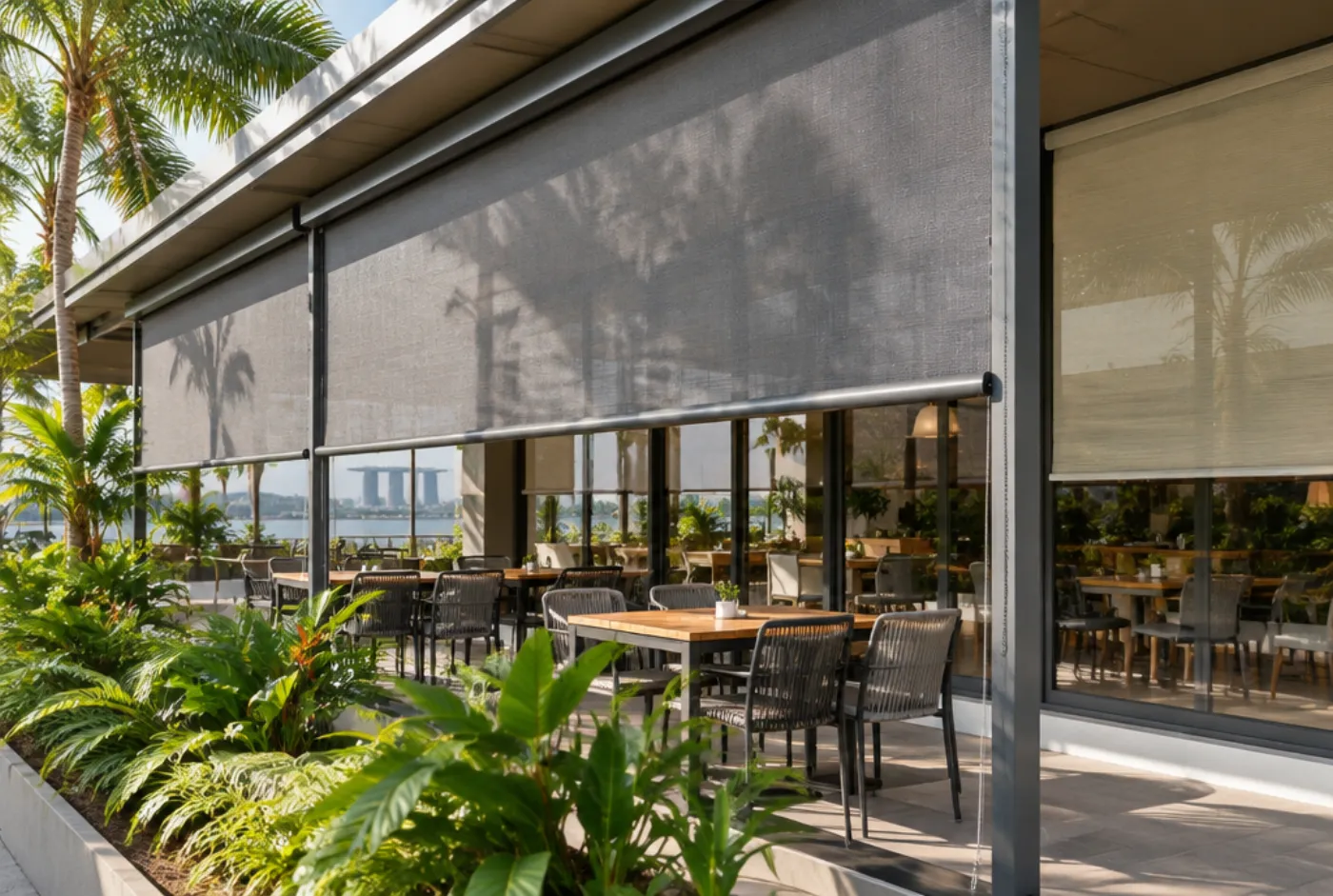
The blind is the last approval, not the first. A terrace that already seats guests can still be refused a fixing on the facade, and a product that suits a condo balcony can be the wrong product on a promenade. Check who can say no, then ask for a price.
What we supply for shops and restaurants is on the shop and F&B blinds page. How an outdoor zip blind differs from a free-hanging roller is on the outdoor zip blinds page. Weather, once the blind is up, is the monsoon guide. This page is the permission list before anyone measures.
Landlord, mall, or the building manager
Start with the landlord or the mall. Malls, shophouse landlords and building managers set colours, fixings, and whether anything may be attached to a shopfront or a common walkway. Ask them before you order, and send the fit-out guide with the drawings. The shop page says the same thing because the quotation cannot guess a house rule.
Get the answer in writing. “The manager said OK” does not survive a change of staff. If the terrace is on common property in a strata mall, the management corporation’s approval is part of that written answer. A subsidiary proprietor fixing an awning to a common-property wall is the example in the strata common-property guide. A restaurant terrace can be the same question.
URA, if the seating is an outdoor refreshment area
The Urban Redevelopment Authority’s handbook page on outdoor refreshment areas (updated 6 June 2026) says outdoor refreshment areas (ORAs) are included as gross floor area. That sentence is about the seating area counting as GFA. It does not mention blinds, zip screens or curtains.
We did not find a line on that page that allows blinds at an ORA, or a line that bans them. Do not treat silence as a yes. If your seating is an ORA, or you are not sure, ask URA, and ask the landlord, before a blind is fixed. A planning approval for tables is not an approval for a new structure on the facade.
One place on that page is specific. For an ORA along the Singapore River Promenade, the handbook says the ORA is computed as GFA, must be confined to the boundary of the development and defined by markers such as planters or flower pots, and: “Only retractable awnings mounted on the development facades are allowed for the ORA to add more interest and diversity to the streetscape.” The full frontage along the promenade and pedestrian mall can be considered for ORA use, subject to evaluation and technical requirements. Because those proposals sit on state land, applicants have to obtain a Temporary Occupation Licence from SLA or its appointed agent.
Read that awning sentence narrowly. It is about the Singapore River Promenade, not about every cafe in Singapore. A retractable awning fixed to the facade is what that paragraph allows. It does not mention a zip blind. Our outdoor zip page states that we do not supply retractable awnings. A zip blind is a different product. Do not assume it satisfies “only retractable awnings” on that promenade. Ask URA before you draw one there.
Elsewhere, take the handbook as a prompt to ask, not as a product rule. Orchard, rooftop and privately owned public-space ORAs on the same page are bonus-GFA notes. They still do not name blinds. If your terrace is one of those, ask the planner who lodged the ORA, then the landlord.
HDB shops
If the unit is an HDB shop, check with HDB as well as the landlord. This page does not state an HDB rule for shopfront or outdoor blinds. We have not quoted one because we are not relying on a page we can point to for that case. Ask the HDB branch that manages the block, and keep their reply with the landlord’s letter. Residential balcony rules are a different subject. Do not copy them onto a shop.
After someone has said yes
Then specify the opening. Side walls or posts for channels, a head fix that the landlord has allowed, mesh or a more solid cloth, and manual or motor. The outdoor zip page explains the product and its limit: zip blinds cope with wind better than a free-hanging outdoor blind, and no fabric blind is a storm shutter. We do not publish a wind rating. In strong wind and in a thunderstorm, raise the blind. The monsoon guide is the weather checklist, including that 25 to 35 km/h line as a description of a monsoon surge, not as a rating for the blind.
Motorised outdoor blinds need an outdoor-rated power point. Plan it with the electrician the landlord accepts. We will not invent a lead time. Send the approval, the photos and the date you hope to open the terrace, and we will say whether the sequence is realistic.
WhatsApp +66 64 528 5763. If the approval is still open, we can tell you what a zip blind needs structurally. We will not cut cloth for a facade the landlord or URA has not accepted.
Common questions
Do I need URA approval for a blind on my cafe terrace?
Ask, if the seating is an outdoor refreshment area or you are not sure. The handbook says ORAs are included as GFA. It does not say blinds are allowed or banned. Along the Singapore River Promenade, the same page allows only retractable awnings mounted on the development facades. That is not a zip blind, and we do not supply those awnings.
Is a landlord’s verbal OK enough?
No. Malls and landlords often set colour and fixing rules for shopfronts. Ask for the fit-out page or an email, and send it with the quotation. The shop and F&B page is the product list once that page is in hand.
What about an HDB coffee shop or shophouse?
Check with HDB and with the landlord. This guide does not quote an HDB shopfront rule. Do not use the residential balcony guides as if they were written for a shop.
Can the blind stay down in a storm?
No. No fabric blind is a storm shutter, and we do not publish a wind rating. Raise it in strong wind and during a thunderstorm. The monsoon guide sets out that habit for the season.
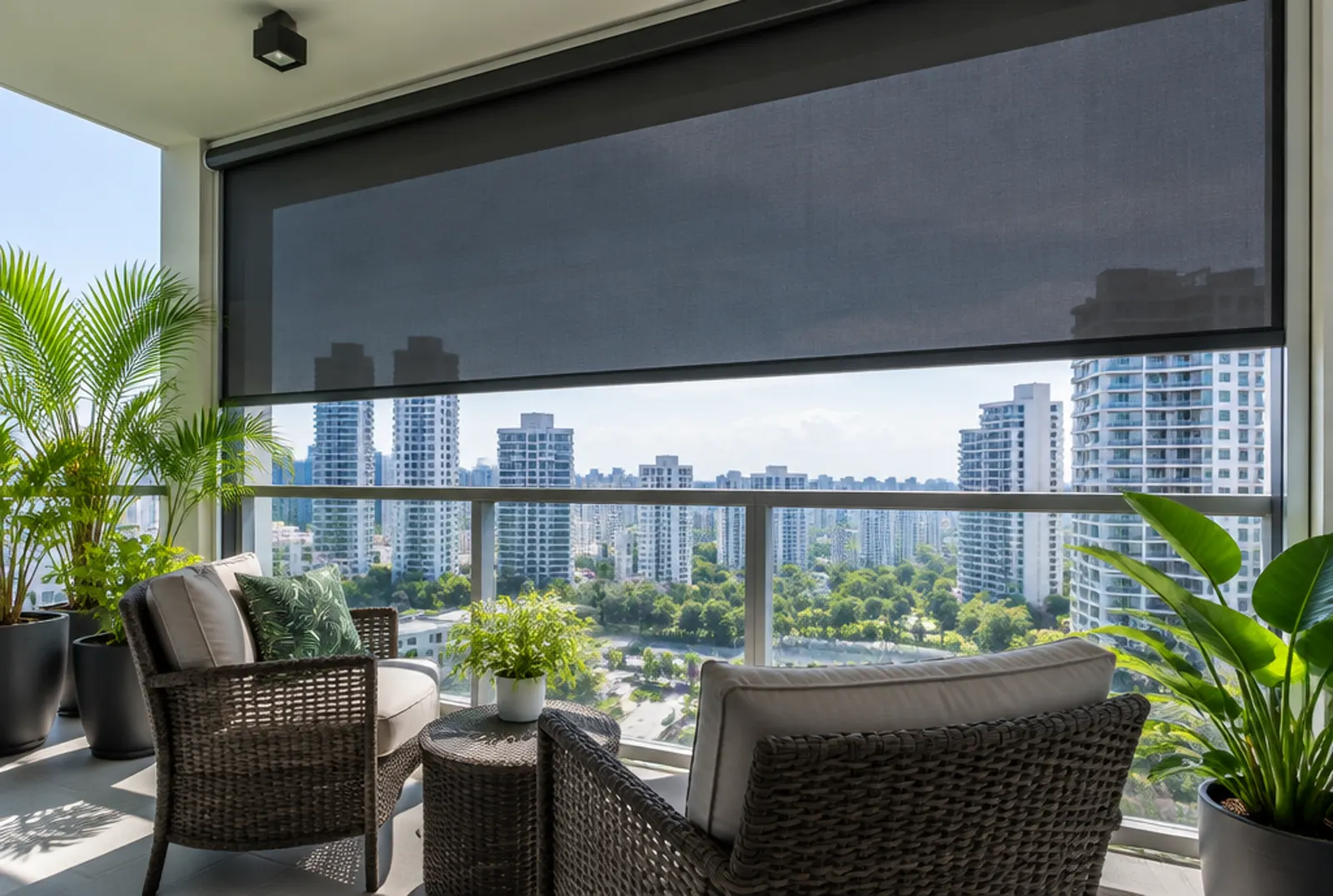 Monsoon Season: Curtains, Blinds and Wet Windows
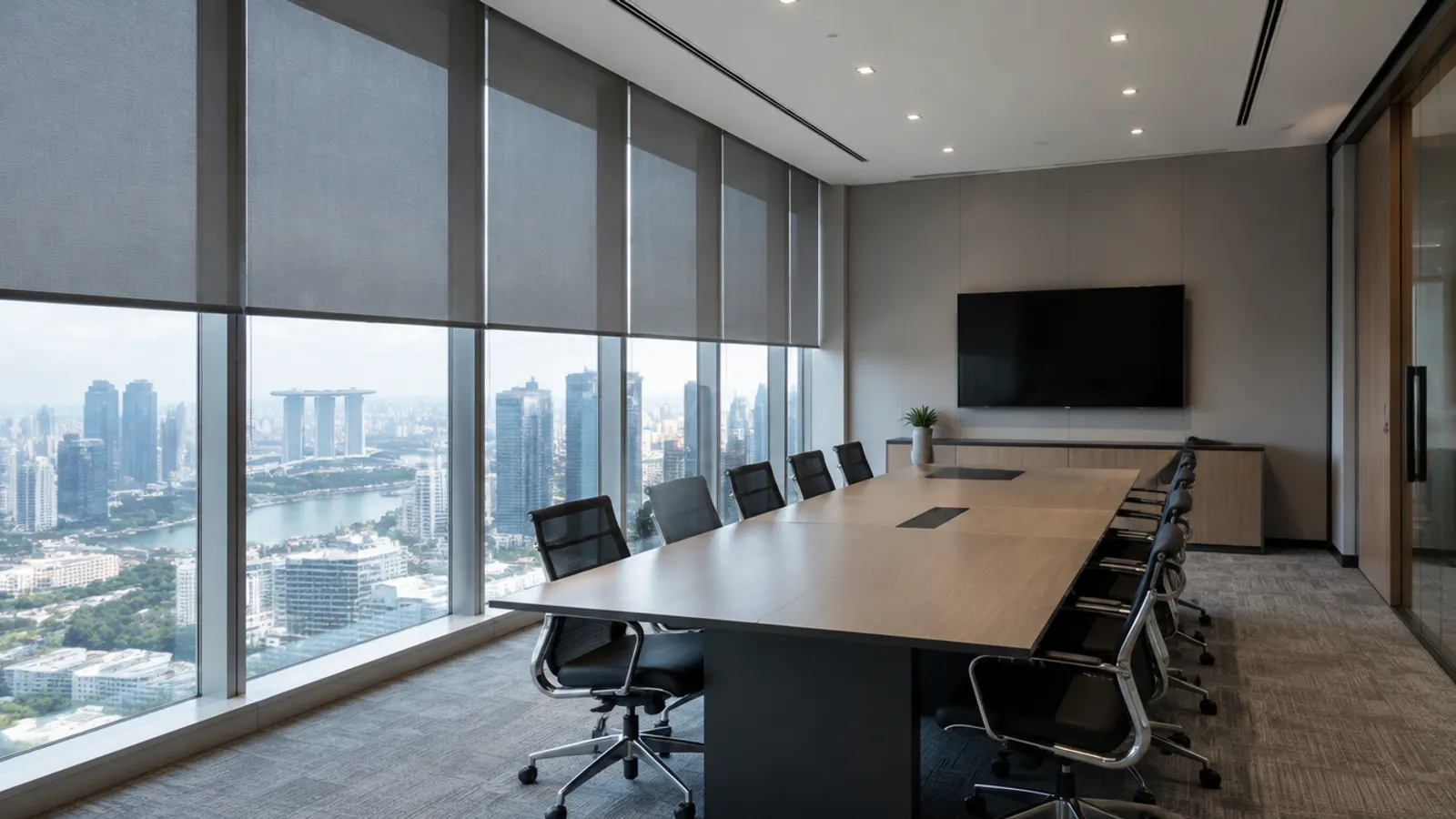 Curtains and Blinds in a Commercial Fit-Out
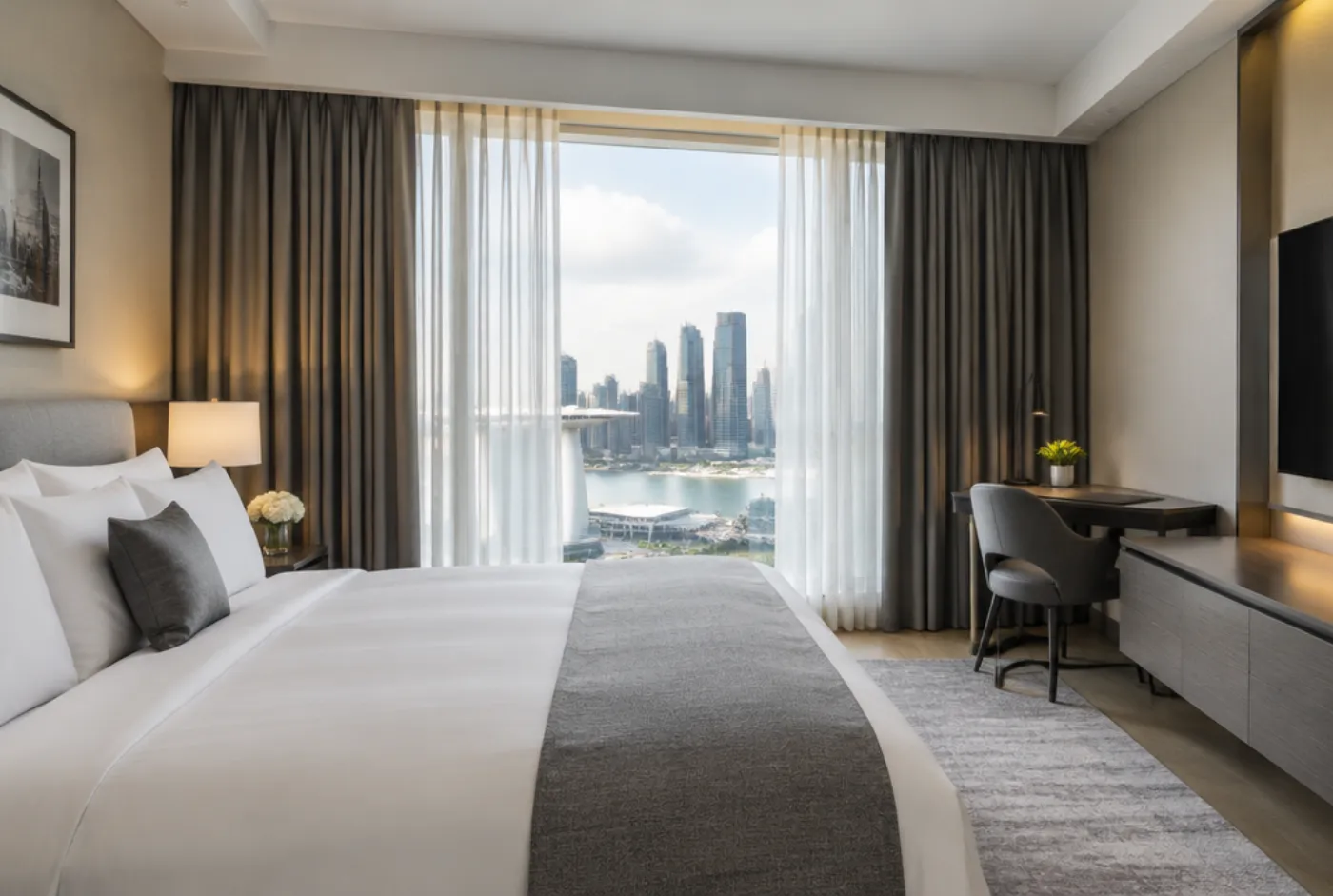 Fire-Retardant Curtains and Blinds for a Commercial Project